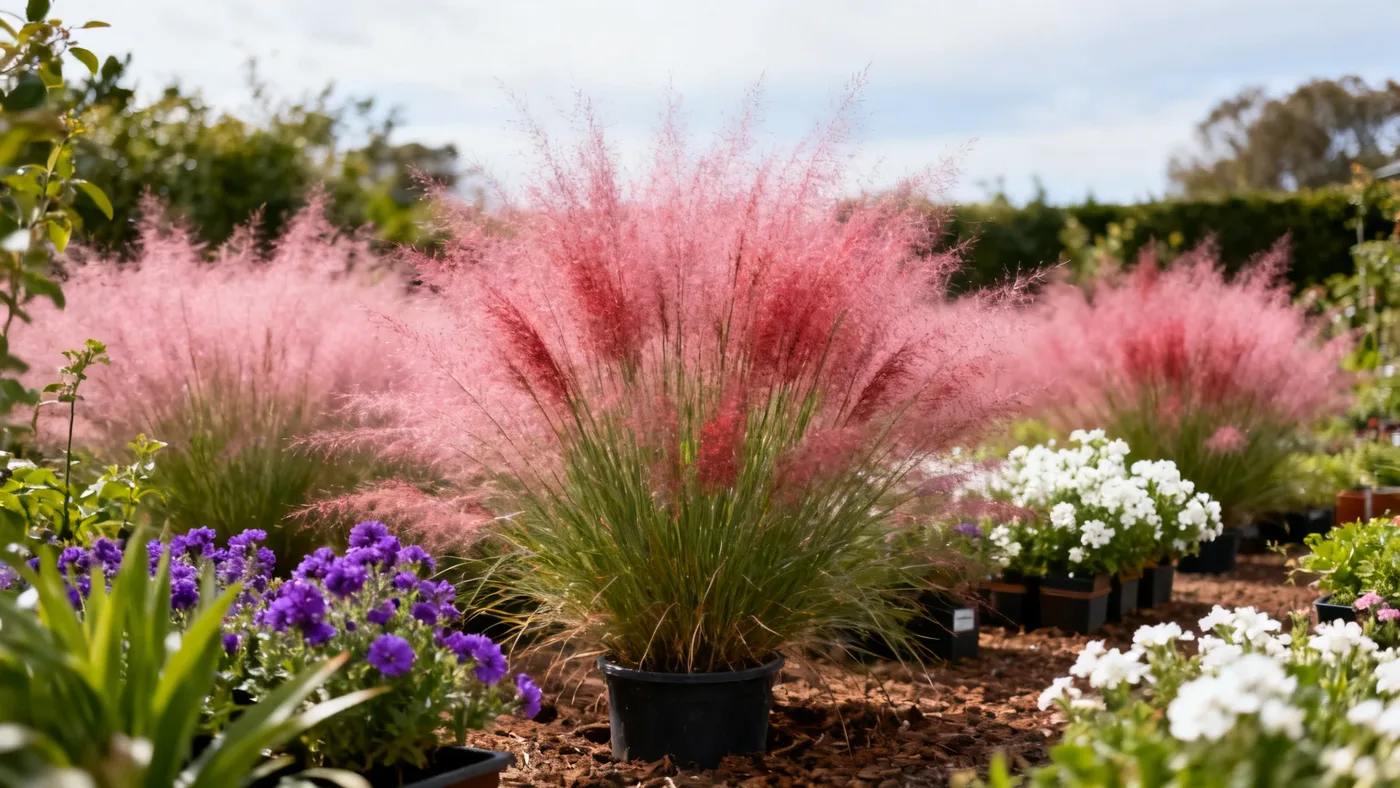
Pink Muhly Grass Sun Requirements for Best Pink Color
If you want Pink Muhly Grass to put on a show, sunlight is your most important tool. The amount of sun your plant gets directly determines the intensity of the pink plumes that bloom in fall. Full sun produces the deepest, most saturated pink color. Part shade will work, but the blooms tend to be paler and thinner. This guide walks you through assessing your yard, positioning your plants, and monitoring results so you get the performance you're after.
Why Sun Matters for Pink Muhly Grass
Pink Muhly Grass produces its signature flowering plumes in late September through November, depending on your region. The color intensity of those plumes depends almost entirely on light exposure. Plants in full sun generate the rich pink to reddish-pink color that makes this grass worth growing. Plants in reduced light produce pale, weak blooms or fail to flower noticeably at all.
This isn't just cosmetic. Homeowners and landscapers choose Pink Muhly Grass for fall interest and visual impact. A plant with sparse, pale plumes loses most of that appeal. Full sun also promotes a compact, tidy growth habit. Shade often triggers floppy or sprawling growth, even in young plants.
Step 1: Assess Your Site for Sun Exposure
Before you buy or plant, spend a few days observing your chosen location.
- Watch the sun's path. From spring through early fall, note which areas of your yard receive direct sun for the longest stretches. Aim for a spot that gets at least 6 hours of direct sunlight daily. Pink Muhly Grass tolerates part shade, but you'll see noticeably reduced bloom color with less than 6 hours.
- Check for afternoon shade. In hot climates (USDA zones 8 and 9), light afternoon shade from a tree or structure can be beneficial during peak summer. The grass will still bloom well as long as it gets morning and midday sun. In cooler zones (6 and 7), aim for full sun throughout the day.
- Identify shade patterns that change with season. If nearby trees are deciduous, remember that they'll leaf out in summer and drop leaves by fall. A spot that's partially shaded now might be fully exposed by September when your grass is blooming. This is often an advantage. A spot that's shaded in summer but sunny in fall can work reasonably well.
- Account for buildings and structures. North-facing walls cast permanent shade. East-facing or west-facing exposures will deliver strong sun for at least part of the day. Avoid planting directly on the south side of a tall building if it creates complete shade for extended periods.
Step 2: Choose and Prepare Your Planting Location
Once you've identified a suitable spot, prepare it for planting.
- Select a full-sun location as your first choice. Aim for 6 to 8 hours of direct sun. If your yard's only option is light shade, you can still grow Pink Muhly Grass, but expect lighter plume color and possibly reduced overall growth.
- Ensure good drainage. Pink Muhly Grass needs well-drained soil. Whether your soil is sand, loam, or clay, good drainage is non-negotiable. Water sitting around the roots will cause root rot, which is far more damaging than any light shade. If your chosen sunny spot has poor drainage, either amend the soil or select a different location.
- Check soil pH if testing is convenient. Pink Muhly Grass adapts to a wide pH range, roughly 5.5 to 7.5. Most home soils fall comfortably in this range. Detailed testing is optional, as the plant is not fussy about pH.
- Clear competing vegetation. Remove grass, weeds, or other plants from a circle roughly 2 to 3 feet wide. This gives your new Pink Muhly Grass room to establish without competition for water or nutrients.
Step 3: Plant and Position for Optimal Sun Exposure
The act of planting doesn't change based on sun exposure, but timing and placement matter.
- Plant in spring or fall. Container-grown plants can go in the ground anytime the soil is workable during their hardiness range (USDA zones 6 through 9). Fall planting in zones 8 and 9 gives plants a chance to establish before summer heat. Spring planting works well everywhere.
- Space plants with future size in mind. Mature Pink Muhly Grass spreads 2 to 3 feet wide. If you're planting multiple plants, space them 18 to 36 inches apart depending on how quickly you want them to fill in. Wider spacing allows better air circulation in shadier spots and reduces foliar disease risk.
- Avoid planting in the shadow of future growth. If you're planting near shrubs or small trees, imagine their mature size and branch structure. A tree that currently casts no shade may shade your grass significantly in 3 years. Position your Pink Muhly Grass where it will still get morning sun even after nearby plants mature.
- Water well at planting. New plants need regular watering to establish roots. Once established (typically by late summer of the first year), Pink Muhly Grass is quite drought-tolerant. Sun exposure and water availability are linked. Plants in part shade often struggle more if water is irregular, whereas full-sun plants tolerate dry periods better once established.
Step 4: Monitor First-Year and Second-Year Performance
Your plant's first bloom season will tell you whether the sun exposure is adequate.
- Watch for bloom emergence in late summer. In most years, Pink Muhly Grass produces noticeable plumes by late August or early September. If your plant is in good light, you should see airy pink to reddish-pink plumes forming.
- Compare plume color to your expectations. If the plumes are pale or sparse, you have too much shade. If they're rich pink and abundant, your site is ideal. Mild paleness is normal in part shade, but a complete lack of plumes signals inadequate light.
- Assess plant structure. A plant in full sun will have a neat, compact clump 2 to 3 feet tall (including plumes, 3 to 4 feet). A plant in shade may sprawl, flop over, or look loose. If you see flopping even in your first year, shade is likely the cause. Excess water or over-fertilizing can also cause this, but inadequate light is the most common culprit in home gardens.
- Consider a location change if needed. If year-one performance is disappointing, you have options. You can dig up the plant in early spring before new growth emerges and move it to a sunnier location. Or you can wait two to three years for the plant to reach full mature size, which sometimes improves bloom production even in marginal light.
Step 5: Maintain Optimal Light Exposure Year to Year
Once your Pink Muhly Grass is established, a few simple practices will keep it performing well.
- Prune neighboring plants in late winter. If nearby trees or shrubs start to cast more shade as they mature, consider pruning them to allow more light through. Thin out lower branches of trees in particular, which increases sunlight without removing the tree.
- Avoid shearing the plant in fall. You might be tempted to tidy up your grass in late fall, but resist the urge. The pink plumes and dried foliage provide winter interest and should be left standing through fall and winter. Cut the plant back to 4 to 6 inches above ground in late winter or early spring before new growth emerges.
- Refrain from over-fertilizing. A light application of balanced fertilizer in spring is optional. Over-fertilizing causes floppy growth, which is often mistaken for a shade problem but can occur in sunny spots too. Let the plant do its job with minimal feeding.
- Plan for seasonal changes. If your site's shade pattern shifts with the seasons (deciduous trees, moving structures), adjust your expectations. Reduced bloom in a shadier summer is normal and doesn't indicate a problem if fall light is strong.
Tips to Maximize Pink Muhly Grass Performance
- Six hours of direct sun is the practical minimum. More is better. Eight or more hours delivers the most vibrant bloom color.
- Morning sun is more beneficial than afternoon sun. East-facing exposures are often ideal.
- If you must choose between full sun and a shadier spot with better drainage, choose the sunny spot. Drainage problems are fixable through soil amendment or drainage installation. Shade is not.
- In USDA zones 8 and 9, light afternoon shade is acceptable and sometimes desirable during peak summer heat. The plant will still bloom well in fall when that shade may no longer be present.
- New container-grown plants from a nursery may look small. They grow steadily once planted, reaching mature size in 2 to 3 years. A small plant in full sun will outperform a larger specimen in part shade within two seasons.
- Pink Muhly Grass is not invasive and is a North American native. It's a good choice for xeriscape and native plant gardens even in part shade, though bloom quality will be reduced.
Common Mistakes to Avoid
- Planting in insufficient light expecting the plant to adapt. Pink Muhly Grass will survive in part shade or even dappled shade, but it won't deliver the visual impact you're after. If bloom color is your goal, full sun is not optional.
- Assuming a spot is shadier than it really is. Many home gardeners overestimate how much shade their sites receive. Spend a full day observing your chosen location before dismissing it as too dark.
- Choosing a shady spot with poor drainage and hoping both problems will resolve. They won't. The plant will struggle and likely decline. Good drainage is the absolute foundation. Sun matters for bloom color, but drainage is about survival.
- Comparing your plant's bloom to nursery photos taken in ideal conditions. Nurseries photograph plants in peak full sun. Your plant in part shade may never look exactly like that. It can still be attractive.
- Expecting the plant to fill in quickly. Pink Muhly Grass grows at a moderate rate, roughly 6 to 12 inches per year. Reaching full mature size takes 2 to 3 years. Shade will slow this process further.
Expected Results and Realistic Timelines
Here's what you can realistically expect based on your sun exposure:
Full sun (6+ hours daily): By late summer or early fall of your first or second year, you should see noticeable pink plumes. By year 2 to 3, the plant will be near full mature size (2 to 3 feet wide, 3 to 4 feet tall with plumes). Plume color will be rich pink to reddish-pink. The plant will have a compact, neat appearance.
Light shade (3 to 6 hours sun): Bloom may be delayed to late September or October. Plumes will be paler and less abundant than in full sun. The plant may take longer to reach full size. It will still be attractive, but the defining characteristic (intense pink color) will be muted. Growth will be slower, and you may notice more sprawling.
Part to heavy shade (less than 3 hours sun): Bloom may be minimal or nearly absent. The plant will likely look more like a lawn grass than the ornamental focal point you're after. Growth will be slow, and the plant may appear stressed. This is not a recommended location for Pink Muhly Grass.
For more detailed care guidance across all seasons, read our complete Pink Muhly Grass care guide.
Quick Reference: Sun Requirements Checklist
| Sun Exposure | Expected Bloom Color | Plume Abundance | Plant Habit | Recommended? |
|---|---|---|---|---|
| Full sun (6+ hours) | Rich pink to reddish-pink | Abundant, airy plumes | Compact, neat | Yes, ideal choice |
| Light shade (3-6 hours) | Pale pink | Moderate, sparser | May sprawl slightly | Acceptable, not ideal |
| Part shade (1-3 hours) | Very pale or nearly absent | Minimal | Sprawling, loose | Not recommended |
| Heavy shade (less than 1 hour) | No meaningful bloom | None or trace amounts | Weak, sparse | Not suitable |