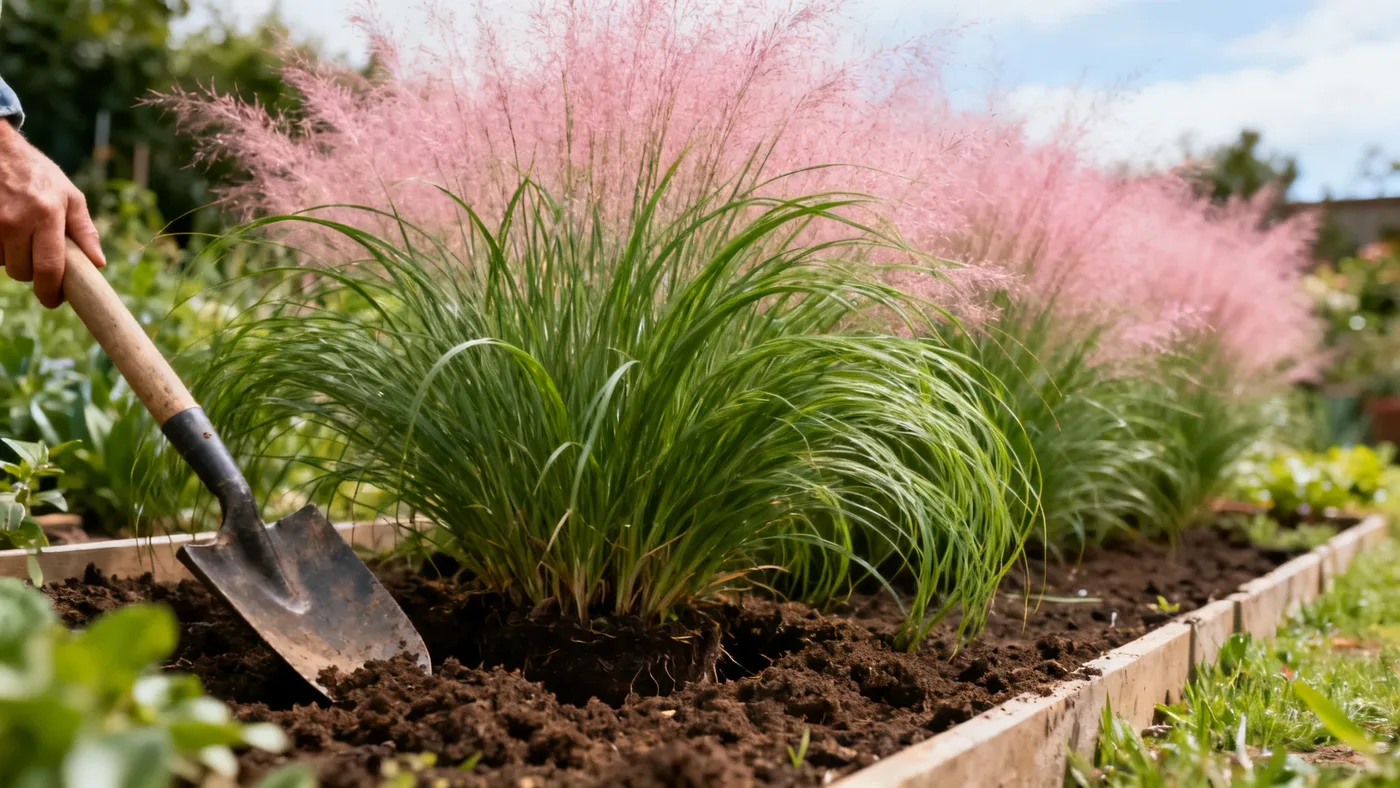
Pink Muhly Grass Spacing for Borders, Hedges and Mass Plantings
Pink Muhly Grass matures to 2 to 3 feet wide, but knowing where to plant each clump makes the difference between a sparse landscape and a lush, intentional planting. Poor spacing leads to either overgrown, crowded plants competing for water and light, or thin gaps that take years to fill. This guide walks you through spacing decisions for three common uses: borders, hedges, and mass plantings.
Why Spacing Matters for Pink Muhly Grass
Spacing determines how quickly your planting fills in, how well air flows through the foliage (preventing disease), and how much water each plant needs to thrive. Pink Muhly Grass grows at a moderate rate, roughly 6 to 12 inches per year. In its first year after planting, you may see 6 inches of growth. By year two or three, your plants reach mature size. The closer you plant them, the faster the visual fill. The farther apart you space them, the lower your initial cost but the longer you wait for a mature look.
Spacing also affects bloom density and flower color. Pink Muhly Grass produces its airy pink plumes in late summer and fall, typically from September through November, depending on your region. Plants that are too crowded may have weaker plumes due to shading or competition. Plants with good air circulation show fuller, more vibrant color.
Materials and Tools You Will Need
- Container-grown Pink Muhly Grass plants (quart or #1 container size)
- Measuring tape or yard stick
- Landscape paint or garden stakes to mark planting positions
- Shovel or spading fork
- Well-draining soil or soil amendment
- Mulch (bark chips or compost, 2 to 3 inches deep)
- Water source and garden hose
- Gloves (optional but helpful)
Pink Muhly Grass Spacing by Use
For Borders (Along Pathways or Perennial Beds)
A border typically features a single row of plants. Space Pink Muhly Grass 24 to 30 inches apart center to center. This spacing allows each mature clump (2 to 3 feet wide) to touch or slightly overlap at maturity, creating a continuous soft edge without crowding. In year one, the plants will appear spaced out. By year two or three, they will form a cohesive, waving border that frames a pathway or bed edge beautifully.
If you want a tighter, faster fill, use 18-inch spacing. This creates a denser border in year two, though the plants may compete slightly for water during establishment. If budget or patience allows, 30-inch spacing gives plants room to expand fully and reduces watering needs per square foot.
For Hedges or Windbreaks
A hedge of Pink Muhly Grass is informal and airy, not a solid barrier like a clipped shrub hedge. Space plants 24 inches apart for a single-row informal screen, or 24 to 30 inches apart for a double-staggered row (plants in the back row offset from the front). The mature height, including bloom plumes, reaches 3 to 4 feet, making it suitable for screening lower views or creating a soft property line.
For a hedge effect, ensure plants receive full sun or light shade. Avoid dense shade, which reduces bloom and causes floppy, sparse growth. Space plants wide enough to allow air flow so that wind does not lodge (flatten) the foliage, and water does not pool between clumps.
For Mass Plantings
Mass plantings use groups of three, five, or more plants to create a dramatic sweep of pink plumes in fall. The spacing for Pink Muhly Grass ranges from 18 to 36 inches apart depending on desired density. For mass plantings, follow this guidance:
- Dense mass (18 inches apart): Use this spacing for a filled, almost seamless look in year two. Plants will be shoulder-to-shoulder at maturity. Choose this if you want quick visual impact and do not mind the higher initial plant cost.
- Medium mass (24 to 30 inches apart): The most common and economical choice. Plants touch at maturity and create a full effect without excessive crowding. This spacing works well in mixed perennial beds with companions like black-eyed Susan, coneflower, or sedum.
- Loose mass (36 inches apart): Plants remain visibly spaced even at maturity. Use this spacing if you plan to fill gaps with lower-growing companions, or if you prefer a meadow-like, naturalized feel with room for each clump to shine individually.
Step-by-Step Planting Instructions
Step 1: Plan Your Layout
Decide on your spacing based on your intended use. For a border, measure out 24 to 30 inches. For a mass planting, choose 18, 24 to 30, or 36 inches. Sketch your layout on paper or mark the spots using landscape paint or garden stakes. This prevents mistakes and ensures even spacing.
Step 2: Choose Planting Season
Pink Muhly Grass is best planted in spring or fall when the ground is workable. Container-grown plants can be planted anytime the ground is not frozen. Planting in spring gives the roots a full growing season to establish before winter. Fall planting (at least 6 weeks before the first hard frost) allows time for root establishment and avoids the heat stress of summer.
Step 3: Select a Sunny Location
Pink Muhly Grass produces its most vibrant pink plumes in full sun. Light shade is tolerable, but low-light conditions reduce bloom color and can cause floppy, sprawling growth. Ensure the site has good drainage. The plant is adaptable to sand, loam, or clay soil, but waterlogged soil causes root rot. If your soil is heavy clay and stays wet, add coarse sand or compost to improve drainage before planting.
Step 4: Dig Planting Holes
At each marked spot, dig a hole slightly wider and as deep as the root ball of your container plant. Gently remove the plant from its quart or #1 container and loosen the root ball with your fingers. Place it in the hole so the top of the root ball is level with the ground surface. Do not bury the crown deeper than it was in the container.
Step 5: Backfill and Mulch
Backfill the hole with amended soil if your native soil is very compacted. Firm the soil gently around the root ball to eliminate air pockets. Water thoroughly to settle the soil. Apply 2 to 3 inches of mulch (bark chips or compost) around each plant, keeping it 2 to 3 inches away from the stem to prevent rot.
Step 6: Water Regularly During Establishment
Pink Muhly Grass requires regular watering to establish, typically for the first growing season. Water deeply 2 to 3 times per week, or when the top inch of soil is dry. Once the plant is established (after 1 to 2 growing seasons), it is drought-tolerant and needs little supplemental water except during severe drought.
Step 7: Monitor Spacing and Growth
Over the next two growing seasons, your plants will expand to their mature 2 to 3 feet width. Check that they are filling in evenly. If a plant appears weak or slow to grow, check for drainage issues or insufficient light. Do not fertilize heavily, as over-fertilizing reduces bloom and encourages floppy growth.
Tips and Common Mistakes to Avoid
Mistake 1: Planting too close in shade. Spacing of 18 inches works great in full sun but will result in crowded, floppy plants in partial shade. If your site is not fully sunny, use 24 to 30 inch spacing and ensure good air flow.
Mistake 2: Watering too frequently once established. Pink Muhly Grass is drought-tolerant once established. Overwatering in year two and beyond can cause root rot and weak growth. Once plants are 12 to 18 months old, reduce watering frequency unless you are in a severe drought.
Mistake 3: Over-fertilizing. Pink Muhly Grass is a light feeder. A light application of balanced fertilizer in spring is optional. Too much nitrogen encourages soft, floppy growth and reduces bloom production. Resist the urge to fertilize every month.
Mistake 4: Confusing it with larger grasses. Pink Muhly Grass (Muhlenbergia capillaris) matures at 2 to 3 feet wide. Do not confuse it with Pampas Grass (Cortaderia selloana), which grows much larger and has sharp-edged leaves. Use the correct spacing for the correct plant.
Tip: Plan for winter interest. Leave Pink Muhly Grass uncut through winter. The tan seed heads and dried foliage provide texture and shelter for beneficial insects and birds. Cut back to 4 to 6 inches in late winter or early spring before new growth emerges. Do not shear in fall, as you will lose the winter plumes.
Tip: Stagger for a hedgerow. If you are creating a double-row hedge, offset the back-row plants so they stand between the front-row plants. This creates a fuller visual effect and improves air flow.
Expected Results
In year one, your spaced Pink Muhly Grass plants establish roots and grow 6 to 12 inches. Bloom may be light. By year two, plants approach mature width (2 to 3 feet), and you will see noticeably fuller plumes in fall. By year three, the planting reaches its design intent: a mature, densely filled border or mass planting with abundant pink to reddish-pink plumes from September through November. The dense, wiry foliage remains attractive year-round, and winter seed heads add texture through cold months.
The color and density of your planting depend on sun exposure. Full-sun plantings show the most vibrant pink color. Light-shade plantings may show softer color. Deer are unlikely to browse Pink Muhly Grass, so established plantings remain intact from wildlife pressure.
Quick Reference: Spacing Chart
| Use | Spacing (center to center) | Visual fill by year 2-3 | Best for |
|---|---|---|---|
| Dense mass or fast fill | 18 inches | Shoulder-to-shoulder | High-impact plantings, small spaces, lower budget for water |
| Border or single row | 24-30 inches | Slightly overlapping | Framing pathways, mixed beds, moderate budget |
| Medium-density mass | 24-30 inches | Fully filled, natural look | Most common choice, balanced cost and maturity time |
| Loose or naturalized mass | 36 inches | Visible spacing, individual clumps | Meadow plantings, companion partnerships, lowest initial cost |
| Informal hedge (single row) | 24 inches | Continuous soft edge | Screening, windbreaks, soft property lines |
| Informal hedge (double row, staggered) | 24-30 inches per row | Fuller, double-depth effect | More substantial hedges, better wind-break effect |
Planning Your Planting
Spacing Pink Muhly Grass correctly sets up success from the start. A 24 to 30 inch spacing is a safe middle ground for most borders and mass plantings, giving you a mature, full look in year two while keeping plants healthy and well-spaced. Closer spacing (18 inches) fills faster but requires more plants and careful watering. Wider spacing (36 inches) stretches your budget and works well in naturalized designs.
Once your Pink Muhly Grass is established, the main care is an annual spring cutback to 4 to 6 inches and minimal watering after year one. For more details on year-round care, see The Complete Pink Muhly Grass Care Guide for Every Season.