Buying Pink Muhly Grass: Container Sizes and What to Look For
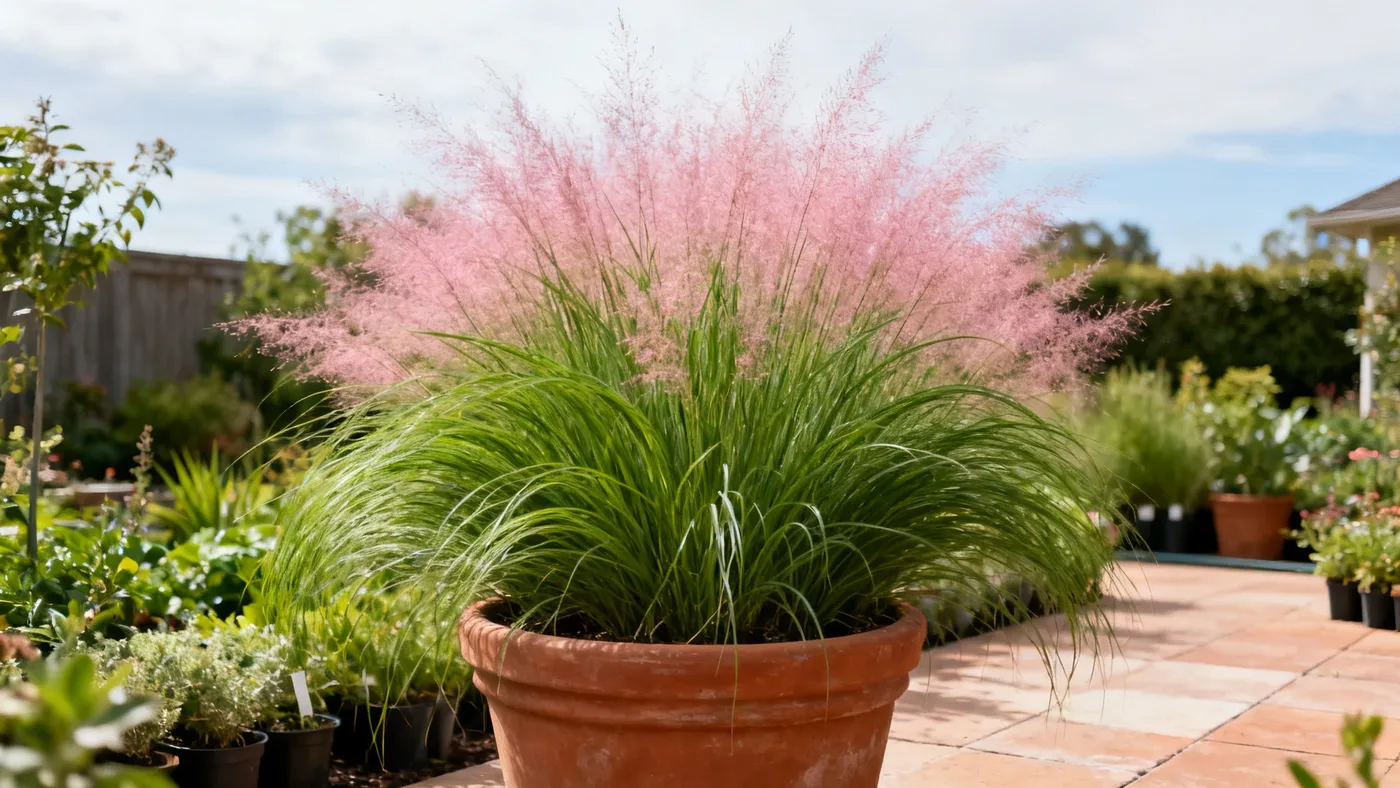
Pink Muhly Grass (Muhlenbergia capillaris) has become a staple in nurseries across the South and Southeast, and for good reason. Its airy pink plumes lighting up in late summer and fall are unmistakable. But when you're shopping for one (or several) for your garden, knowing what to look for makes the difference between a plant that thrives and one that struggles. This guide walks you through container sizes, quality markers, and how to spot a healthy specimen before you take it home.
Understanding Pink Muhly Grass Container Sizes
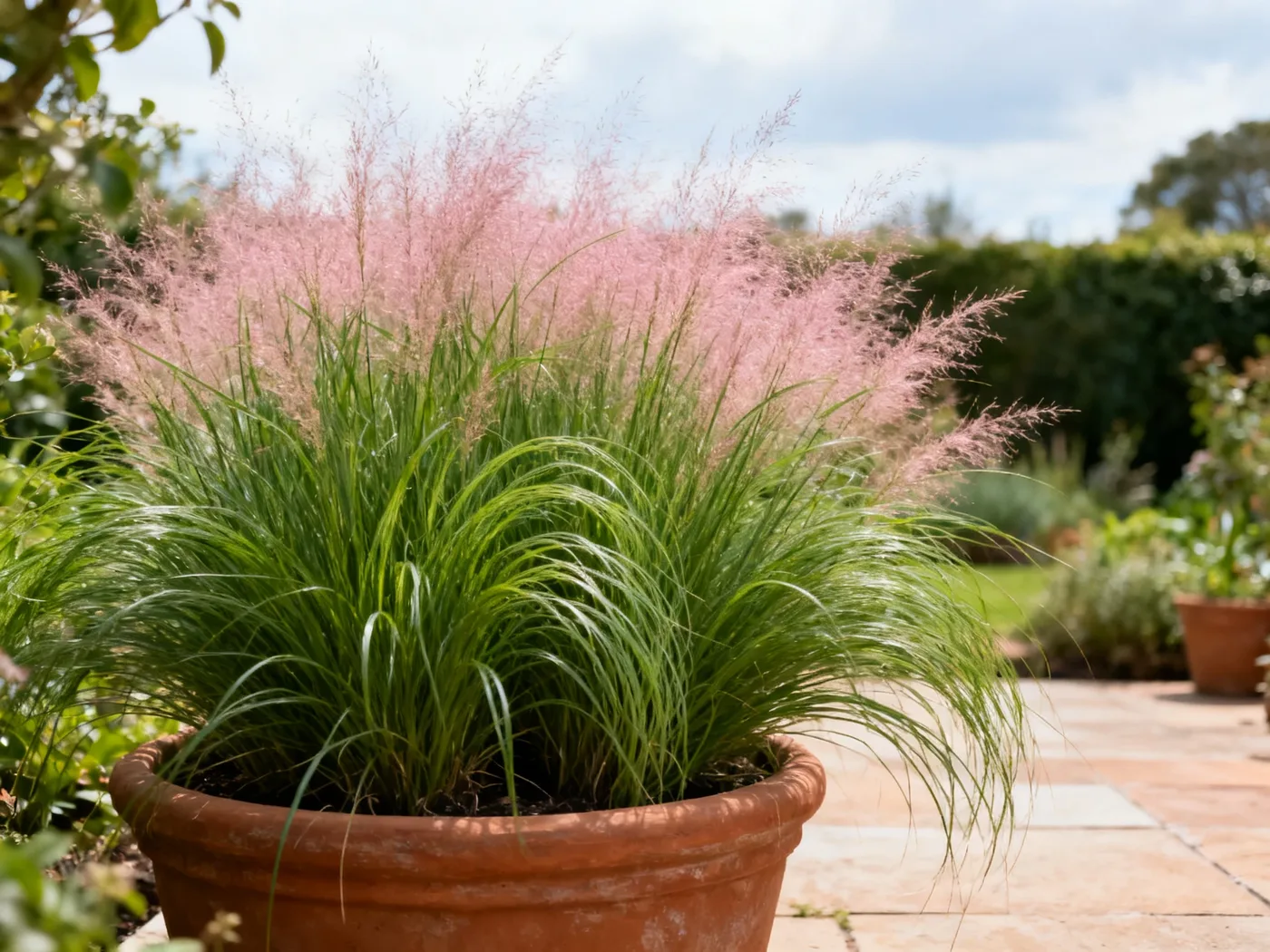
Most nurseries and garden centers sell Pink Muhly Grass as container-grown plants, and size matters. Container sizes determine not just the price you pay, but the maturity stage of the plant and how quickly it fills in your landscape.
Quart Containers (1 Qt)
Quart-container Pink Muhly Grass is the entry point for budget-conscious buyers and gardeners planning mass plantings. A 1-quart start is a young plant, typically 6 to 12 months old from propagation. These small plants have enough root development to transplant successfully, but they are not yet mature.
Because Pink Muhly Grass grows at a moderate rate (roughly 6 to 12 inches of growth per year), a quart-size plant may take 2 to 3 years to reach its mature width of 2 to 3 feet. First noticeable bloom often appears in year 2 after planting, but the full, dense plume display you see in mature landscape photos takes patience. Quart starts are ideal if you have time, plan a large grouping where scale matters less during establishment, or want to save money while gaining experience with the plant.
#1 Containers
A #1 container (typically 1 gallon in volume) holds a more developed Pink Muhly Grass plant. These are usually 12 to 18 months old and show visible foliage density and root maturity. A #1 plant planted in spring or fall will often produce its first noticeable plumes by late summer or fall of that same year, and reach closer to mature size by the following season.
#1 containers strike a balance between cost and immediate garden impact. They're the sweet spot for most home gardeners who want visible results within one season without overpaying for a specimen plant.
#3 Containers (3 Gallon)
#3 container plants are near or at landscape maturity. These specimens are typically 2 to 3 years old and have already developed the dense foliage clump (2 to 3 feet wide) and robust root system that will produce full, showy plumes in their first year in your garden. #3 plants deliver immediate landscape presence and are the choice for gardeners wanting instant full-size specimens or creating high-impact focal points right away.
The trade-off is cost. A #3 plant will be significantly more expensive than a quart or #1, but the plant arrives garden-ready.
What to Look For: Quality Indicators
Knowing the container size is only the first step. Once you identify the size you want, inspect the plant itself for signs of vigor and health.
Foliage Density and Color
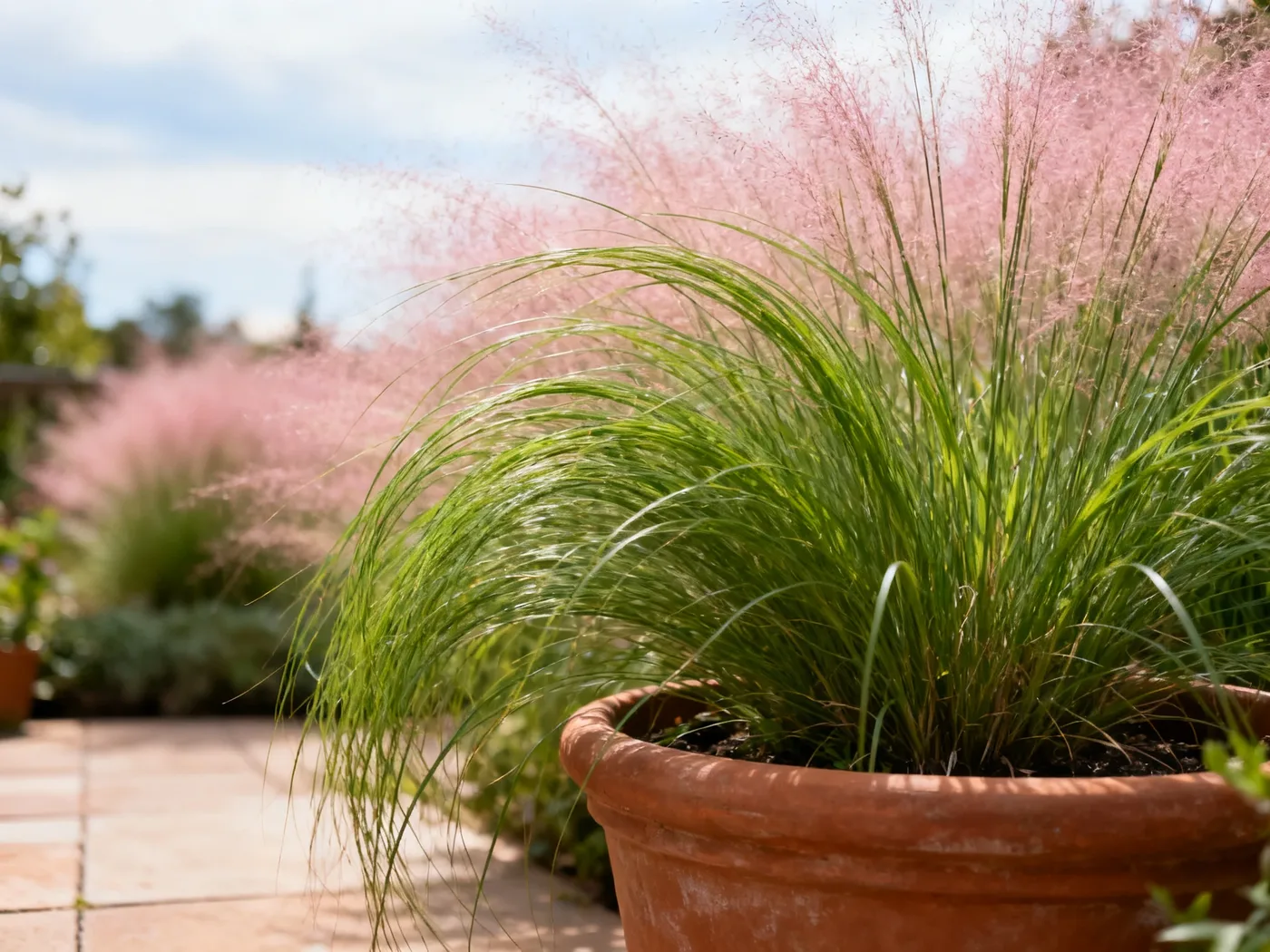
Healthy Pink Muhly Grass has dense, fine-textured wiry green foliage forming a compact clump. The blades should be arching and full, not sparse or thinning at the base. If you can see a lot of bare soil or thin patches in the foliage, the plant has not been well-established or may have been stressed during transport or storage.
Check the color. Foliage should be a healthy green, not yellowing or bronzed (unless it is late fall, when cool weather naturally tints the foliage bronze and tan). Yellowing often signals poor drainage, overwatering, or nutrient stress.
Root Health
Gently slide the plant out of its pot (or ask the nursery staff to show you). The roots should be white to light tan and feel firm, filling the soil ball. Roots circling tightly around the base in a dense mat ("root-bound") are a sign the plant has been in the container too long, but this is less critical for ornamental grasses than for other plants. Pink Muhly Grass tolerates it better than most perennials.
Red flags: brown, mushy roots suggest root rot, usually from soggy soil or poor drainage during the nursery holding period. Do not buy a plant with mushy roots. Roots should never smell sour or unpleasant.
No Signs of Pests or Disease
Inspect the foliage carefully, especially the base where blades emerge. Look for webbing (spider mites), cotton-like clusters (mealybugs), or tiny moving insects. Pink Muhly Grass is generally pest-free, but occasional mealybugs do occur, and a light infestation at the nursery may not be visible to the casual buyer. Rust (a fungal issue) appears as rusty-orange spots on foliage; this is less common but not unheard of.
A few minor cosmetic issues (a bent blade, a small tear) are normal and will repair themselves once the plant is established. But systemic pest or disease signs mean pass on that plant and choose another.
Potting Soil and Moisture
The soil in the pot should be slightly moist, not soggy or bone-dry. Pink Muhly Grass needs good drainage, so the soil mix should feel airy (containing perlite or sand alongside compost or peat). If the soil is dense and compacted, or if water pours through without absorbing, the plant may not have been potted with adequate drainage in mind.
Cultivar Options Worth Knowing
Most nurseries stock the straight species Pink Muhly Grass (Muhlenbergia capillaris), which produces the signature airy pink to reddish-pink plumes in late summer and fall. But specialty nurseries or mail-order growers sometimes offer named cultivars with distinct traits.
'Regal Mist'
'Regal Mist' is a deeper pink selection, producing plumes with more intense reddish-pink color. It is the choice if you want a more dramatic, saturated plume display. Availability varies by region.
'White Cloud'
'White Cloud' is a white bloom form of Pink Muhly Grass. It has the same growth habit and hardiness (zones 6-9) but produces pure white plumes instead of pink. White Cloud is striking in mixed borders and adds contrast to darker-foliaged companions. Like the species, it is a moderate grower reaching 2-3 feet wide and 3-4 feet tall with plumes.
'Fast Forward'
'Fast Forward' is marketed as an earlier, more compact selection, useful for gardeners in cooler zones or those wanting a smaller footprint. Availability may be limited.
If you find a cultivar you like, check the label or ask the nursery whether it is division-grown or seed-grown. Cultivars (especially color selections like 'Regal Mist' or 'White Cloud') are typically maintained by division to preserve their specific traits, so division-grown plants are your guarantee of true-to-form color and habit.
Where to Buy: Retail vs. Online vs. Local
Local Nurseries and Garden Centers
The advantage of shopping local is seeing the plant in person and choosing based on the quality markers above. Nursery staff in the South and Southeast often grow or stock Pink Muhly Grass year-round. Shopping local also means no shipping stress on young plants. Container-grown plants can generally be planted anytime the ground is workable in its hardiness range (zones 6-9), so seasonal timing is flexible if you buy locally.
Online and Mail-Order Growers
Mail-order nurseries offer wider cultivar selection and the convenience of home delivery. The trade-off is you cannot inspect the plant before purchase. Reputable growers ship during the plant's dormant or early-growth window to minimize stress, and they pack carefully to protect roots during transit. Read reviews before ordering, and check the nursery's shipping guarantee in case the plant arrives damaged.
Big-Box Garden Centers
Chain retailers carry Pink Muhly Grass seasonally, especially spring and fall. Quality and stock vary widely by location and time of year. The benefit is familiar pricing and instant gratification (no shipping wait). The downside is less personalized advice and sometimes older inventory that has been in containers longer than ideal.
Price-Point Expectations and Value
Pink Muhly Grass pricing depends on container size and location. Quart-size plants are the least expensive entry point, while #1 and #3 containers command higher prices proportional to their size and maturity. Cultivars like 'White Cloud' or 'Regal Mist' may cost more than the straight species due to limited propagation and supply.
Value is not the lowest price, but the healthiest plant for the container size. A $15 quart with dense foliage and no pest issues is better value than a $12 quart with sparse growth or root problems. Similarly, a #1 container with plump, healthy roots is worth the cost difference over a discounted specimen that has been sitting in poor conditions.
Red Flags: What Not to Buy
- Wilted or yellowing foliage with no explanation. Stress signals during holding can indicate broader problems. If the nursery cannot explain the decline (recent transit, for example), choose a healthier-looking plant.
- Bone-dry soil or root-bound plants with hard, compacted soil. These may recover after planting, but they start off stressed and will lag in growth.
- Soggy, waterlogged soil or visible mold or algae on the container. This points to poor drainage or overwatering during nursery care, and root rot is likely.
- Visible pests or disease signs. Mealybugs, spider mites, rust, or soft mushy stems mean pass and select another plant.
- No label or species identification. If the nursery cannot confirm it is Pink Muhly Grass (Muhlenbergia capillaris), you risk buying a look-alike species with different growing requirements or hardiness.
- Very cheap #3 containers or specimens with premature plumes in spring. Forced or overstressed plants may not establish well once transplanted into your garden.
Post-Purchase Care and Planting Timeline
Once you bring your Pink Muhly Grass home, keep the soil lightly moist (not waterlogged) until planting. If you cannot plant within a week, keep the container in a sheltered spot with morning sun and afternoon shade to acclimate it to your garden conditions.
Pink Muhly Grass is ready to plant in spring or fall when the ground is workable in your zone (6-9). If you buy in late summer and planting time is soon (September-November), expect first blooms that season. If you plant in spring from a younger container, first noticeable bloom may wait until the following late summer.
For detailed planting steps and spacing, read our Pink Muhly Grass planting guide. For year-round care and seasonal timings, the complete care guide covers watering, pruning, and what to expect each season.
Quick Reference Checklist
| Container Size | Typical Age | Year to First Bloom | Time to Mature Size | Best For |
|---|---|---|---|---|
| Quart (1 Qt) | 6-12 months | Year 2 after planting | 2-3 years | Budget plantings, mass installations, patient gardeners |
| #1 Gallon | 12-18 months | Year 1 after planting (often) | 1-2 years | Most home gardeners; balanced cost and speed |
| #3 Gallon | 2-3 years | Year 1 after planting (full display) | Mature on arrival | Instant impact, specimen plants, focal points |
Health Checklist Before You Buy
- Foliage is dense, green, and fills the clump; no bare patches
- Roots are white to tan, firm, and fill the soil ball (light root-binding is acceptable)
- No mushy, brown, or foul-smelling roots
- Soil is airy and well-draining, lightly moist (not soggy)
- No visible pests (webbing, cottony clusters, moving insects)
- No rust, yellowing, or soft stem damage
- Label confirms species (Muhlenbergia capillaris) and cultivar (if applicable)
- Plant is within hardiness zones 6-9 for your region