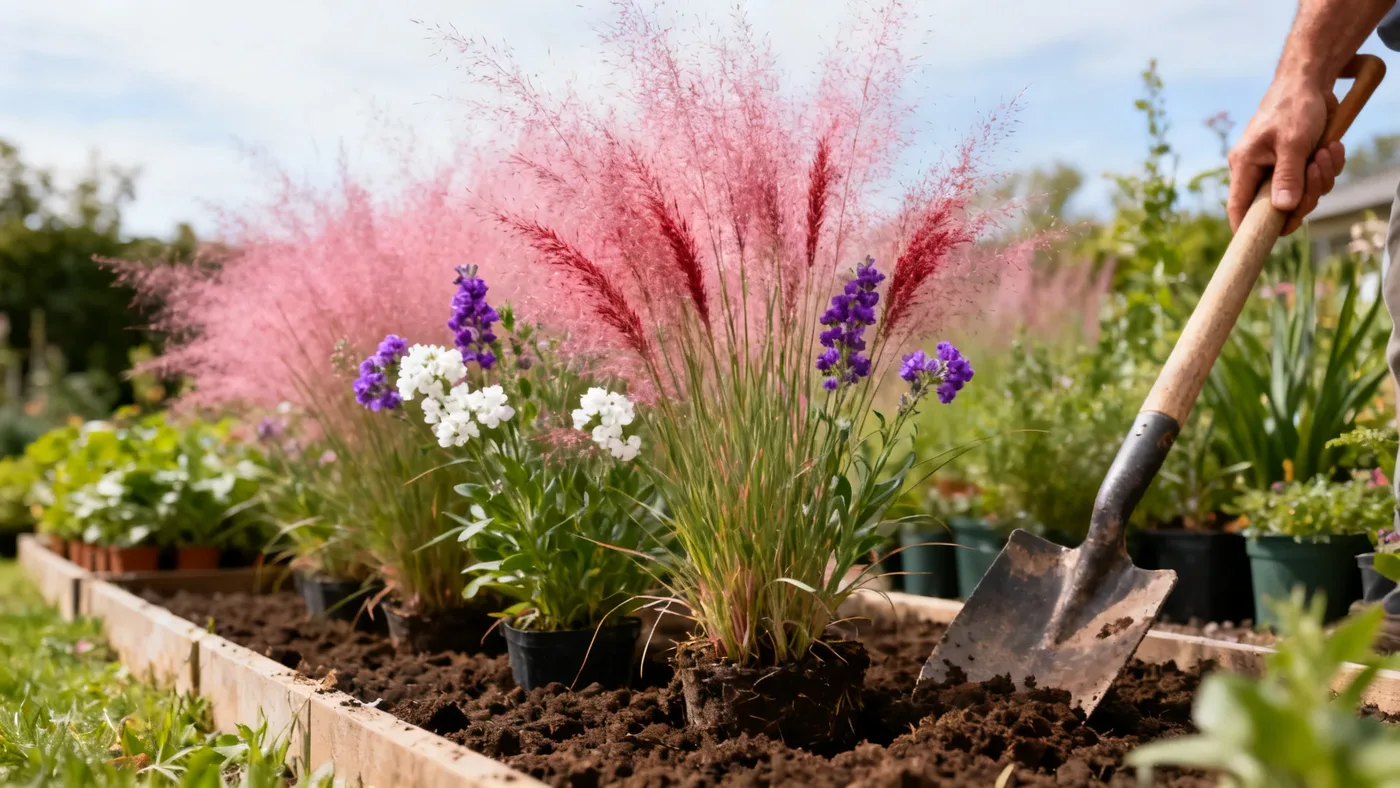
How to Plant Pink Muhly Grass for the Best Fall Color
Pink Muhly Grass is a warm-season ornamental grass that puts on its most spectacular show in fall. Planted at the right time with proper technique, your plants will develop into full, healthy clumps that produce those signature airy pink plumes starting in late summer and stretching through November. This guide walks you through everything you need to do to plant Pink Muhly Grass for maximum fall bloom and color.
Why Timing and Technique Matter for Fall Color
Pink Muhly Grass flowers from late summer through fall, typically from September to November depending on your location and local weather patterns. The color and intensity of those pink plumes depend on two main things: how long the plant has been in the ground before bloom season arrives, and how much direct sun it receives during its growing phase. A plant that is well-established by late summer will produce fuller, more vibrant plumes than one that was planted just weeks earlier.
This is why planting at the right season matters. Spring and fall are both good planting windows. A spring planting gives your grass the entire growing season to build roots and foliage before September bloom. A fall planting can work too, as long as the ground is still workable and the plant has time to settle in before hard frost. Container-grown plants are more forgiving and can be planted anytime your local soil is soft enough to dig.
What You'll Need Before You Plant
Materials and Tools
- Pink Muhly Grass plant (usually sold as a quart or #1 container from a nursery)
- Spade or garden shovel
- Garden fork or cultivator
- Watering can or soaker hose
- Mulch (optional but recommended: compost, shredded hardwood bark, or leaf mold)
- Soil amendments if your soil is very compacted or drains poorly
Site Requirements
Pink Muhly Grass is adaptable to many conditions, but it performs best in the right place. You need:
- Sunlight: Full sun to light shade. Full sun (6 or more hours of direct sunlight daily) produces the best flower color and the most robust growth.
- Drainage: Well-drained soil. Pink Muhly Grass will rot in soggy soil, so if your site holds water after rain, either choose a different spot or amend the soil with sand or gravel to improve drainage.
- Soil type: Adaptable. Pink Muhly Grass grows in sand, loam, or clay as long as drainage is good. Soil pH can range from acidic to slightly alkaline, roughly 5.5 to 7.5, so a soil test is not essential.
- Space: Room for the mature clump. At full size, Pink Muhly Grass spreads 2 to 3 feet wide. Space plants 18 to 36 inches apart depending on how quickly you want them to fill in. Closer spacing (18 inches) gives a denser, fuller look sooner, while wider spacing (30 to 36 inches) allows each plant room to be admired individually.
- Hardiness: Pink Muhly Grass thrives in USDA zones 6 to 9. Check your zone before planting to confirm the plant will overwinter in your area.
Step-by-Step Planting Instructions
Step 1: Prepare the Soil
Dig a hole slightly wider and just as deep as the root ball of your container plant. If you are planting in heavy clay or very compacted soil, dig the hole a bit deeper and backfill 2 to 3 inches of coarse sand or gravel at the bottom to help with drainage.
Loosen the soil at the bottom and sides of the hole with a garden fork. This gives new roots an easier path to expand into the surrounding earth. If your soil is very heavy, mix a shovelful of sand or compost into the soil you have loosened.
Step 2: Remove the Plant from Its Container
Water your Pink Muhly Grass plant a few hours before planting if the soil in the pot feels dry. Gently tip the container on its side and slide the plant out. If roots are matted or circling the outside of the root ball, use your fingers to loosen them gently. Don't be aggressive, but do encourage roots to spread outward.
Step 3: Set the Plant in the Hole
Place the plant in the hole so that the top of the root ball is level with the ground surface. The base of the plant, where the foliage emerges from the roots, should sit right at soil level, not buried. Burying the crown invites rot. If the hole is too deep, pull the plant out, add more soil to the bottom, and try again.
Step 4: Backfill and Firm the Soil
Fill the hole halfway with the soil you removed. Water gently to settle the soil and eliminate air pockets. Finish filling the hole with the remaining soil and water again. The soil should be firm enough that the plant doesn't rock, but not so compacted that water cannot penetrate.
Step 5: Water Thoroughly
Give the freshly planted Pink Muhly Grass a slow, deep watering. Aim for 1 to 2 inches of water applied slowly enough that it soaks in rather than running off. This is especially important if you planted in spring or summer. The goal is to settle the soil fully around the roots and provide moisture during the critical establishment phase.
Step 6: Apply Mulch (Optional)
Add a 1 to 2-inch layer of mulch around the base of the plant, keeping it a few inches away from the stems. Mulch helps retain soil moisture during the establishment period and moderates soil temperature. Use compost, shredded hardwood bark, or leaf mold. Avoid piling mulch against the plant's base, as this can trap moisture and rot emerging foliage.
Watering Your Newly Planted Pink Muhly Grass
For the first growing season, water regularly. Pink Muhly Grass is drought-tolerant once established, but young plants need consistent moisture as they build their root systems. Check the soil 2 to 3 inches down. If it feels dry, water deeply. Depending on your climate and rainfall, this may mean watering once or twice a week during hot weather.
By the second year, you can reduce watering frequency as the root system expands and the plant becomes more self-sufficient. In most climates, established Pink Muhly Grass needs only the rainfall your region receives naturally.
Common Planting Mistakes to Avoid
Burying the crown. The most common error is planting the grass too deep. The point where the roots meet the foliage must stay at or just above soil level. Planting too deep causes rot and slow growth.
Planting in shade. While Pink Muhly Grass tolerates light shade, it performs best in full sun. In shade, plants produce fewer flowers and the blooms may lack the color you're hoping for. If your site gets less than 6 hours of direct sun, reconsider the location or wait for a sunnier spot.
Poor drainage. If your planting site drains slowly or holds water after rain, amend it or choose a different spot. Root rot in wet soil is difficult to recover from and often kills the plant outright.
Overwatering established plants. Once the plant is in the ground for a full season, ease off on supplemental watering unless you are in a severe drought. Overwatering can encourage soft, floppy growth and reduce flowering.
Planting too late in fall. In cold climates (zones 6 to 7), planting too late in fall may not give the plant enough time to establish roots before hard frost. Aim for early to mid-fall, or stick with spring planting to be safe. Fall planting works better in warmer zones (8 to 9) where the ground doesn't freeze solid.
What to Expect After Planting
Your Pink Muhly Grass will grow steadily if conditions are right. Expect roughly 6 to 12 inches of growth per year as the plant establishes itself. Full mature size, roughly 2 to 3 feet tall at the foliage and 3 to 4 feet when the bloom plumes are fully extended, typically takes 2 to 3 years.
If you planted in spring, you may see modest flowers by late summer of year one, though many plants won't produce noticeable blooms until year two. A spring-planted specimen usually delivers robust, full bloom by the second fall. A fall-planted plant has more ground to make up in its first spring, so it may take until year three for maximum flower production.
The pink to reddish-pink plumes will emerge in late summer, typically late August in southern zones and September in northern ones, and can persist into November if frost comes late. As the plumes age, they fade to tan and eventually beige. If you leave them standing through winter, they provide winter interest and texture in the landscape. If you prefer a neater look, you can cut the plant back in late winter to 4 to 6 inches above ground just before new growth emerges in spring.
For ongoing care and seasonal maintenance beyond the first year, refer to the complete Pink Muhly Grass care guide.
Quick Reference Planting Checklist
| Task | Timing or Details |
|---|---|
| Choose planting site | Full sun (6+ hours daily); well-drained soil; zones 6 to 9 |
| Prepare soil | Loosen hole to 1.5x root ball width; add sand or gravel if clay-heavy |
| Plant timing | Spring or fall; container-grown anytime ground is workable |
| Set depth | Crown at soil level; do not bury |
| Spacing | 18 to 36 inches apart (closer for faster fill-in) |
| Initial water | 1 to 2 inches applied slowly; soak the soil thoroughly |
| Year 1 water schedule | Weekly or twice weekly in hot weather; keep soil consistently moist but not soggy |
| Mulch (optional) | 1 to 2 inches around base; keep away from plant crown |
| First year bloom | May be modest or absent; full bloom typically by year 2 |
| Mature size | 2 to 3 feet wide; 3 to 4 feet tall including flowers (by year 2 to 3) |
| Bloom timing | Late summer through fall; September to November, depending on zone |