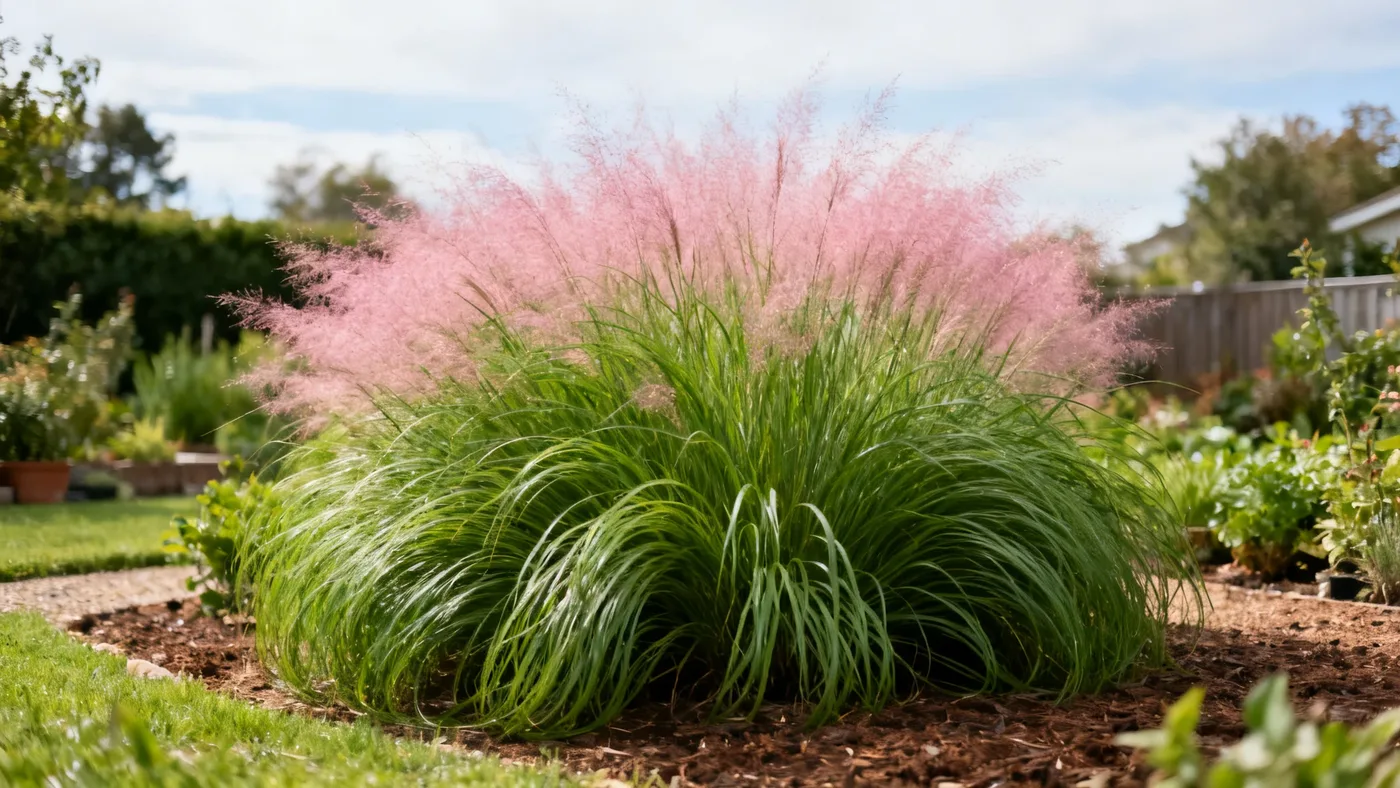
Watering Pink Muhly Grass: Establishment Through Maturity
Pink Muhly Grass transitions from a thirsty newcomer to a drought-tolerant perennial over its first two growing seasons. The key is understanding what your plant needs at each stage: aggressive watering during establishment, then a gradual shift toward less frequent irrigation as the root system deepens. Get this sequence right, and you'll build a resilient plant that thrives on rainfall alone once mature. Miss it, and you risk either stunting growth or creating conditions that invite root rot.
Why Watering Strategy Matters for Pink Muhly Grass
Pink Muhly Grass is remarkably adaptable to a wide range of soil types: sand, loam, or clay. But all of them share one non-negotiable requirement: good drainage. The plant's native range spans the southeastern and eastern United States from New Jersey and Massachusetts south to Florida and west to Texas and Kansas. In that geography, the grass experiences both humid growing seasons and dry spells. Your job as a gardener is to simulate that pattern without letting the soil stay soggy.
The common mistake is treating newly planted Pink Muhly Grass the same way you water an established clump. A young plant has a shallow, compact root system; an established plant (usually by year 2 to 3) has roots that reach deeper into the soil and can draw on moisture reserves you can't see. Watering habits that work perfectly for a three-year-old clump will actually waterlog a six-week-old transplant.
What You'll Need Before You Start
- Established or container-grown Pink Muhly Grass plant
- Drip irrigation hose or soaker line (optional but recommended)
- Mulch (2 to 3 inches, compost or shredded bark)
- Soil moisture meter or your finger (to check dryness)
- Watering can or hose with a gentle spray nozzle
- Note-taking system to log first-season watering dates
Watering During Establishment: Year One
Pink Muhly Grass can be planted in spring or fall, as long as the ground is workable in your USDA zone (6 through 9 for most cultivars). The establishment phase is your most critical window. A newly planted clump has a root system confined to a small footprint, usually the size of its nursery container. It cannot access moisture beyond that zone and will dry out faster than you'd expect.
Step 1: Water Immediately After Planting
Thoroughly water the planting hole and the surrounding soil right after you set the plant in the ground. Water until the soil is visibly moist 2 to 3 inches down; this settles the soil around the roots and eliminates air pockets. Do not oversaturate. The soil should feel like a wrung-out sponge, not like soup.
Step 2: Establish a Regular Watering Schedule for Weeks 1-4
For the first month after planting, check soil moisture every 2 to 3 days. Water when the top 1 inch of soil feels dry to the touch. In spring, this might mean watering twice a week; in fall or cooler weather, once weekly may suffice. The frequency depends on your local rainfall, sun exposure, and soil type. Sandy soil dries faster than clay. Full-sun sites lose moisture more quickly than part-shade locations.
Use a gentle spray or drip irrigation rather than a hard stream. A harsh spray can damage young foliage and expose roots. Apply water at the base of the plant, not overhead, to reduce fungal problems and direct moisture where roots need it.
Step 3: Extend Watering Intervals Gradually (Weeks 5-12)
Once your Pink Muhly Grass shows new growth (usually 3 to 4 weeks in), the root system is beginning to expand. Continue checking soil moisture, but you can reduce frequency slightly. Aim to water when the top inch of soil dries out, but allow the soil to dry a bit more each week. This pattern encourages roots to grow deeper in search of water. By week 8 to 12, you should be watering once per week or every 10 days, depending on conditions.
The goal is to avoid waterlogging while still providing consistent moisture. Soggy soil invites fungal diseases and root rot, which is one of the plant's few serious problems on poorly drained sites.
Step 4: Switch to Rain-Checking by Month 4-6
By the midpoint of the first growing season, your Pink Muhly Grass has begun to establish a deeper root network. Supplemental watering should now follow a rain-check method. Water only if your area receives less than 1 inch of rain per week during the growing season. Check your local weather data or a rain gauge. If rainfall is adequate, skip that week's watering entirely.
This approach weathers your plant to seasonal rainfall patterns and prevents over-reliance on irrigation. Stop supplemental watering before the first hard frost (this varies by zone, but typically September to October in zones 6-7, October to November in zones 8-9). Let the plant go into dormancy with soil that's dry to moderately moist, not waterlogged.
Transition to Maturity: Year Two and Beyond
Pink Muhly Grass typically reaches noticeable bloom by year 2 and full mature clump size by year 2 to 3. A mature clump is 2 to 3 feet wide in foliage and 3 to 4 feet tall when the pink plumes emerge in late summer and fall. At this stage, the root system has deepened considerably, and the plant's drought tolerance kicks in fully.
Step 5: Establish Drought-Tolerant Watering in Year 2
Once your Pink Muhly Grass is established, reduce supplemental watering significantly. The plant is classified as having high drought tolerance once established, meaning it can survive on rainfall alone in most growing climates. Begin year 2 by watering only during extended dry spells (more than 2 weeks without rain). Then, further reduce to emergency-only watering by mid-season.
If your region typically receives 30 inches of rain annually or more, you may not need to water at all after establishment. If your region averages less than 20 inches annually, occasional deep watering during drought can support stronger growth, but it is not necessary for survival.
Step 6: Deep Watering for Stressed Plants (Optional)
If a mature Pink Muhly Grass shows visible wilting or stunted growth during a severe drought, give it one deep watering: apply water slowly at the base of the plant until the soil is moist 6 to 8 inches down. This typically requires 10 to 15 minutes of steady watering from a soaker hose or drip line. Then, wait at least 2 to 3 weeks before watering again. This infrequent but thorough approach promotes deep rooting and teaches the plant to be self-sufficient.
Step 7: Monitor After Bloom Fade
Pink Muhly Grass blooms typically appear from September through November (timing varies by region and latitude). After the plumes fade and foliage begins to bronze with cold, discontinue watering and let the plant enter dormancy dry. Do not cut back the foliage until late winter or early spring before new growth emerges; the dried stems and seed heads provide winter interest and shelter for wildlife.
Soil Preparation and Drainage: The Foundation
Successful watering starts before you plant. Pink Muhly Grass adapts to a wide pH range (roughly 5.5 to 7.5) but demands good drainage in any soil type. If your site has clay soil that holds water, amend it with 2 to 3 inches of compost worked in before planting. If soil is very compacted, break it up to 8 to 10 inches deep. Well-draining soil is non-negotiable; no amount of careful watering can overcome a site where water sits.
Apply 2 to 3 inches of mulch around the base of newly planted Pink Muhly Grass, keeping mulch a few inches away from the crown of the plant. Mulch conserves soil moisture and moderates soil temperature, reducing watering frequency slightly during hot spells.
Common Watering Mistakes and How to Avoid Them
Overwatering Young Plants
The most frequent error is keeping the soil too wet during year one. Pink Muhly Grass is not a bog plant. Daily or every-other-day watering in the first weeks often causes root rot, fungal foliage diseases, or a weak, floppy plant that never develops structural integrity. Water deeply but infrequently, and let the top inch of soil dry between waterings.
Ignoring Soil Drainage at Planting Time
If your site drains poorly and you skip soil amendment, no watering schedule will save the plant. Soggy soil is one of the few conditions that seriously harms Pink Muhly Grass. Always test drainage by digging a hole, filling it with water, and seeing how fast it drains. If water is still standing after 2 hours, that site needs drainage work.
Watering Established Plants Like Year-One Plants
Once your Pink Muhly Grass is 2 to 3 years old, it rarely needs supplemental water beyond natural rainfall. Continuing to water weekly or twice weekly at that stage is wasteful and can encourage floppy, weak growth. Let established plants rely on rainfall; water only during genuine drought.
Watering Overhead Onto Foliage
Overhead watering wets the foliage, which can promote fungal diseases and does not deliver water efficiently to roots. Use drip irrigation or soaker hoses, or water at the base with a gentle spray directed at the soil.
Expected Results and Timeline
With consistent watering during establishment and a shift to infrequent watering thereafter, you can expect the following progression:
- Weeks 1-4 after planting: New growth emerges; foliage deepens in color. Plant may look fragile but should not collapse if watering is consistent.
- Months 2-6 (First year): Clump expands noticeably. Plant growth is typically 6 to 12 inches in the first season, depending on variety, sun, and soil quality.
- Year 2: First noticeable bloom often appears; clump width approaches 1.5 to 2 feet. Foliage is fuller and more upright.
- Year 2-3: Full mature clump size is reached; bloom production is robust; drought tolerance is established.
These timelines assume adequate sun (full sun to light shade). Plants in heavy shade may take longer to reach full size and may produce fewer or less colorful plumes.
Connecting Watering to Other Care
Watering is one piece of Pink Muhly Grass care, but it works hand-in-hand with pruning, soil management, and sun exposure. For a complete overview of year-round care, see The Complete Pink Muhly Grass Care Guide for Every Season, which covers fertilizing, cutting back, and seasonal maintenance alongside watering.
Quick Reference: Watering Schedule for Pink Muhly Grass
| Stage | Frequency | Soil Moisture Check | Special Notes |
|---|---|---|---|
| Weeks 1-4 (Newly planted) | Every 2-3 days or when top 1 inch is dry | Should feel like a wrung-out sponge | Use gentle spray or drip line; no overhead |
| Weeks 5-12 (Early establishment) | Every 7-10 days; reduce frequency gradually | Allow top 1-2 inches to dry slightly | Encourage deeper rooting; watch for overwatering signs |
| Month 4-6 (Late first season) | Only if less than 1 inch rain/week | Rain gauge method; skip if rainfall adequate | Stop before first frost; let plant go dormant dry |
| Year 2 and beyond (Established) | During extended dry spells (2+ weeks no rain) only | Visual signs of wilting or drought stress | Deep watering (6-8 in. depth) if needed; then wait 2-3 weeks |
| Mature plant (Year 3+) | Rainfall only; rarely any supplemental water | High drought tolerance once established | High salt tolerance makes it ideal for coastal/dry sites |