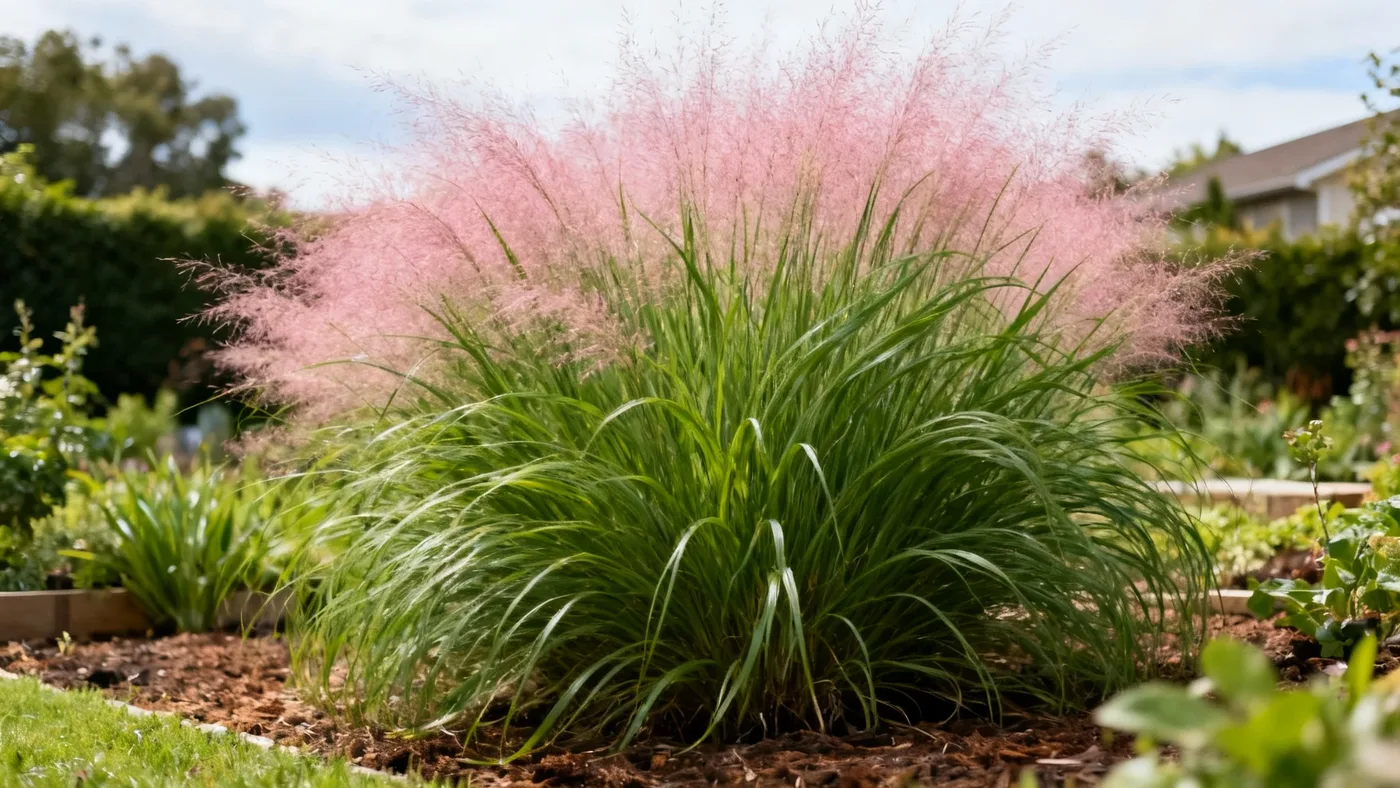
Is Pink Muhly Grass Drought Tolerant? Heat and Dry Soil
Yes, Pink Muhly Grass is highly drought tolerant once established. This native ornamental grass thrives in heat and dry soil, making it an excellent choice for xeriscape gardens, coastal landscapes, and properties where water conservation matters. The catch is the first growing season: you need to get the plant through its establishment phase with consistent moisture. Once the root system is mature, Pink Muhly Grass handles drought with confidence.
This guide walks you through maximizing the plant's drought tolerance, from site selection through long-term low-water maintenance.
Understanding Pink Muhly Grass and Drought Tolerance
Pink Muhly Grass (Muhlenbergia capillaris) is native to the Southeastern and eastern United States, from New Jersey and Massachusetts south to Florida and west to Texas and Kansas. This native range tells you something important: the plant evolved in climates with seasonal dry spells and hot summers. It is adapted to survive and thrive with irregular rainfall.
The plant's fine-textured, wiry foliage is built for drought survival. The narrow leaf blades minimize water loss through evaporation, and the deep, fibrous root system pulls moisture from lower soil layers that shallow-rooted plants cannot reach. Once those roots develop, the grass can go weeks without supplemental water in most climates.
Pink Muhly Grass also tolerates high salt, which makes it valuable in coastal gardens where salt spray accelerates soil salinity. This same toughness translates to handling the osmotic stress of dry conditions.
Step 1: Choose a Location with Full Sun and Good Drainage
Drought tolerance depends on site conditions. Pink Muhly Grass needs full sun to light shade, with best results in full sun. Light is not negotiable here: in shade, the plant grows slower, produces fewer blooms, and becomes more prone to floppy growth. This matters for drought tolerance because more vigorous foliage with stronger root development handles water stress better.
Equally important is drainage. Pink Muhly Grass adapts to sand, loam, or clay, but it must have good drainage. Soggy soil kills the plant faster than dry soil ever will. In poorly drained spots, the roots rot even if you water less. Choose a location where water does not pool after rain.
If your site has heavy clay, you have two options: amend the soil before planting (see Step 2), or choose another location. Standing water is the enemy of drought-tolerant grasses.
Step 2: Prepare the Soil for Drainage and Root Development
Good soil preparation early on sets up the plant for years of low-maintenance success. You are not creating special soil; you are removing barriers to root growth.
For sandy or loamy soils: Work the planting hole to the full width of your plant's root ball, at least 18 inches in diameter. No soil amendment is usually needed. Just break up compacted soil and backfill with native soil.
For clay soils: Dig a hole 2 to 3 times wider than the root ball. If clay is dense and sticky, mix the backfill with 25 to 50 percent coarse sand or grit to improve drainage in the immediate root zone. Do not amend the entire surrounding area, which can trap water around the roots. The plant will eventually grow into native soil as roots expand outward.
For all soils: Set the plant so the soil line on the stem matches the ground level. Do not plant deeper. Planting too deep invites collar rot.
Step 3: Water Regularly to Establish Roots (Spring or Fall Planting)
This is the critical phase. A newly planted Pink Muhly Grass takes 2 to 3 years to reach mature size (2 to 3 feet wide and 2 to 3 feet tall in foliage, or 3 to 4 feet including blooms). The root system is building during this window, and consistent moisture speeds establishment.
Water newly planted grasses deeply but not constantly. After planting in spring or fall, water thoroughly so the soil is moist to a depth of 6 to 8 inches. Check the soil 2 to 3 days later: if the top inch is dry but the soil below remains moist, you are on track. In the first month, aim to keep the soil consistently moist but never soggy.
Frequency depends on climate and season. In hot, dry weather, you may water twice a week. In cool spring or after rain, you might skip a week. The goal is to prevent the soil from drying completely while avoiding waterlogged conditions.
After the first season (roughly 12 months), the plant is established enough to be more tolerant of dry spells between waterings. You can reduce frequency. By year 2 to 3, the grass should handle drought as designed.
Step 4: Transition to Low-Water Maintenance Once Established
Once Pink Muhly Grass is established, it thrives on low to moderate water. In most climates, rainfall alone is sufficient for mature plants. In arid regions or during extended droughts, occasional deep watering (every 3 to 4 weeks) keeps the grass looking vigorous.
The transition happens gradually. You are not flipping a switch; you are slowly reducing supplemental watering as the root system matures. If you planted in spring, reduce frequency by mid-summer of the second year. If you planted in fall, start tapering back the following summer.
Monitor the foliage. Healthy, drought-tolerant Pink Muhly Grass does not wilt noticeably under moderate drought. The foliage stays firm and upright. If leaves begin to look dull or droopy during the growing season (late spring through early fall), water deeply.
Step 5: Avoid Overfertilizing and Overwatering
Two mistakes kill the drought-tolerance advantage: fertilizing too much and watering too much.
Pink Muhly Grass is a light feeder. A light application of balanced fertilizer in spring is optional. Do not apply more than that. Heavy feeding causes the plant to grow excessively soft foliage that is water-hungry, dense, and prone to floppy growth. The plant becomes less resilient to drought.
Similarly, regular overhead watering or frequent irrigation keeps soil constantly moist, which encourages shallow roots and weakens the plant. Once established, the goal is to rely on the plant's natural drought tolerance, not fight against it with supplemental water.
What to Expect in Different Climates
Pink Muhly Grass thrives in USDA zones 6 to 9, though some sources include zones 5b and 10. In zones 6 to 7 (cooler regions), the plant is fully cold-hardy and reliable. In zones 8 to 9 (hotter regions), it performs exceptionally well, since heat and drought are the conditions it loves.
In cooler climates, expect slower growth. The plant may take 3 years to reach full size instead of 2. Fall and early winter bloom is reliable, and winter seed heads persist through spring if you leave them uncut, providing structure and bird habitat.
In hot, arid climates (zones 9, or high-elevation zones 8), the plant establishes faster once roots are set. Heat does not stress it. Drought is not an issue once the grass is 2 years old.
Common Mistakes That Reduce Drought Tolerance
Planting in shade: Weak growth and poor root development. Move to full sun if possible.
Planting in clay without amendment: Waterlogging around the roots. Amend or replant in a better-draining spot.
Overwatering the established plant: Encourages shallow roots and disease. Water only during extended dry spells.
Overwatering during establishment: The opposite mistake: soggy conditions rot the plant before roots develop. Let the top inch of soil dry between waterings.
Mixing fertilizer with water: Soft, weak growth that is more vulnerable to stress. Keep fertilizer minimal.
Ignoring drainage: A wet site will kill Pink Muhly Grass regardless of drought tolerance. Fix drainage first.
How Long Does Establishment Take?
A container-grown Pink Muhly Grass planted in spring reaches mature size by fall of year 2 or early year 3. Growth is moderate: roughly 6 to 12 inches per year until the plant fills out. You may see first noticeable blooms in year 1 (especially if planted in spring), but full, abundant bloom typically comes in year 2 and beyond.
The key milestone is when watering can drop to rainfall and occasional deep watering. This typically occurs 12 to 18 months after planting, depending on climate and initial soil conditions.
Quick Reference: Establishing and Maintaining Pink Muhly Grass in Drought Conditions
| Phase / Condition | Action | Timeline |
|---|---|---|
| Site selection | Full sun, well-draining soil (sand, loam, or amended clay) | Before planting |
| Soil prep | Widen planting hole; add coarse sand or grit to clay (25-50 percent) | Before planting |
| Establishment watering | Moist soil, not soggy; check depth 2-3 days after planting | Months 1-6 after planting |
| Early maturity | Reduce watering frequency; plant tolerates dry spells | Months 7-18 after planting |
| Mature plant | Rainfall sufficient; deep water only during drought (every 3-4 weeks) | Year 2 onward |
| Fertilizer | Light application in spring only; avoid excess | Year 1 and beyond |
| Annual pruning | Cut back to 4-6 inches in late winter or early spring | Late February to early April |
Pink Muhly Grass is a rewarding choice for gardeners who want an ornamental plant that thrives on neglect once established. The upfront investment of consistent watering during year 1 pays dividends for years to come. For more information on year-round care, see the complete Pink Muhly Grass care guide for every season.