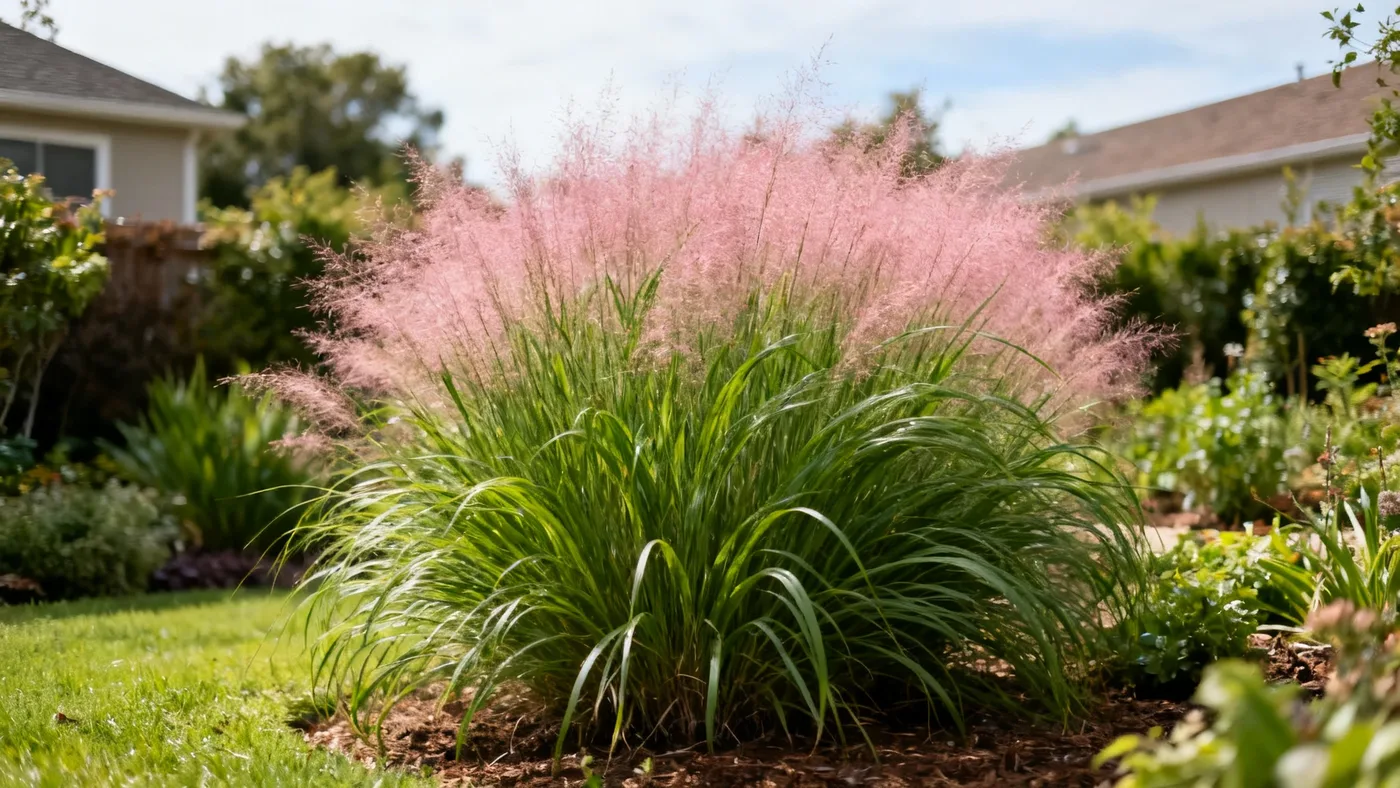
Best Soil for Pink Muhly Grass: Drainage and pH Needs
Pink Muhly Grass (Muhlenbergia capillaris) is one of the most reliable ornamental grasses for home gardens, but its success depends more on soil conditions than on any other factor. Unlike plants that struggle in poor soil, Pink Muhly Grass actually adapts to a range of soil types. What it won't tolerate is standing water. This guide walks you through testing, amending, and preparing the perfect soil for this stunning fall-blooming grass.
What Pink Muhly Grass Soil Needs
Pink Muhly Grass has straightforward soil requirements. The plant grows in sand, loam, or clay, which means your existing garden soil is likely workable. The true requirement is drainage. The plant is adaptable to soil pH ranging from roughly 5.5 to 7.5 (acidic to slightly alkaline), so pH rarely becomes an issue in home settings.
The real concern is moisture. Pink Muhly Grass is drought-tolerant once established, but root rot in soggy soil is the primary cause of plant failure. Poor drainage leads to fungal disease, compacted root systems, and premature decline. Even a plant that looks healthy above ground can be rotting below the soil line.
The good news: if your soil drains at all, you can grow Pink Muhly Grass. If your soil is heavy clay or tends to stay wet, amendments are straightforward and affordable.
Understanding Your Current Soil
Before you amend anything, know what you're working with. Soil texture (the ratio of sand, silt, and clay) and drainage rate determine how much work you'll need to do.
Conduct a simple drainage test. Dig a hole 12 inches deep and 6 inches across at your planting site. Fill it with water and time how long it takes to drain. If water drains within a few hours, you have adequate drainage. If water sits for more than 8 hours, you have a drainage problem that needs addressing.
Check soil texture by feel. Take a handful of moist soil and squeeze it. Sandy soil falls apart. Loam holds together loosely. Clay holds a tight ball. Most home gardens are loam or clay. Loam drains naturally. Clay needs amendment.
Observe your yard after rain. Do puddles form at the planting site? Does grass look waterlogged? These visual cues matter more than any test. Pink Muhly Grass performs best in spots where water doesn't linger after heavy rain.
Materials and Amendments You'll Need
For a single Pink Muhly Grass plant, gather these materials:
- Compost (3 to 5 gallons; aged, finished compost, not fresh bark mulch)
- Coarse sand or perlite (2 to 3 gallons if your soil is clay-heavy)
- Peat moss or coconut coir (1 to 2 gallons, optional but recommended for clay soils)
- A soil pH test kit (optional, but useful if you suspect extreme pH)
- A spading fork or sharp shovel
- Mulch (2 to 3 inches after planting; pine bark, shredded hardwood, or compost)
For mass plantings (3 or more plants spaced 18 to 36 inches apart), calculate amendments per square foot and scale accordingly.
Step-by-Step Soil Preparation Guide
Step 1: Test drainage at the site.
Dig your test hole to the full depth you'll plant (usually 12 to 15 inches for a container-grown Pink Muhly). Fill with water. Record the time. If it drains in under 4 hours, skip to Step 3. If it drains between 4 and 8 hours, proceed to Step 2. If water remains after 8 hours, you must amend before planting.
Step 2: Amend clay or compacted soil.
If your soil is clay or clay-loam, loosen it by digging to at least 15 inches deep over a circle 12 inches wider than the root ball. Work in 2 to 3 gallons of coarse sand or perlite and 1 to 2 gallons of peat moss or coconut coir. Do not simply fill the planting hole with amendments. Instead, amend the surrounding soil so roots can move freely into native soil as they grow. This prevents the "bathtub effect" where roots stay trapped in amended soil that sits atop clay.
Step 3: Test and adjust pH if needed.
Use a home soil test kit or send a sample to your local extension service. Pink Muhly Grass tolerates 5.5 to 7.5 pH. If your test shows pH below 5.0 (very acidic), add agricultural lime at the rate recommended on the package. If pH is above 8.0 (very alkaline), add sulfur. Most home soils fall within the tolerable range. If you're unsure, skip this step. The plant will adapt.
Step 4: Prepare the planting hole.
Dig a hole as deep as the root ball and 1.5 times as wide. Loosen the sides and bottom of the hole with a fork. If you amended in Step 2, this will be much easier. Place the plant so the top of the root ball sits level with the soil surface. Do not bury the crown.
Step 5: Backfill with amended soil.
Use the native soil from the hole, mixed with 30 percent finished compost by volume. For clay soil, mix in 10 to 15 percent sand or perlite as well. Backfill gently but firmly, eliminating large air pockets without compacting. Water as you backfill to settle the soil.
Step 6: Mulch and water in.
Apply 2 to 3 inches of mulch around the base, keeping it 2 inches away from the crown to prevent rot. Water the area deeply once or twice per week for the first 4 to 6 weeks. This helps roots establish. Once established (typically by late fall in the year of planting), reduce watering frequency dramatically. The plant will thrive on rainfall alone in most regions.
Tips for Different Soil Types
Sandy soil: Pink Muhly Grass grows well in sand, but drainage is so fast that the plant may need supplemental water in hot, dry summers. Work in 1 to 2 gallons of compost at planting time to improve water retention. Mulch to conserve moisture.
Loam: You have ideal soil. Amend lightly with 2 to 3 gallons of compost and proceed with confidence.
Clay soil: This is the challenge. Follow Step 2 carefully. Do not skip it. Amending only the planting hole traps roots in clay. Loosen and amend a larger area. If the site has a history of standing water, consider creating a raised bed or mound so the plant sits higher.
Coastal or salty soil: Pink Muhly Grass handles salt well. No special amendment is needed. Drainage remains the priority.
Common Mistakes to Avoid
Over-mulching. Mulch is helpful, but too much suffocates the crown and encourages rot. Stick to 2 to 3 inches, kept 2 inches away from the base.
Amending only the planting hole. Roots need to grow beyond the amendment. Amend the surrounding soil to help roots transition into native soil as they expand.
Adding too much fertilizer. Pink Muhly Grass is a light feeder. Over-fertilizing causes floppy, weak growth that fails to stand upright. Skip fertilizer at planting time.
Planting in shade. While the plant tolerates part shade, bloom color fades and growth becomes sparse in low light. Full sun sites produce the best color and strongest plants.
Ignoring seasonal drainage. A site that drains well in summer might stay wet in spring. Observe the site through a full year before planting if possible.
Expected Results and Timeline
Pink Muhly Grass typically shows first noticeable bloom in year two and reaches mature size (2 to 3 feet wide) by year 2 to 3. With good drainage and proper soil amendments, you can expect a plant that stands upright without staking, produces airy pink plumes from September to November (exact timing varies by region and latitude), and persists as a long-lived perennial for 10 or more years.
Plants in compacted or poorly drained soil may appear stunted, show sparse bloom, or decline within a few years. Proper soil preparation at planting time prevents these outcomes.
For comprehensive seasonal care after planting, see our complete guide to year-round Pink Muhly Grass care.
Quick Reference: Soil Preparation Checklist
| Step | Task | Timeframe |
|---|---|---|
| 1 | Test drainage at site | Before planting |
| 2 | Amend clay or compacted soil if needed | 1-2 weeks before planting |
| 3 | Test pH if you suspect extremes | Before planting |
| 4 | Dig planting hole 1.5x root ball width | Day of planting |
| 5 | Backfill with 30% compost mix | Day of planting |
| 6 | Apply 2-3 in mulch, water deeply | Day of planting |
| 7 | Water weekly for 4-6 weeks | Weeks 1-6 after planting |
| 8 | Resume normal watering (rainfall) | Month 2 onward |