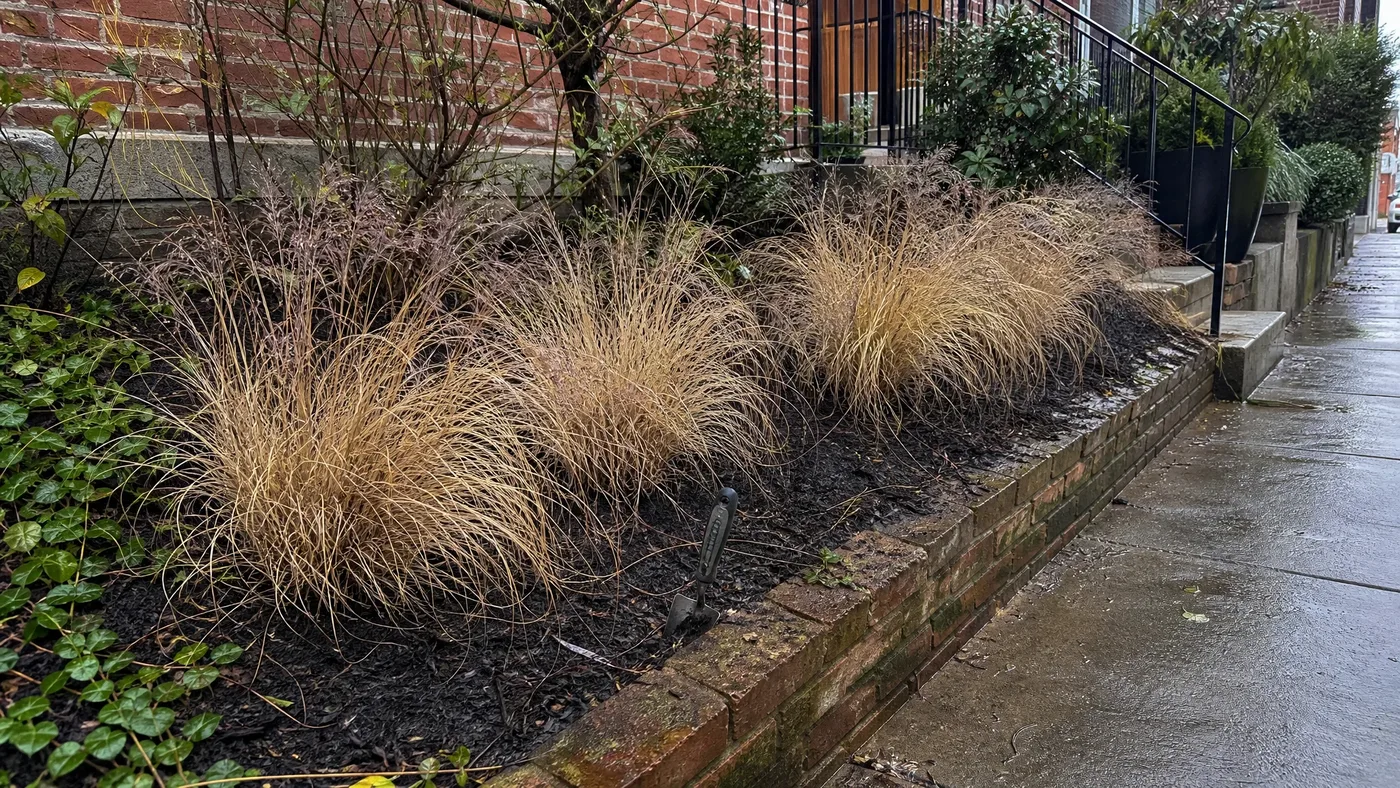
Pink Muhly Grass for Slopes, Erosion Control and Coastal Sites
Plant a hillside with pink muhly grass on the strength of a tag, and the first hard rain can show you the result. Clumps sit on little pedestals of soil, roots show on the downhill side, and bare channels run between them. On a salt-sprayed corner, the leaves brown by midsummer and the plant sulks for a year. Nursery tags call this grass a soil-holder. A skeptic should ask what that claim rests on before anyone plants a bank with it.
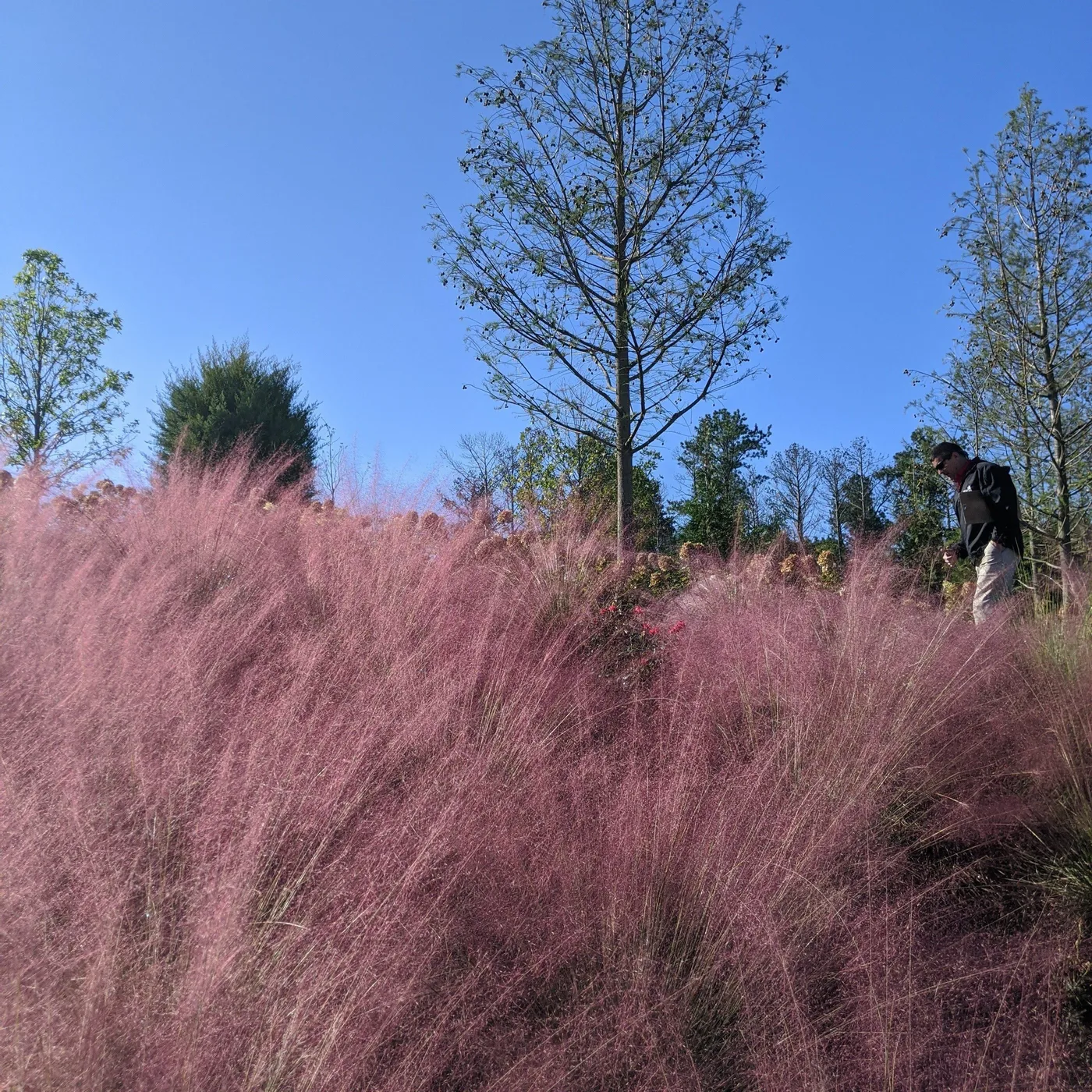
We'll walk you through four yard situations, a steep bank, a pool-deck strip, a driveway edge and a coastal corner lot, with a rain garden dip in between, then sort out which claims held up and which need backup. Some of what you hear has extension research behind it. Some of it is optimism. The plant is excellent at its real job, and it works best when you know what that job is.
A Steep Backyard Bank Tested Against the Claims
Start with what the sources actually say. Muhly grass is a rain garden plant that works well in poor soils as a groundcover and can be used to prevent soil erosion. That is a statement of use. No source we trust gives a slope angle, a root depth or a soil loss figure, so treat "soil-holder" as a reasonable expectation rather than a measured result.
What the Roots Can and Cannot Do
The roots are fibrous, so they knit the top layer of soil, and that helps against surface wash. Pink muhly is also a bunchgrass that does not spread by rhizomes. Each clump holds its own footprint, about 2 to 3 feet across at maturity, and the soil between clumps stays bare until you cover it. Growth is medium, so the first season or two is the weak window.
The roots will not fix a slope that is already slumping, a bank of loose fill, or a grade steeper than your local extension service says plants alone can handle. Ask them for that limit. One of the most common questions we get is whether a few plants will stop a washout. They will not, not in the first year.
After the first big storm, walk the bank and read it. Fine silt fanned out below a clump means the plant is doing its job. Soil stripped from the uphill side of a crown means water is arriving faster than a young plant can slow it, and that spot needs matting or a shelf cut above it.
Planting the Bank Step by Step
Plant on the bank like this, and give the grass help while the roots catch up.
- Confirm the bank gets 6 or more hours of direct sun. Shade thins the clumps and thin clumps hold less.
- Cover the bare soil between planting spots with mulch or erosion matting before the first storm, not after.
- Stagger the clumps in rows across the slope, never straight down it, so water meets a plant at every level. Use the spacing guide to set distances so mature clumps meet.
- Set each crown level with the soil and shape a small shelf on the uphill side to catch water.
- Water through the first season using the establishment schedule, then stop babying it.
We grow and sell this grass, so we have a stake here. We would still rather you plant a test patch than a whole bank on faith.
A Pink Muhly Grass Strip Beside the Pool Deck
A pool-side strip raises three questions: splash, chlorinated water and reflected heat. Heat is the easy one. NC State says muhly grass tolerates heat, humidity, drought, and poor soil and is highly salt-tolerant, and it wants full sun anyway. A concrete deck bouncing light onto it is close to its preferred conditions.
Splash and Chlorinated Water
Here the evidence runs out. The salt tolerance in the sources covers sea spray and road salt, and none of them measures pool water. If your pool uses salt, the salt tolerance is a fair sign but not proof. For chlorine, we would call it untested. Keep clumps out of the splash line, and let rain or a hose rinse the leaves after heavy splashing.
Watch the plant for the first season. Tips that brown on the pool side only, while the rest of the clump stays green, point to splash. Move the clump back or add a few inches of space before you blame anything else.
Fitting the Strip
Width is the real constraint. The plant reaches 2 to 3 feet across and can stand taller than that in bloom, so a narrow strip takes one row of clumps, set so they do not crowd the deck edge. Drainage matters more than people expect. Sites with good drainage are preferred, so do not plant where overspray pools against the deck footing.
Cut the clumps back in winter, before new growth starts, so old blades do not blow into the water. The cutting guide has the timing. The fall plumes then reach their peak while the pool is still in use, which is the reason to plant here at all.
Driveway Runoff and Pink Muhly Grass Edges
Does a clump really slow water? A little, and only when the water arrives as a thin sheet. A clump creates friction and a pocket where the flow spreads and drops sediment. A concentrated stream off a downspout or a sloped apron simply finds the gaps between clumps. Our verdict: pink muhly is a filter strip along the edge, not a dam.
Salt, Heat and Snow Piles
This is where the plant earns its reputation. Missouri State's horticulture notes describe it as tolerant of salt, both sea spray and road salt/ice melter. Add the heat tolerance and a strip between hot pavement and lawn is a fair test of its toughness. De-icer reaches the bed mainly as snowmelt, and clumps in the path of that meltwater should cope.
Plow piles are different. Heavy snow dumped on a clump flattens the crown, and plowed gravel buries it, so plant well back from where the plow throws.
Building the Edge
Plant two staggered rows if the strip is wide enough, and keep the clumps close enough that mature plants touch. Fill the gaps with mulch the first season. If runoff pours in from a fixed point, fix that with a swale, a splash block or a rock apron first, and let the grass edge the result. The drought guide covers how the plant handles baked, dry strips once it is established.
A Rain Garden Dip Where Water Sits
Muhly grass turns up on rain garden plant lists, so people assume it can live anywhere water collects. The sources are mixed. UF/IFAS credits it with extreme tolerance to drought and flooding, and says that suits wetland sites. Clemson adds that some Muhlenbergia species and cultivars handle wet conditions better than others, and still prefers good drainage.
Where in the Dip to Plant
Our reading: put it on the side slopes and the upper rim, not in the lowest point. Water that drains within hours is fine for it. Standing water for days after every storm is a poor bet, and the bottom of a dip is exactly where that happens. Let a sedge or a rush take the wet center.
The rim is also where the grass does its best erosion work. Inflow slows as it spreads through the clumps before it drops into the basin, and the foliage shades the soil that would otherwise crust and seal over.
Keeping the Dip Working
Flooding tolerance does not mean the plant wants wet feet while it is young. Water new clumps by hand until they root in, even in a spot built to hold storm runoff. Cut the grass back each winter so debris does not smother the next flush of growth, and rake sediment from the clump bases if silt builds up. Silt that buries the crown does more harm than the water.
If your dip stays soggy for weeks, test it with one clump first. It will tell you in a season what no tag can.
Salt Spray on a Windy Coastal Corner Lot
Sort proven tolerance from nursery optimism, because the sources do not agree. NC State calls the plant highly salt-tolerant. On the coast, though, it rates only moderate, meaning it can grow near the beachfront but is sheltered by higher salt-tolerant plants, structures, or sand dunes. We side with the cautious reading for anything facing open water.
What Is Proven
The plant belongs on the coast. It is native to beach dunes and coastal uplands, and it is often found in inter-dune swales. It takes sand, loam and clay, acidic or alkaline. Poor, sandy ground is not a problem, and a coastal lot's lean soil suits it.
What Is Optimism
Wind is where the tags get vague, and the sources give no wind rating. We expect the airy plumes to lean and tangle in constant gales, though the clump stays rooted. The tag that says "salt tolerant" does not mean "front-row". Plant it on the lee side of a fence, house, or dune plantings, and let tougher beach plants take the first hit.
Setting Up the Corner
Mulch matters more here than on inland sites, because sandy ground dries and blows. Spread a layer around young clumps and keep it in place until they fill out. Fast drainage also changes how often young plants need water, so read the soil guide before you plant sandy ground. Then trust the coastal reputation, but verify it on your own lot first.
What Pink Muhly Grass Can and Cannot Hold
Here is the scorecard from the situations above. We rate each claim by what the sources support and what we would add so the planting does not rely on the grass alone.
| Claim | Verdict | Backup we would add |
|---|---|---|
| Holds soil on a slope | Holds on gentle to moderate banks once established | Mulch or matting between clumps for the first seasons |
| Slows runoff | Slows thin sheet flow only | Swale, rock apron or splash block at fixed inflow points |
| Handles road salt | Supported | Keep out of plow throw |
| Handles ocean spray | Supported, with a shelter caveat | Plant behind a fence, structure or dune plants |
| Handles standing water | Mixed, drainage still preferred | Plant the rim, not the lowest point |
| Handles pool splash | Untested for chlorine | Keep out of the splash line and rinse after heavy use |
Where It Should Not Be the Only Fix
Do not rely on the grass alone for a bank that is actively sliding, a grade past your extension service's limit, a gully already cut by water, or fill that sits on top of a retaining problem. For those, bring in grading, structure or a professional first, then add the grass as a surface layer.
Pink Muhly Grass as One Part of a Slope Plan
Treat the plant as one part of a slope plan. The roots protect the top layer, the clumps slow thin flows, and the tolerances for heat, road salt and sandy soil are real. Mulch, matting and sound drainage do the rest.
Plant a small test patch and watch it through one wet season before you commit a whole hillside. Trust what the plant does on your ground over what the tag says.
Pink Muhly Grass
Nursery-grown Pink Muhly Grass in sizes from 1 GALLON, shipped to your door.
From $78.94
Shop Now →Slopes are tough ground, and Pink Muhly Grass is raised the same way on our farms, in full sun and well-drained beds. We are a small business with our own farms, growing the quality plants we sell from start to finish. When you have a hillside, bank or coastal strip in mind, we would be glad for you to come take a look.