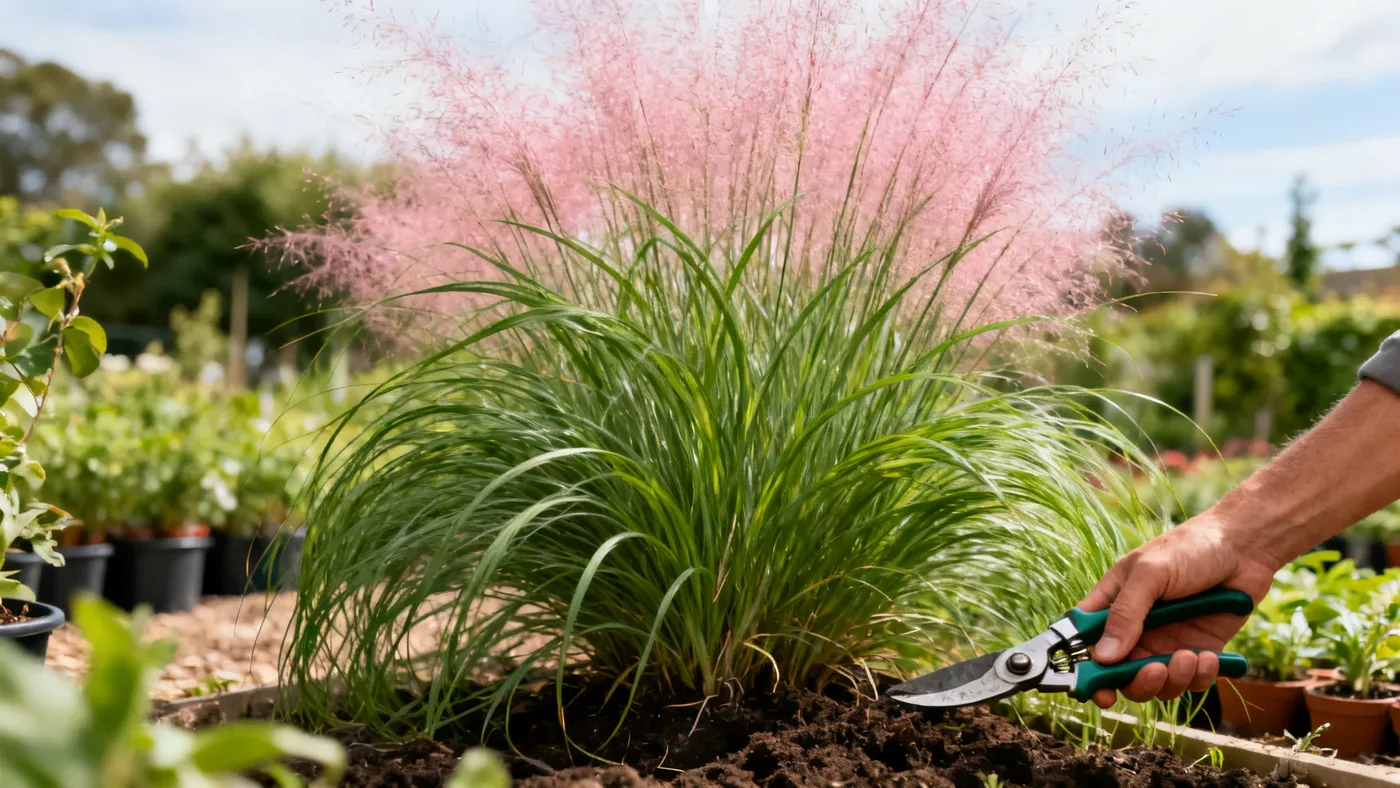
When and How to Cut Back Pink Muhly Grass Each Year
Pink Muhly Grass rewards you with stunning fall color and winter texture, but only if you cut it back at the right time and the right way. This warm-season ornamental grass builds its strength through late spring and summer, flowers in September through November depending on your location, and holds its tan seed heads through winter for months of visual interest. The catch: one poorly timed cutback in fall can wipe out your entire bloom show and winter landscape value.
This guide walks you through the precise timing, tools, and technique that experienced growers use to maintain healthy Pink Muhly Grass year after year.
What You'll Need
- Hand pruners or bypass shears for small plants or young clumps
- Hedge shears or a string trimmer (high blade setting) for larger, established clumps
- A heavy-duty garden knife or machete (optional, for very dense or overgrown plants)
- Gloves to protect your hands from sharp leaf blades
- Safety glasses (recommended when using power tools)
- A tarp or cloth to catch clippings if you're working in a small space
- A ruler or measuring tape to verify your cut height (4 to 6 inches)
Understanding Your Pink Muhly Grass Growth Cycle
Pink Muhly Grass is a warm-season perennial grass that begins active growth in late spring. It builds foliage through the summer months, forming a dense mound 2 to 3 feet tall. In late summer and early fall, typically September through November depending on your USDA hardiness zone, the plant sends up tall, airy plumes that start pink or reddish-pink and gradually fade to tan.
After frost arrives, the foliage and seed heads remain standing through winter. This dried plant material provides valuable habitat for overwintering insects and adds texture and visual appeal to the dormant garden. A plant left uncut through winter strengthens its crown and root system as it prepares for spring emergence.
In late winter or early spring, before fresh growth appears, you cut the plant back to restart the cycle. The key principle: prune after the plant has stored its reserves in the root system and before it wastes energy on new top growth.
The Best Time to Cut Back Your Pink Muhly Grass
Timing is the single most important factor in Pink Muhly Grass pruning. Cut too early, and you sacrifice fall color and winter interest. Cut too late, and new growth emerges before you finish, creating an unsightly, two-toned plant.
By Region and Hardiness Zone
Pink Muhly Grass thrives in USDA hardiness zones 6 through 9. The colder your zone, the earlier you should prune because frost arrives sooner. Here is a practical timeline:
- Zones 6 to 7: Prune in mid-March to early April
- Zones 8 to 9: Prune in late February to mid-March
If you are unsure of your zone or your local frost date, check your local cooperative extension office. They can give you a precise last-frost-date for your area and help you fine-tune the timing.
The Visual Cue
Even better than a calendar: wait until you see the first fresh green shoots emerging from the base of the plant. Some growers prefer to wait until these shoots are 1 to 2 inches tall. At that point, new growth is underway below, so cutting the old foliage will not delay the spring flush. The grass is simultaneously shedding the past year and building toward the new one.
The One Hard Rule
Never cut back Pink Muhly Grass in fall or early winter. Even if the plant looks messy after the bloom fades, leave it alone until late winter. Shearing in fall destroys the plumes and removes the dried foliage that provides winter interest and structural support to the clump.
Step-by-Step Cutting Back Instructions
Step 1: Choose Your Tool
For young plants or small clumps (less than 2 feet across), hand pruners or bypass shears work well. You can control the height precisely, and the work is quiet and meditative. For established clumps or groups of plants, hedge shears or a string trimmer on a high setting saves time and effort.
Whatever tool you choose, make sure it is sharp. Dull blades bruise the plant tissue, leaving ragged cuts that may not heal cleanly. A sharp cut encourages healthy regrowth.
Step 2: Assess the Clump
Stand back and look at the plant. Healthy Pink Muhly Grass forms a dense, uniform mound. If the center is thin or dead, or if the clump is much larger than 3 feet across, the plant may benefit from division after this pruning cycle. Make a mental note for spring planning.
Step 3: Set Your Cutting Height
Cut the plant back to 4 to 6 inches above ground level. This is the critical specification. Cutting lower damages the crown and the tender growing points. Cutting higher leaves dead, woody stem above the fresh growth, which looks shabby as the plant emerges.
If you are using a string trimmer, set the deck height to 5 inches and walk slowly. If you are using hand shears, cut a few stalks and measure with a ruler to verify your height before moving on to the entire plant.
Step 4: Cut Across the Entire Clump
Work systematically from one side of the plant to the other. Make your cuts at the same height as much as possible. The goal is a level, uniform stubble 4 to 6 inches tall. Do not scalp the plant or leave tall tufts. Even height ensures even regrowth.
Step 5: Remove the Clippings
Pink Muhly clippings are light and voluminous. Pile them on a tarp, in a large bin, or in a yard-waste cart. Do not leave them scattered around the plant, where they can smother new growth or harbor pests. If you have a chipper, the dried plant material chips nicely and makes a good mulch for acid-loving plants.
If the clippings are clean and pest-free, you can also layer them in a compost pile or add them to a leaf mold bin to break down over a season or two.
Step 6: Step Back and Verify
Once you have finished, stand back and look at the plant. You should see a stubble field of grass stems 4 to 6 inches tall. The plant will look quite short and bare, which is normal and correct. Within a few weeks, depending on weather and your zone, fresh green growth will emerge and fill the clump.
Tips for Success
- Prune on a calm day. The clippings are very light and will blow around in wind. A still morning makes cleanup easier and safer.
- Wear gloves. Pink Muhly leaves are fine and wiry but can be sharp. Gloves prevent small cuts and make the work more comfortable.
- Do not fertilize right after pruning. The plant does not need fertilizer to regrow. In fact, over-fertilizing causes floppy, weak growth later in the season. Wait until the new growth is 3 to 4 inches tall, then apply a light spring feeding if your soil is poor.
- Water after pruning if the weather is dry. The plant will appreciate moisture as it emerges. Once established, Pink Muhly is drought-tolerant and does not need supplemental water in most climates.
- Do not mulch over the crown. Some gardeners make the mistake of piling mulch around the newly pruned plant to hide the bare appearance. This can encourage rot and disease. Leave the crown bare to air-dry after cutting.
Common Mistakes to Avoid
Cutting back in fall or winter: This is the most common and costly error. The plant loses its plumes, winter interest, and structural support to new growth. The crown may also be exposed to frost damage. Wait until late winter, no matter how untidy the plant looks.
Cutting too low: Scalping the plant (cutting below 3 inches) exposes the crown and risks damaging the growing points. Regrowth will be slow and sparse.
Cutting too high: Leaving stems taller than 6 inches wastes the plant's energy on dead woody tissue that will eventually look scraggly or need a second pruning. Stick to the 4 to 6 inch target.
Using a powered hedge trimmer carelessly: A string trimmer or powered hedge shear can quickly remove too much plant or cut at uneven heights. Test your settings on a small area first, and move slowly.
Leaving clippings on the plant: Piled clippings can rot and introduce disease, especially if the spring is wet. Always remove them.
What to Expect After Cutting Back
Immediately after pruning, your Pink Muhly Grass will look sparse and somewhat unpromising. This is normal and expected. Within 1 to 2 weeks (sooner in warm zones, slower in cool zones), you will see tiny green shoots emerging from the base. Within 3 to 4 weeks, these shoots will elongate and begin to fill the clump.
By late spring, the plant will have regained most of its 2 to 3 foot height. By midsummer, it will be full and dense. In fall, the plumes will emerge on schedule, typically between September and November depending on your location.
A well-pruned young Pink Muhly Grass plant generally reaches full maturity in 2 to 3 years. Established plants that are 3 years old or older regrow faster and flower more abundantly each year.
Quick Reference Checklist
| Task | Timing | Key Detail |
|---|---|---|
| Check local conditions | Late winter | Verify your USDA zone and check for first green shoots emerging |
| Sharpen your tools | Before pruning | Dull blades bruise stems and slow healing |
| Set cutting height | Before starting | 4 to 6 inches above ground, use a ruler to verify |
| Cut the entire clump | One session | Work systematically for uniform height |
| Remove all clippings | Same day | Pile on tarp or in cart, do not leave scattered |
| Monitor for regrowth | 2 to 4 weeks after | Green shoots emerge, no fertilizer needed yet |
| Enjoy fall plumes | September to November | Plumes and winter texture persist until next late winter |
For more details on year-round care, watering, and companion planting, see the complete Pink Muhly Grass care guide for every season.