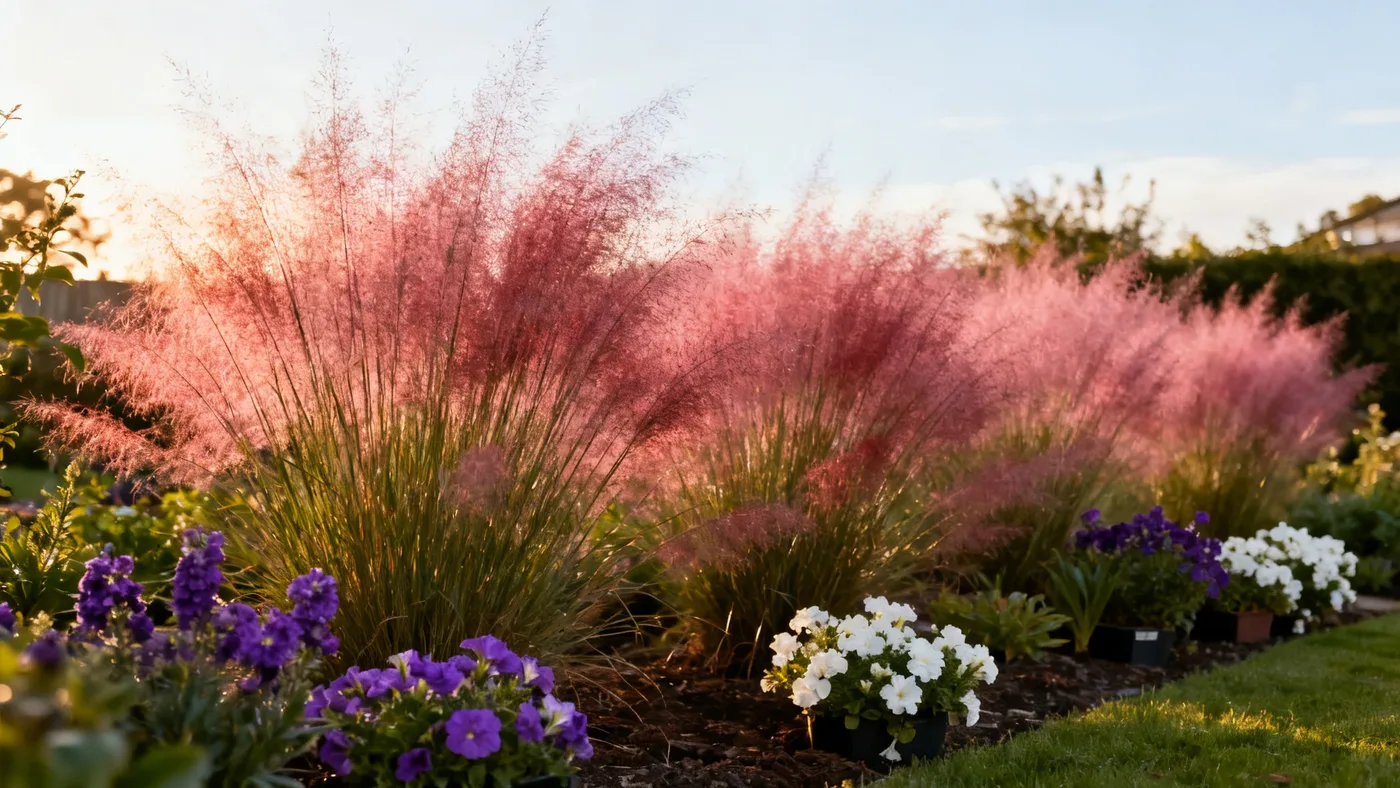
When Does Pink Muhly Grass Bloom? A Season by Season Guide
Right now, in late September, the bloom show is just beginning across much of the country. Pink Muhly Grass (Muhlenbergia capillaris) is entering its peak season, and if you've been waiting for those signature pink plumes to appear, this is the window to watch. Unlike many ornamental grasses that bloom in midsummer and fade by August, Pink Muhly Grass times its flowers for late summer and fall, when most other perennials are winding down. This timing makes it one of the most reliable sources of color and texture in a cooling-season garden.
Whether you already have Pink Muhly Grass in your landscape or you're planning to plant some, understanding its bloom timeline helps you set realistic expectations and prepare for peak color.
The Pink Muhly Grass Bloom Window: September Through November
Pink Muhly Grass blooms reliably in late summer to fall, typically from September through November. The exact timing depends on where you garden, your microclimate, and water patterns during the growing season. In most growing zones, you'll see the first airy pink plumes emerge in early September, with the display intensifying through mid-October before gradually fading to tan as temperatures drop.
The plumes themselves are the star of the show: delicate, hair-like structures that rise 3 to 4 feet above the foliage clump, catching light in a way that makes them glow at dawn and dusk. Early-season blooms tend to show the richest pink to reddish-pink color. As cooler weather sets in, the plumes fade to pale tan or beige by November, but they remain on the plant throughout winter if you leave them uncut, providing weeks of additional textural interest.
One important note: if you cut back your Pink Muhly Grass in fall or early winter, you remove the bloom plumes. The best practice is to leave the entire plant standing through winter and cut it back to 4 to 6 inches above ground in late winter or early spring, just as new growth begins to emerge.
When Bloom Peaks in Your Growing Zone
Pink Muhly Grass is hardy in USDA zones 6 through 9, and bloom timing shifts slightly depending on where you live. This is because warmer regions warm up earlier in summer and can trigger earlier flowering, while cooler zones experience shorter day length that pushes bloom into October or even early November.
Zone 6 (northern range): Bloom peaks in October, sometimes not fully emerging until mid-September. Expect the display to hold through November before frost stops the show.
Zones 7 and 8 (mid-range): This is where you'll see the broadest September-November window. Early plumes appear in late August or early September, and by mid-September the plant is in full bloom. October is typically the month of maximum color intensity.
Zone 9 (southern range): Bloom often begins in late August and can peak by early September, giving you the longest window to enjoy the plumes before they fade. Hot summers may stress the plant slightly, so consistent water through August supports robust flowering.
Factors like nearby walls, asphalt, or afternoon shade can shift these timelines by a week or two. A plant in full sun will typically bloom slightly earlier and more profusely than one in part shade, where pink plumes may be less vibrant.
Your Pink Muhly Grass Bloom Timeline: Year One to Year Three
If you've just planted a Pink Muhly Grass, don't be discouraged if you see few or no blooms in year one. This grass grows at a moderate pace, roughly 6 to 12 inches per year, and needs time to establish a mature root system before flowering.
Year One: A newly planted container-grown start will focus on root establishment rather than flowering. You may see a small spike or two of plumes in late fall of the first year, especially if planted in spring, but don't expect a showy display. Focus on consistent water during the growing season to build vigor.
Year Two: This is where you'll notice first real blooms. By late summer or early fall of year two, your plant should produce its first noticeable flush of pink plumes. The display will be modest compared to a mature plant, but you'll see the characteristic color and texture. The plant reaches roughly half its mature size by the end of year two.
Year Three and Beyond: By year three, your Pink Muhly Grass reaches full mature clump size (2 to 3 feet tall in foliage, 3 to 4 feet including plumes) and delivers its most spectacular bloom. This is when the plant becomes a garden focal point, with dozens of plumes creating an airy cloud effect. In subsequent years, bloom remains consistent as long as the plant receives full sun and isn't over-fertilized.
Supporting Strong Blooms Throughout the Season
Pink Muhly Grass doesn't demand much, but a few seasonal practices maximize bloom quality and longevity.
Summer watering: Consistent moisture through July and August, especially in zones 8 and 9, directly supports autumn flower production. Once established, this grass is drought-tolerant, but plants that experience stress from dry soil may produce fewer plumes. Water deeply once a week during hot spells rather than shallow daily watering.
Sunlight: Full sun produces the most abundant blooms and the deepest pink color. In part shade, the plant still flowers, but plumes may be fewer and color less vivid. If your plant is in light shade and producing sparse bloom, consider whether it could be moved to a sunnier spot in the next planting season.
Fertilizer restraint: This is a light feeder. A light application of balanced fertilizer in spring is optional and often unnecessary. Over-fertilizing causes lush, floppy foliage growth at the expense of flowers, so skip the extra feeding if you want robust bloom.
Established plants: Once your Pink Muhly Grass is 2 years old, bloom is largely automatic. The main seasonal task is spring pruning. Cut the plant back to 4 to 6 inches above ground in late winter or early spring, before new growth breaks. This removes last year's tan seed heads and foliage, making room for fresh growth and flowers. Pruning in fall is the one mistake to avoid: it removes the winter interest you've waited all season for.
Extending the Bloom Show
Pink Muhly Grass delivers two distinct phases of fall interest. The live pink plumes peak from September through mid-October. As temperatures drop and frost arrives, the plumes fade to tan and eventually pale beige, creating a softer, neutral-toned texture that complements nearby plantings and remains attractive through December and beyond.
If you have early frost in your zone, the bloom cycle may compress: plumes may peak sharply in September and fade faster. Conversely, mild autumns in zone 8 or 9 can stretch the display into November.
This timing makes Pink Muhly Grass an excellent companion to plants that bloom in the same window: black-eyed Susan, coneflower, sedum, and fall-blooming salvias all reach their peak alongside the muhly grass plumes, creating a cohesive fall garden scene. For a complete approach to seasonal care and planting, see the Complete Pink Muhly Grass Care Guide for Every Season.
Quick Reference: Pink Muhly Grass Bloom Timeline
| Time Period | What to Expect | Care Action |
|---|---|---|
| Late winter / Early spring | Plant begins sending up new shoots; old foliage and seed heads still visible | Cut back to 4-6 inches above ground before new growth fully breaks |
| Spring through mid-summer | Rapid green foliage growth; no flowers yet | Water consistently; provide full sun; do not fertilize heavily |
| Late August - Early September | First pink plume spikes emerge; color is pale pink to reddish-pink | Continue watering; observe for first bloom; take photos to compare year to year |
| Mid-September - Mid-October | Plumes reach peak color and quantity; plant is a garden focal point | Enjoy the display; no pruning or cutting; do not shear |
| Late October - November | Plumes fade from pink to tan to pale beige; seeds mature and disperse | Leave plumes standing for winter texture; monitor for heavy frost |
| December - February | Foliage and seed heads turn brown and bronze; dormant growth underground | Leave standing; do not cut; do not fertilize; this is the winter interest phase |
| Year 1 (first growing season) | Modest or no bloom; plant focuses on root establishment | Water consistently; prune lightly or not at all; expect full bloom in year 2-3 |
| Year 2 | First noticeable bloom in fall; plant reaches half mature size | Normal watering and care; spring pruning begins; expect stronger year 3 display |
| Year 3+ | Full mature bloom with dozens of pink plumes; consistent annual display | Annual spring pruning maintains vigor; occasional division every 3-4 years if desired |