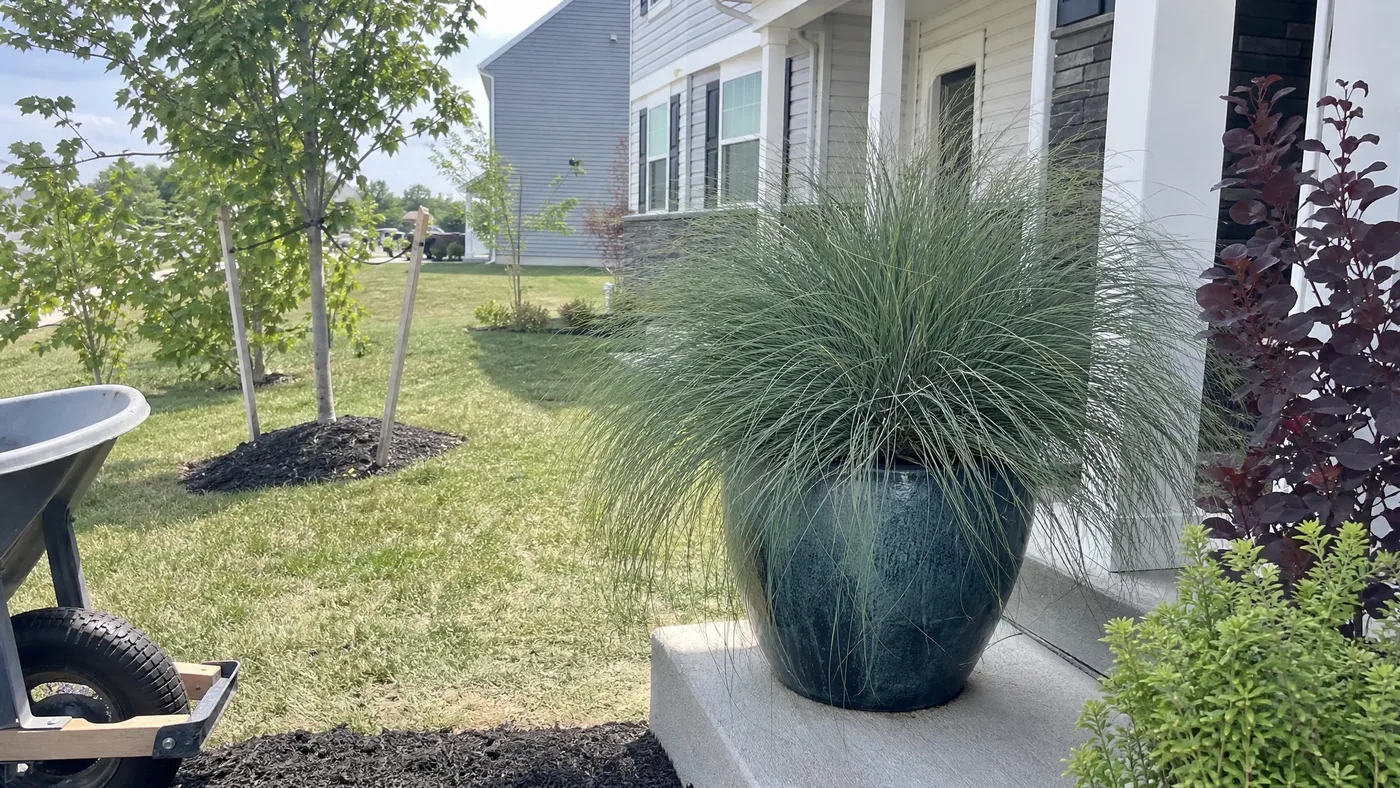
What Pink Muhly Grass Looks Like Before It Blooms
A clump is a bundle of stems that share one crown, and for most of the year that bundle is all you will see of pink muhly grass. The famous pink haze appears only as summer ends, so the plant spends the rest of the season looking like a neat fountain of green threads. That surprises many buyers.
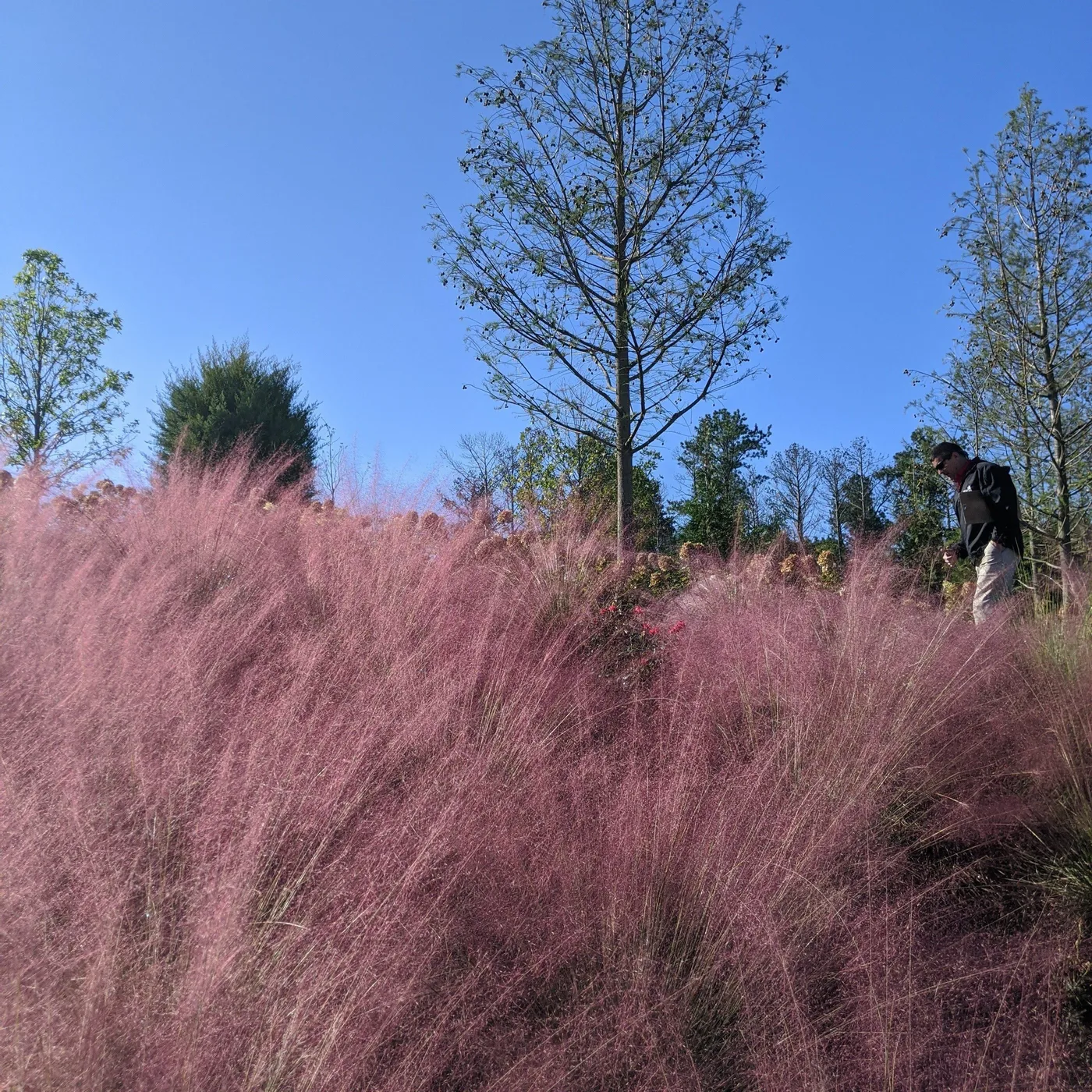
The surprise matters because a quiet plant gets misjudged. People who read plain green as failure often overwater, overfeed or dig out a plant that is doing exactly what it should. Read on for how the clump is built, what it does underground, what a normal summer mound looks like, what triggers the bloom, how to spot real trouble, and how to make the bed look good while you wait.
How Pink Muhly Grass Builds a Clump From One Crown
Three terms explain nearly everything about this plant's off-season look, so we will define them first.
Crown, Clump and Blade Defined
The crown is the dense knuckle at soil level where the roots head down and the stems head up. A blade is a single leaf, long and narrow like a strand of thread. The clump is every blade and stem rising from that one crown. Picture a paintbrush standing on its handle: the handle is the crown, and the bristles are the blades fanning out above it.
Each blade on a mature plant measures 18 to 36 inches, according to NC State's description of the leaves. Because the blades arch outward from the center, a healthy clump settles into a rounded mound rather than standing like a spike.
Why the Clump Stays Put
Some grasses run sideways underground and pop up feet from where you planted them. Pink muhly does not. It is a bunchgrass, and extension specialists at the University of Illinois note that it doesn't spread from rhizomes. The clump gets wider only as new stems form around the edge of the crown.
That slow, orderly widening is why the plant behaves in a border. You are buying one tidy mound, not a spreading patch, and the mound you plant in spring is in the same spot, only a little broader, the next year. Seedlings are a separate question from how the clump grows, and the clump itself will not wander.
Why Fine Blades Look Plain in Spring
Spring is when the plant looks least like its photographs. The new blades are wiry, thread-like and dark green, and they are very narrow. A narrow blade catches little light and makes no bold shape, so the clump reads as soft texture rather than as a showpiece. There is no flower bud, no color change and no broad leaf to give you something to look at.
The old growth adds to the muddle. This grass is semi-evergreen, so last year's blades may fade to tan and straw while fresh green pushes up through them. If you left the clump standing through winter, it looks half green and half brown for a few weeks in spring. That is normal.
One of the most common questions we get in spring is whether a quiet plant has died. Check the base. Green shoots at the crown mean it is alive and simply slow to fill in.
Cutting Back for a Cleaner Start
If the tan thatch bothers you, cut it off before new growth begins. Mississippi State's extension service says to cut the clumps back to 6 inches in late winter, and UF/IFAS describes cutting to the ground. Either way, do it early so you never trim new green blades. Our guide on when and how to cut back pink muhly grass gives the full routine.
What Pink Muhly Grass Does Underground in Summer
By early summer the clump looks settled, and many people assume nothing is happening. A lot is. Warm months are when a bunchgrass builds its crown and roots, and that work does not show above the soil. Think of it as a savings account: the plant is banking reserves for the bloom that comes months later.
This explains why top growth looks modest. The plant grows at a medium rate, so you should not expect a first-year plant to balloon. A newly planted clump puts much of its effort into anchoring itself, and the visible mound lags behind the root system.
What Established Roots Give You
Once the roots have spread through the surrounding soil, the plant handles dry weather well. Illinois Extension says pink muhly is drought-tolerant once established, and it also tolerates heat, humidity and poor soil. The key phrase is once established. In the first season, water regularly so the roots can get going, then ease off as the clump fills out and the mound thickens.
Full sun matters for this stage. Six or more hours of direct sun a day is the standard recommendation, and a sunny, well-drained site gives the crown what it needs to build up. Resist the urge to fertilize a plain-looking plant. Rich feeding pushes soft leaf growth, and this grass is happy in poor soil.
Green Mounds Are Normal Until Autumn
By midsummer a healthy plant is a full, arching dome of fine green blades, and that is the finished look until fall. Most sources give the mound a size of 2 to 3 feet tall and 2 to 3 feet wide. It can reach 4 feet tall and 3 feet wide, so judge your own plant against that range rather than against a photo of plumes.
The plumes add height later, which is why a bed can look short in July and tall in October. The table below shows what a normal year looks like on a clump you cut back in late winter.
| Time of year | What you see | What it means |
|---|---|---|
| Late winter | Cut stubble or tan thatch | The crown is resting |
| Spring | Thin green shoots rising | New blades are forming |
| Summer | A rounded green mound | Roots and crown are building |
| Late summer | Stalks lifting above the blades | Bloom is starting |
| Fall | Pink plumes | Peak show, September through November |
For exact dates by region, our season-by-season bloom guide goes further. Here the point is simpler: a green mound in July is the plant on schedule.
Pink Muhly Grass Needs Short Days to Flower
This grass does not flower because it has reached a certain size or because you fed it. It flowers because the nights are getting longer. Plants that respond to day length track the shortening days after midsummer, and pink muhly is one of them. That is why bloom arrives in late summer or fall, running from September through November.
The trigger works through the whole plant at once. When days shorten past a point the plant is tuned to, it stops making only blades and starts sending up flower stalks from the clump. A plant that is healthy but planted in the wrong place can still miss it. A floodlight or porch light that stays on all night can muddle a short-day plant, so avoid planting right beside one.
Why Feeding Will Not Hurry It
Common advice says to feed in early summer for more plumes. We disagree. Extra nitrogen makes more green blades, not an earlier bloom, and day length sets the clock whatever you do.
What you can control is light. Putting the plant in full sun gives it the energy to respond when the days shorten, and a clump shaded for half the day tends to answer with a thin, sparse show or very little at all.
Telling Healthy Green From a Struggling Plant
A plain plant is not a sick plant, but a few signs separate the two. Check these before you decide anything is wrong.
Signs of a Healthy Clump
- Blades are dark green and wiry, arching outward from a firm crown.
- New shoots keep appearing at the edges of the clump through spring and early summer.
- The mound holds its shape after rain and does not flop open at the center.
- Any brown is limited to old, outer blades from the previous year.
Signs Worth Acting On
Yellowing across the whole clump, a mound that splits open in the middle, or blades that stay pale all summer point to a growing problem. The usual cause is too much shade or soil that stays soggy, since the grass does best in full sun and well-drained ground. Our guide on why pink muhly grass turns brown or yellow walks through the causes.
Insects are a less common cause, but they happen. Clemson's extension service says muhlygrass mealybugs feed on leaf sap from the grasses, reducing infested plants' health and vigor. If a clump looks weak in a way that watering and sun do not explain, take a sample to your local extension service for a firm identification.
How to Enjoy Pink Muhly Grass Before the Plumes
You do not have to wait for fall to get value from this plant. The trick is to use the green phase on purpose, with companions, placement and purchase timing that suit a quiet clump.
Companions for the Quiet Season
Fine blades look best next to bolder shapes. Put the mound in front of broad-leaved perennials, or between summer bloomers such as salvia, so the grass supplies a soft green edge while its neighbors carry the color. Goldenrod and little bluestem keep the bed interesting into fall, when the plumes arrive. The landscape ideas and companion plants guide has full planting combinations.
Placement and Buying Timing
Plant it where you will see the whole mound, such as along a walk, at the front of a border or in a drift of several plants. Repetition makes plain green look intentional. Place it in full sun and leave room for a 2 to 3 foot spread.
When you shop, buy in spring or summer, when you can see the green clump in its pot and judge it. A full, firm, dark green plant is a good sign, and you do not need to see a plume. Our guide on container sizes and what to look for lists what to check.
What to Look for as Summer Ends
Pink muhly grass is a clump of fine green blades that grows from one crown, stays in place and does most of its summer work below ground. A modest green mound 2 to 3 feet across is a healthy plant, not a disappointing one, and day length rather than feeding decides when the pink arrives.
So plant it in full sun, water it in, then leave it alone. In late summer, look at the top of the clump for slender flower stalks rising above the blades. When you see them, the bloom has begun.
Pink Muhly Grass
Nursery-grown Pink Muhly Grass in sizes from 1 GALLON, shipped to your door.
From $78.94
Shop Now →In summer, our Pink Muhly Grass is a plain green mound in full sun and well-drained ground on our farms, which is just how it should look before it blooms. As a small business with farms of our own, we grow and sell top-quality grasses, so we know a healthy clump before the pink ever shows. When you are ready to plant one and watch for those first flower stalks, we would love for you to take a look.