Landscape Ideas for Pink Muhly Grass and Companion Plants
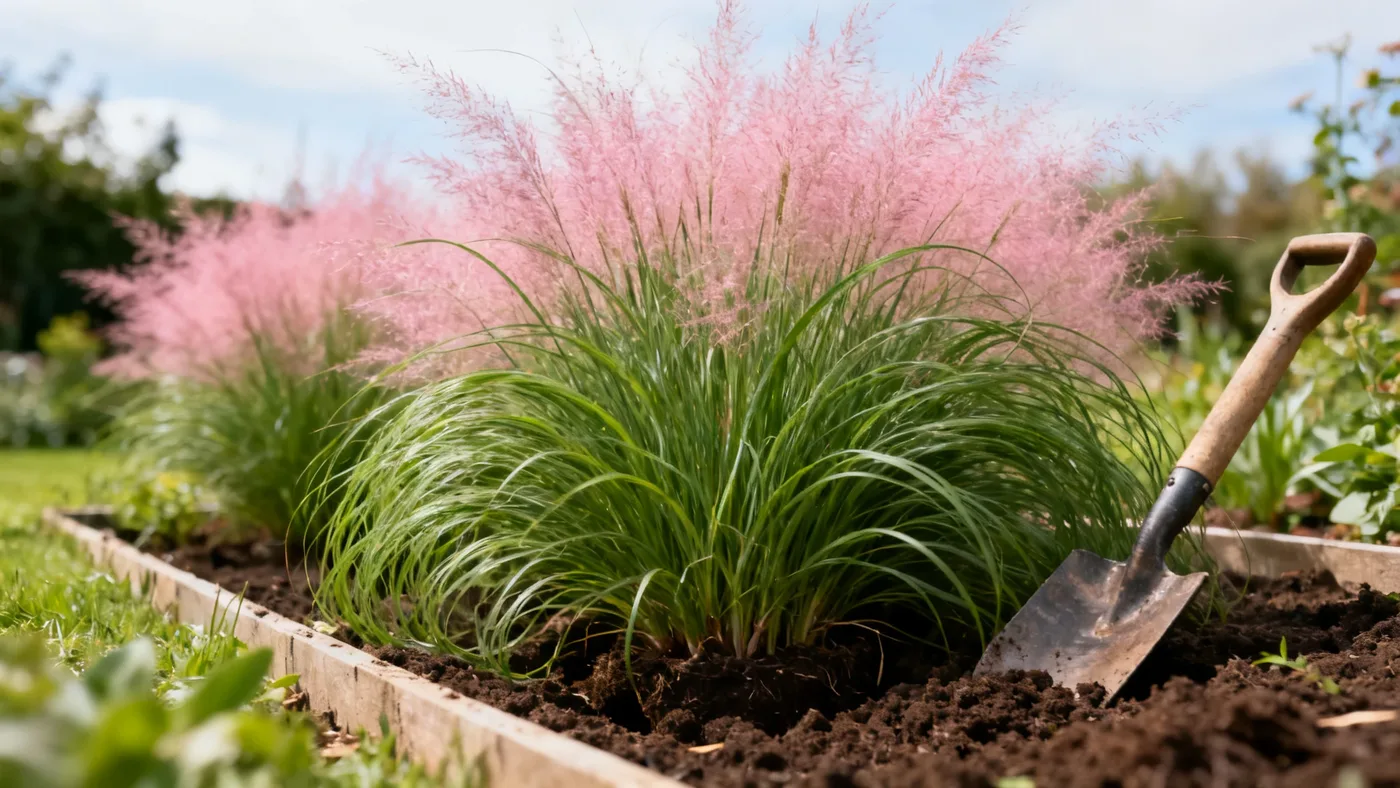
Pink Muhly Grass (Muhlenbergia capillaris) is one of the most versatile ornamental grasses for home gardens and landscapes. Its airy pink plumes that appear in late summer and fall create drama and movement in any planting, and its fine-textured foliage provides year-round interest. Whether you're designing a xeriscape, a cottage garden, or a coastal landscape, pink muhly grass delivers reliable performance in USDA zones 6-9. The key to maximizing its impact is understanding how to use it effectively in mass plantings and pairing it with complementary perennials. For detailed care instructions, check out the complete pink muhly grass care guide.
This guide walks you through practical landscape design with muhly grass, from mass plantings to mixed borders. Each approach shows how to choose companion plants, space your plants correctly, and create cohesive designs that thrive with minimal maintenance.
1. Create a Focal Point With a Massed Pink Muhly Grass Display
A mass planting of pink muhly grass is one of the most eye-catching ways to use this plant. Rather than scattering individual plants throughout your landscape, grouping 3 to 7 plants together in an odd number creates a much stronger visual impact. Space them 24 to 36 inches apart to allow room for mature width (2-3 feet) without crowding. This spacing gives each plant enough light and air circulation while still creating a unified mass.
By fall, your massed pink muhly grass will explode with feathery pink plumes reaching 3 to 4 feet tall, creating a focal point visible from across the yard. The plumes persist through winter if left uncut, providing textural interest in the dormant season. In late winter or early spring, cut the entire mass back to 4-6 inches above ground to remove old growth and make way for new foliage.
Practical takeaway: Use pink muhly grass mass plantings as anchors for perennial borders. This approach works beautifully along property lines, at the back of mixed beds, or as a living screen on slopes for erosion control.
2. Pair Pink Muhly Grass With Black-Eyed Susan and Coneflower
For a classic perennial border that bursts with color and texture, combine pink muhly grass with black-eyed Susan (Rudbeckia) and coneflower (Echinacea). These companions share similar growing requirements: full sun to light shade, good drought tolerance once established, and low fertilizer needs. Black-eyed Susan blooms yellow and gold from midsummer through fall, while coneflower offers pink, purple, or white daisy-like flowers. The muhly grass provides airy vertical structure behind these stockier perennials.
This combination is particularly effective when you space plants correctly. Plant the pink muhly grass at 24-36 inches apart for the mass effect, then fill around it with clusters of 3-5 black-eyed Susans and coneflowers spaced 12-18 inches apart. The result is a layered, naturalistic planting with multiple seasons of interest. In late fall, after frost, the seed heads of all three plants provide food and shelter for songbirds.
Practical takeaway: This pairing thrives in full sun and adapts to a range of soil types. Once established by year 2, this combination requires watering only during drought and minimal deadheading if you leave seed heads for winter interest.
3. Design a Xeriscape Border With Pink Muhly Grass and Sedums
In water-conscious landscapes or coastal areas where salt spray is a concern, pink muhly grass is a superb choice thanks to its high salt tolerance and drought hardiness. Combine it with sedums (Sedum species) and stonecrop for a xeriscape that looks sophisticated and performs like a tough perennial. This approach to pink muhly grass companion plants balances visual interest with sustainability.
Sedums are low-growing succulents with fleshy leaves and clusters of tiny flowers in late summer and fall. Their gray, purple, or burgundy foliage provides a cool-toned contrast to the pink muhly plumes. Plant sedums at 12-18 inch spacing in the foreground, then layer pink muhly grass 24-36 inches behind them. Add a drift of ornamental onion or yucca for architectural punctuation. This scheme works beautifully in raised beds, along driveways, or on slopes that receive reflected heat and drought stress.
Practical takeaway: Water deeply at planting time, then rely on rainfall once established. A spring application of balanced fertilizer is optional; over-fertilizing causes floppy growth and reduces bloom quality. Mulch lightly with gravel or decomposed granite to reduce water needs further.
4. Layer Pink Muhly Grass in a Mixed Perennial Bed With Salvia and Goldenrod
For a more ambitious landscape design with muhly grass, create a tiered border that plays with height, color, and bloom time. Use tall pink muhly grass (3-4 feet with plumes) as the back layer, mid-height salvia and goldenrod (2-3 feet) in the middle, and low-growing companion perennials in front. This creates visual rhythm and ensures that no plant is hidden by its neighbors.
Salvia comes in dozens of varieties: purple salvias, red salvias, and white salvias all complement the pink muhly plumes beautifully. Goldenrod is often misunderstood as an allergen culprit (it actually attracts pollinators without triggering allergies), and its golden yellow flowers illuminate the landscape in late summer and fall. Space pink muhly grass at 24-36 inch intervals, salvia and goldenrod at 18-24 inches, and foreground plants at 12-18 inches. This staggered spacing ensures each plant receives adequate light and resources.
Practical takeaway: Choose a site with full sun (at least 6 hours daily) for best muhly grass bloom color. The companions adapt to light shade, but pink bloom tends to be muted if plants receive less than 4 hours of direct sun. Grouping plants by water needs simplifies watering schedules.
5. Use Pink Muhly Grass As a Container Accent for Patios and Entries
Pink Muhly Grass is well-suited to containers and is commonly sold as quart-container starts or larger sizes at nurseries, making it easy to acquire starter plants. A 12-16 inch diameter pot filled with quality potting soil will host a single plant that reaches its mature size (2-3 feet wide, 3-4 feet tall with plumes) within 2-3 years. This approach to landscape design with muhly grass works when in-ground space is limited.
Place a container of pink muhly grass near an entry, along a patio edge, or on a deck to draw attention to its architectural form and showy fall bloom. In late summer and fall, the pink plumes become the focal point of your outdoor space. Combine it with underplanting sedums or trailing ivy to soften the container's edge. Water containers more frequently than in-ground plantings, especially during establishment and dry spells. Each fall, top-dress with 1-2 inches of compost. In late winter, cut the plant back to 4-6 inches and let new growth emerge.
Practical takeaway: Containers allow you to site pink muhly grass where in-ground planting may not be ideal, such as on compacted soil or near hardscape. In zones 5 or colder, move the container to a sheltered location in winter or treat it as an annual.
6. Establish a Meadow-Like Planting With Little Bluestem and Pink Muhly Grass
For a naturalized, low-maintenance landscape that supports wildlife, combine pink muhly grass with little bluestem (Schizachyrium scoparium) and native wildflowers. This approach to pink muhly grass landscaping ideas works on slopes, in large open areas, or as a replacement for a traditional lawn in zones 6-9. Space pink muhly grass at 36 inch intervals (the wider end of the spacing range) and little bluestem at 24 inch intervals. Fill between them with clusters of native wildflowers such as coreopsis, rudbeckia, and salvia.
Little bluestem is a warm-season grass like pink muhly, reaching 2-3 feet tall with fine foliage that turns bronze and purple in fall. Its seed heads are modest but attractive. Together, the two grasses create a soft, flowing meadow appearance that requires mowing or cutting back only once per year in late winter. The denser planting supports songbirds, beneficial insects, and pollinators seeking shelter and seeds.
Practical takeaway: Establish a meadow planting from container-grown plants (not seed) for faster, more reliable results. Water weekly for the first month after planting, then step back and let the perennials establish over year 1 and 2. By year 3, your meadow planting will be largely self-sufficient in zones 6-9.
Quick Reference: Pink Muhly Grass Landscaping Checklist
| Design Element | Guideline | Notes |
|---|---|---|
| Spacing for mass planting | 24-36 in apart | Wider spacing for more open effect; closer for denser look |
| Mature size | 2-3 ft wide, 3-4 ft tall with plumes | Reaches full size in 2-3 years from container starts |
| Sun requirement | Full sun to light shade; best bloom in full sun | Reduced bloom in shade or with over-fertilizing |
| Bloom time | September-November (varies by region) | Pink plumes persist through winter if not cut back |
| Spacing with companions | 12-18 in foreground, 18-24 in mid-layer, 24-36 in back | Prevents crowding and shading of lower-growing plants |
| Recommended companions | Black-eyed Susan, coneflower, salvia, goldenrod, little bluestem, sedum, yucca | Choose 2-3 that share your sun and water conditions |
| Pruning timing | Late winter to early spring before new growth | Cut back to 4-6 in; do NOT shear in fall |
| Drought tolerance | High once established | Low to moderate water during first year; minimal thereafter |
| USDA zones | 6-9 | Verify with local extension service for zones 5 or 10 |
| Container suitability | Yes, well-draining soil required | Reaches maturity in containers within 2-3 years |