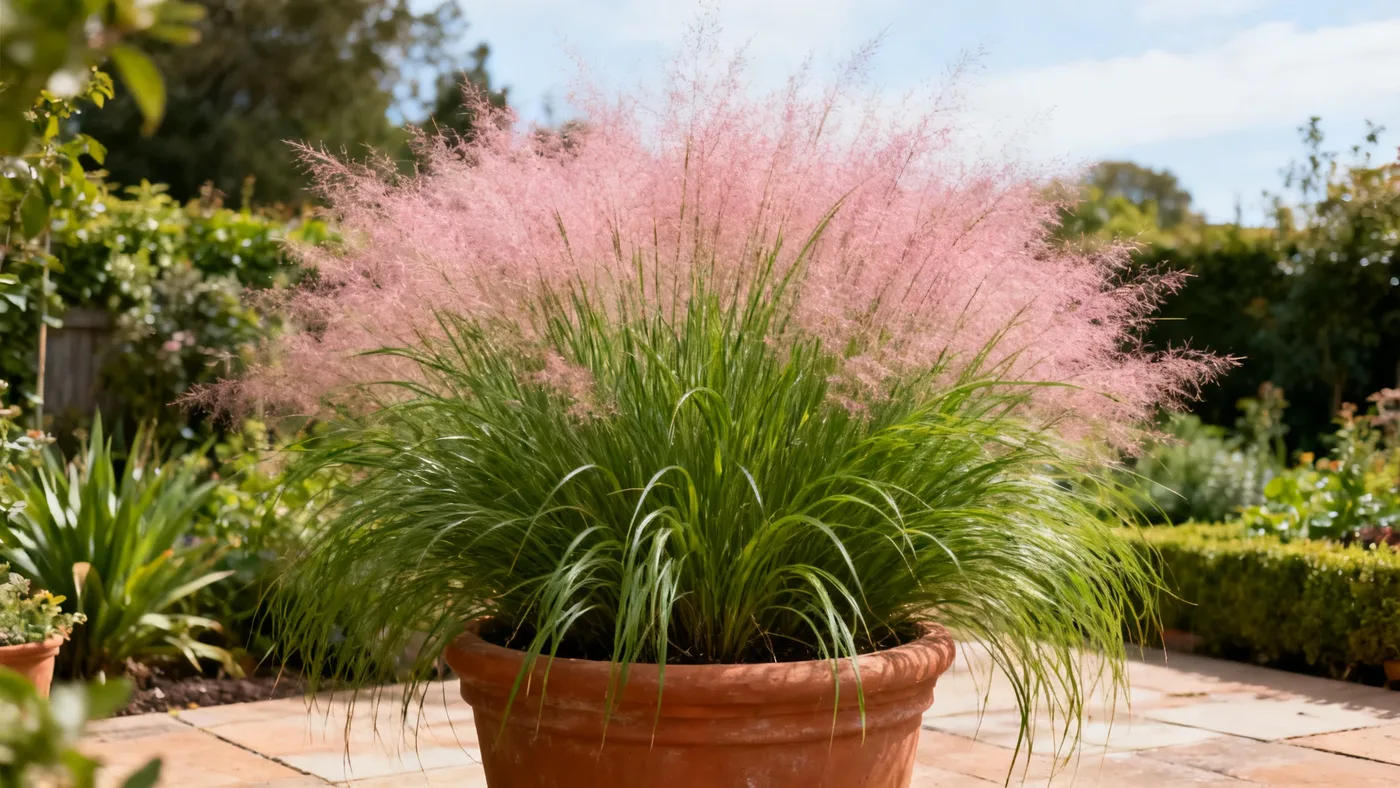
Growing Pink Muhly Grass in Pots and Containers
Pink Muhly Grass thrives in containers. Whether you're working with a small patio, a balcony, or a deck where in-ground planting isn't an option, growing pink muhly grass in pots delivers the same show of feathery pink plumes you'd get in a garden bed. Container growing also gives you flexibility: move plants to maximize sun, protect them during extreme weather, or cluster several together for a dramatic seasonal display.
Why Containers Work for Pink Muhly Grass
Pink Muhly Grass is naturally adaptable. It tolerates a range of soil types, from sand to loam to clay, and adjusts to varied pH levels. What matters most in a container is drainage. As a warm-season perennial native to the southeastern United States, pink muhly grass moves water through its root system quickly and resents sitting wet. A pot with drainage holes and the right soil mix gives you control over that environment from day one.
Container-grown plants are also commonly sold as quart-sized starts or larger nursery pots, making them ideal for direct transplanting into your chosen container. You're not starting from seed or division; you're moving an established plant into a home where it will mature over the next 2 to 3 years and then provide a long-lived perennial display, often for 10 or more years with basic seasonal maintenance.
Materials and Supplies You'll Need
- One container, minimum 12 inches deep and 12 inches wide (larger is better: 18 inches or more encourages fuller clumps)
- Drainage holes in the bottom of the container
- Potting soil or a custom mix: 40% garden soil or topsoil, 40% peat moss or coconut coir, 20% coarse sand or perlite
- One pink muhly grass plant (quart-size or larger nursery-grown specimen)
- Watering can with a soft rose attachment
- Balanced fertilizer (10-10-10 or similar) for optional spring application
- Bypass pruners or hedge shears for late-winter cutback
- Mulch (optional: 1 inch of bark or straw around the base to retain moisture and moderate soil temperature)
Step-by-Step Planting Instructions
Step 1: Choose Your Container
Select a pot at least 12 inches deep and 12 inches wide. Terracotta, plastic, composite, and ceramic containers all work; the material matters less than drainage. Make sure the pot has drainage holes. If you love a pot without drainage, use it as a decorative outer container and set your draining pot inside. Pink muhly grass reaches 2 to 3 feet wide at maturity, so larger containers (18 inches or bigger) encourage fuller, more attractive clumps. Undersized pots dry out faster and limit growth.
Step 2: Prepare the Soil Mix
Pink muhly grass needs well-draining soil. If you use bagged potting soil alone, it often retains too much moisture. Instead, mix three parts potting soil with one part coarse sand or perlite. Alternatively, blend 40 percent garden soil or topsoil, 40 percent peat moss or coconut coir, and 20 percent coarse sand. The grass is adaptable to acidic and slightly alkaline soils (roughly 5.5 to 7.5 pH), so don't worry about fine-tuning pH for container growing.
Step 3: Fill the Container Partially
Add soil mix to the container until it reaches about one-third full. This base layer ensures the plant will sit at the correct depth once transplanted. Firm the soil gently with your hands to remove air pockets, but don't compress it hard.
Step 4: Remove the Plant from Its Nursery Pot
Water the plant lightly an hour before transplanting if the soil feels dry. Turn the nursery pot on its side and gently slide the plant out, supporting the base of the clump with your other hand. Loosen the roots slightly by running your fingers through the root ball. If roots are tightly wound, make three or four gentle cuts along the sides of the root ball to encourage outward growth into the new container soil.
Step 5: Position the Plant
Set the pink muhly grass into the container so the top of the root ball sits just below the container rim (about 1 to 2 inches down). This leaves room for watering without spillover. The plant should not sit deeper than it was in the nursery pot; planting too deep risks rot in wet conditions.
Step 6: Fill Around the Plant
Add soil mix around the sides of the root ball, filling until soil level matches the top of the root ball. Press the soil gently around the plant to eliminate large air gaps. Leave a 1 to 2 inch gap at the rim for water to pool and soak in.
Step 7: Water Thoroughly
Water slowly and deeply until water drains from the bottom of the pot. This settles the soil and helps roots establish contact with their new medium. The soil will settle slightly over the next few days; add a bit more soil if needed.
Container Care Through the Seasons
Spring and Summer
Position your container in full sun to light shade. Pink muhly grass reaches its best bloom color and fullest growth in full sun, so choose a spot that gets at least 6 to 8 hours of direct sunlight daily. Water regularly during the first growing season to help roots establish. Once established, the plant is drought tolerant, but containers dry faster than garden soil, so check soil moisture 2 to 3 times per week in hot weather. Water when the top inch of soil feels dry to the touch.
Fertilizing is optional. Pink muhly grass is a light feeder. If you choose to fertilize, apply a balanced fertilizer (10-10-10 or similar) in spring at half the recommended strength. Over-fertilizing reduces bloom production and causes floppy, weak growth.
Late Summer and Fall
This is when your container planting shines. Pink muhly grass blooms from late summer into fall, typically September through November, depending on your region within USDA zones 6 through 9. The airy pink to reddish-pink plumes rise 3 to 4 feet tall (including the bloom spikes) above the 2 to 3 foot foliage clump. Do not cut back or deadhead the plumes; leave them standing. They're the reason you grew the plant in a container on your patio.
Late Winter and Early Spring
Once the plumes fade and bleach to tan, and foliage turns bronze or brown with cold, cut the entire plant back to 4 to 6 inches above the soil surface in late winter or very early spring, before new growth emerges. Use bypass pruners or hedge shears. This cutback removes old foliage and makes room for fresh spring growth. Do not shear in fall or you'll lose the winter interest provided by the tan seed heads.
After cutback, the plant may show minimal growth for several weeks as it mobilizes energy from the root system. By mid-spring, new green shoots will emerge from the base.
Tips for Container Success
- Drainage is non-negotiable. Use a pot with holes and fast-draining soil. Standing water kills pink muhly grass faster than drought.
- Group containers for visual impact. A single pot looks sparse; cluster three or five containers of varying heights for a stronger display on a patio or deck.
- Plan for size. The plant reaches 2 to 3 feet wide and 3 to 4 feet tall (including plumes) by year 2 to 3. Don't underestimate the mature footprint when spacing containers.
- Move containers to protect in extreme cold. If you garden in USDA zone 5b or colder (the lower end of the hardiness range), move containers to a sheltered location or against a south-facing wall in the harshest months. Container plants are more exposed to temperature swings than in-ground plantings.
- Mulch the soil surface. A 1 inch layer of bark or straw around the base (not touching the stems) moderates soil temperature and reduces moisture loss in dry spells.
- Water less often as the plant matures. Year-one plants need frequent watering to establish roots. By year two, reduce watering frequency; the plant is drought tolerant once its root system is deep and established.
Common Container Mistakes to Avoid
Pot Too Small or Without Drainage
A pot smaller than 12 inches dries out daily in summer heat, stressing the plant and limiting growth. Lack of drainage holes causes root rot, the most common cause of pink muhly grass failure. Invest in proper containers from the start.
Over-Watering
The biggest mistake is treating pink muhly grass like a tropical plant that loves moisture. It doesn't. Water when the top inch of soil is dry. Let the container drain fully after watering. If you're unsure, err on the drier side.
Too Much Shade
Pink muhly grass can survive in light or partial shade, but bloom color fades and plume production drops. Reserve shaded containers for other plants. Give this one the sunny spot on your patio.
Cutting Back in Fall
Shearing or cutting back in autumn removes the tan seed heads and plumes that provide all the visual interest through winter. Wait until late winter or early spring, just before new growth emerges, to cut the plant back to 4 to 6 inches high.
Skipping Division or Rejuvenation
Container plantings can persist for 10 or more years, but over time the clump may decline or become sparse. Every 3 to 4 years, you may divide the plant by carefully removing it from the container, splitting the root ball into 2 or 3 sections with a clean knife, and repotting the divisions into fresh soil. This refreshes vigor and gives you new plants.
Expected Results
In year one after planting, expect steady foliage growth and perhaps light bloom if you're using a larger plant. Growth proceeds at roughly 6 to 12 inches per year. By year two, the plant typically shows more robust flowering, and by year three, you'll have a full, mature clump reaching its mature height and width of 2 to 3 feet wide and 3 to 4 feet tall including bloom plumes. Once established, the plant requires minimal maintenance beyond seasonal cutback and occasional watering during prolonged dry spells. For detailed seasonal care and companion planting ideas, see our complete pink muhly grass care guide for every season.
Quick Reference: Container Growing Checklist
| Task | When | Notes |
|---|---|---|
| Select and prepare container | Before planting | Minimum 12" deep x 12" wide; must have drainage holes |
| Mix soil and plant | Spring or fall | Use fast-draining soil; plant at same depth as nursery pot |
| Water in after planting | Immediately | Water slowly until it drains from bottom |
| Regular watering (year one) | Spring through fall | Check soil 2-3x per week; water when top inch is dry |
| Optional spring fertilizer | Mid-spring | Balanced formula at half strength; light feeders only |
| Reduce watering (year two+) | After first year | Plant is drought-tolerant once roots establish |
| Enjoy bloom display | September-November | Leave plumes standing; do not deadhead or cut |
| Cut back to 4-6 inches | Late winter/early spring | Before new growth emerges; use pruners or shears |
| Optional division/rejuvenation | Every 3-4 years | Split root ball and repot in fresh soil to refresh vigor |