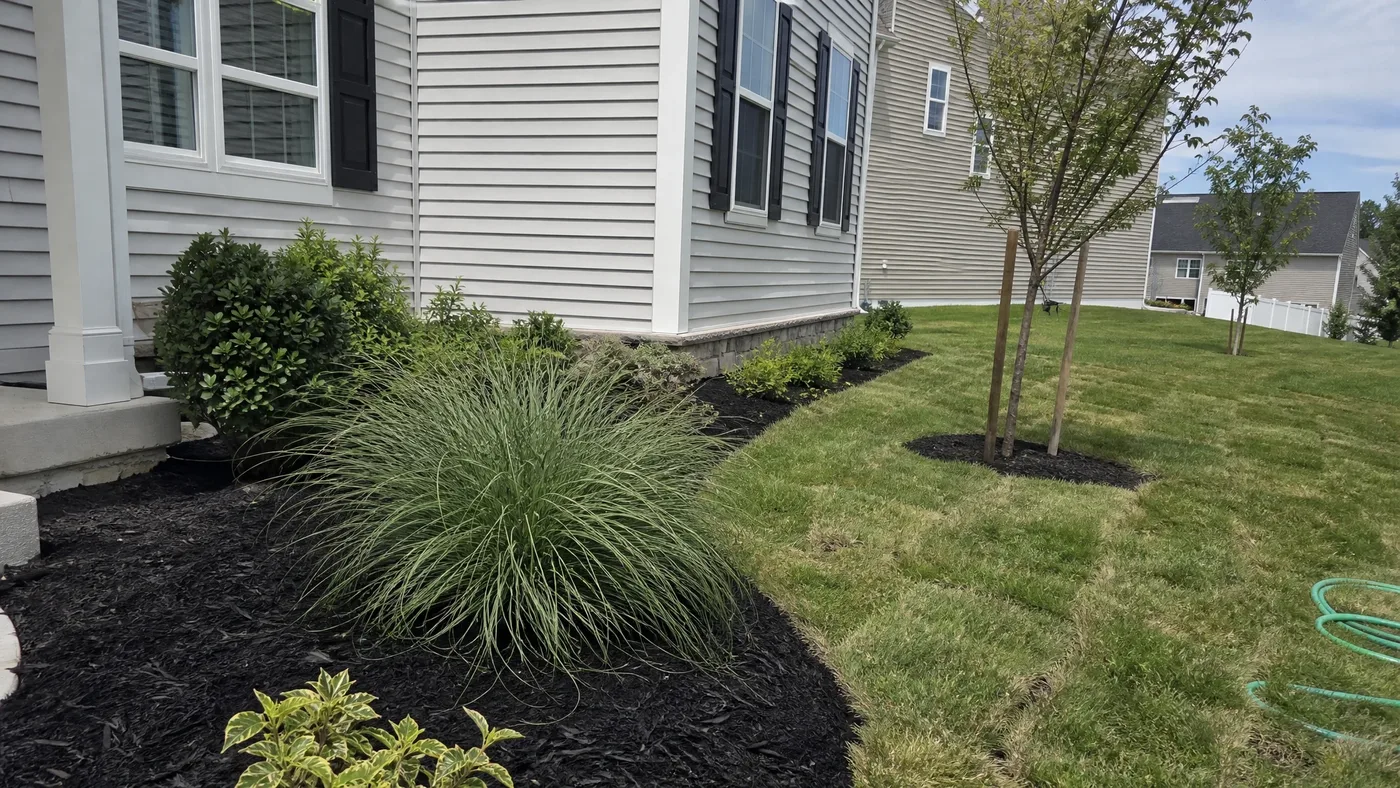
Pink Muhly Grass Pros and Cons: Is It Right for You?
Plenty of plants look better in the catalog than in your yard, and pink muhly grass is only a good buy for some yards. It is native from Massachusetts to Florida and across to Texas, which tells you what it expects: heat, bright sun and soil nobody has babied. Give it that and it hands you a pink haze every fall. Give it a shady corner and it sulks.
We'll walk you through the sun, space and soil you need before you buy, then the dull first weeks and the first year, then what a settled clump gives back and what it costs you in seedlings and short blooms. By the end you should know whether this grass belongs in your yard or in somebody else's.
Before You Buy Pink Muhly Grass, Count Your Hours of Sun
Start with the sun, because it is the one requirement you cannot negotiate. Full sun means 6 or more hours of direct sunlight a day, and direct means direct, not bright shade or a pleasant glow. Stand in the spot on a clear day and watch where the shadows fall from morning to evening. If the count comes up short, stop here and save your money.
A few sources say it tolerates part shade, and it will stay alive there. It will also lean, thin out and bloom poorly, and you will have paid for a pink grass that grows green. Our sun requirements guide covers how light affects the color, but the buying rule is simple: no sun, no plant.
Space, Soil and Climate Checks
The rest of the screening fits in a table and takes about two minutes with a tape measure. If any row lands in the right-hand column, this is not your plant.
| Check | What the plant needs | Walk away if |
|---|---|---|
| Sun | 6 or more hours of direct sun | The spot is shaded by midday |
| Space | A clump 2–3 feet tall and wide | You need something under 2 feet |
| Soil | Well drained, sand, loam or clay | Water stands after a hard rain |
| Climate | USDA zones 5–9 | You garden colder than zone 5 |
Size surprises people more than anything else. A clump can reach 4 feet tall and 3 feet wide, so this is not a tuck-in-the-front-of-the-bed plant. It grows as a bunch and does not spread by rhizomes, so it will not creep into the neighbors, but it will not stay small either.
Soil is the forgiving part. It accepts acidic and alkaline pH and sand, loam and clay, and it tolerates poor soil. Drainage is where the forgiveness ends. Sites with good drainage are preferred, so a low spot that holds water after a storm is a bad home no matter how sunny it is.
The First Weeks Are Boring and That Is Fine
Plant it, water it in, then expect very little. A new pink muhly grass is a small tuft of thin green blades, and for the first few weeks it looks about the way it did going into the ground. No pink, no plumes, no growth you could prove in a photo.
One of the most common questions we get this early is whether a plant that hasn't changed is dead. It isn't. The roots work first and the top gets its turn later. Ours ship in containers as young plants, so what lands on your porch is a modest green tuft, not a finished clump.
What You Will and Won't See
Blooming is a fall event. The flowers appear from September through November, so a plant set out in spring or early summer will not flower on any schedule you pick. Growth speed is also hard to pin down, since NC State calls the rate medium while the University of Tennessee calls it fast. Treat both as a range and let your sun hours do the sorting.
What to Do and What to Skip
Water so the root ball never dries out, and keep weeds and turf from crowding the tuft. That is the whole list. Skip the fertilizer, because the sources describe this grass as at home in poor soil. Skip the urge to dig it up and check the roots, too. A plant that sits still is a plant doing its job, and grass is not known for drama.
What Pink Muhly Grass Asks of You That First Year
Mostly water and patience, in that order. The drought tolerance people brag about belongs to established plants, not to something that went in last month. Through the first growing season, water often enough that the root zone never dries out completely, then taper off as the plant settles. Rain and soil change the schedule, so check with your local extension service, or read our watering guide for the pattern from planting to maturity.
Beyond water, the first-year job list is short:
- Water on a steady schedule until the clump has been through a full growing season, then ease off.
- Pull weeds and grass from around the clump so they do not crowd it while it is still small.
- Leave the fertilizer in the shed, since poor soil does not bother this plant.
- In late winter, cut the clump back to about 6 inches before spring growth starts. Mississippi State Extension gives that timing and warns that cutting earlier removes the plumes that give winter interest.
A Realistic Bloom Outlook
Be honest with yourself about the first fall. A plant that settled in over the summer may send up a few thin plumes or none, and thin plumes in year one are not a sign of failure. What we tell customers is to count on the second fall for the real show, once the clump has had time to fill out.
If you buy this grass expecting a wall of pink by October of the year you plant it, you will be disappointed. If you buy it expecting a good plant in year two and a better one after that, you will not.
An Established Pink Muhly Grass Clump Pays You Back
Once a clump has been in the ground through a full year, the deal flips: you do less and it gives more. The payoffs come from the same place as the demands, a plant built for hot, sunny, lean ground. For the right yard they are enough to justify the purchase on their own, and none of them needs a spray bottle, a stake or a free weekend.
Drought, Deer and Poor Soil
Illinois Extension says pink muhly is drought-tolerant once established, and it also handles heat, humidity, poor soil and salt. It is highly resistant to deer grazing too. For a dry slope, a hot strip by the driveway or a bed the hose never reaches, that is a useful résumé.
Pests are a mild caveat. It has no known pests, while NC State says the muhlygrass mealybug is becoming more of an issue in North Carolina. Watch for it, but it is not a reason to skip the plant.
One Haircut a Year
Upkeep is one task. Cut the clump back in late winter, to about 6 inches per Mississippi State, or to the ground in early spring before new growth. Our cutting back guide has the details. There is no deadheading and no staking. If a clump loses vigor, divide it in spring or early summer.
Fall Color and the Tan Afterglow
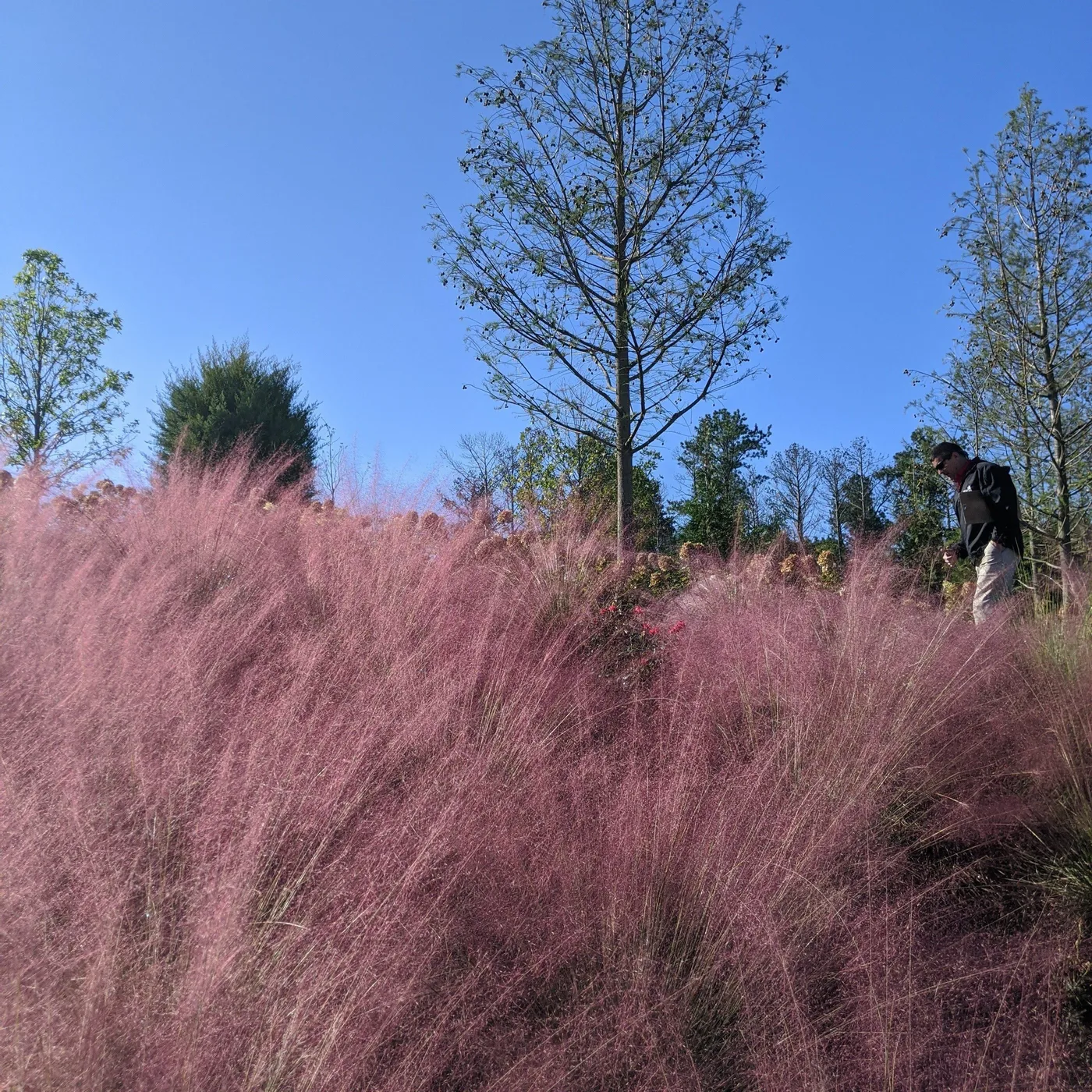
This is why anyone buys it. The airy plumes come in pink, purplish red or purplish gray, and Mississippi State calls them billowy, cloud-like masses. Then they fade, and Clemson says they turn to tan or brown seed plumes that hold up through winter. You get a second act, as long as you wait to cut.
Seedlings and Short Blooms Are the Price of Admission
Every plant sends a bill, and this one's has two items. The first is seedlings. The University of Tennessee notes that it will naturalize by re-seeding, and in our rows a few seedlings turn up around the clumps every year. UF/IFAS lists it as not known to be invasive, so this is a nuisance, not a takeover.
Who Will Mind the Seedlings
If you keep crisp mulched beds with every plant in its assigned spot, you will mind. Pull seedlings while they are small tufts, or pot them up and give them away. If you plant in drifts or a loose, sunny border, a few extras tend to look like part of the design rather than a mistake.
The Bloom Window Is Short
The second item is time. The bloom runs September through November, and the best of the pink is a stretch inside that window, with weather deciding how long it lasts. The rest of the year you own a green mound of fine blades, then a tan one. Our bloom timing guide shows what to expect month by month.
How Messy It Gets
Counting it up, the mess is three things: seedlings, tan plumes that stay up all winter, and one big cut in late winter. Nothing drops fruit, nothing needs raking in a hurry. If those three bother you, buy something else. If they don't, you have found one of the lower-effort grasses you can plant.
Pink Muhly Grass Fits Some Yards and Not Others
The verdict depends on who is standing in the yard, so here is how it breaks down by buyer. We would rather you skip this grass than plant it where it can't win.
Sunny, dry, hands-off yards. Buy it. A hot bed, a slope, a roadside strip or a spot where the hose gives up is what it was built for, and one cut a year is all the upkeep you owe it.
Shady or soggy yards. Skip it. Part shade gets you a weak plant and standing water gets you a worse one. Pick something that wants those conditions instead.
Tidy, crisp-edged beds. Think twice. Seedlings and a tan plume that stays up all winter will annoy you, and a grass that does not reseed is the safer choice there.
Cold or edge-of-range gardens. Clemson lists zones 5–9, but UF/IFAS lists 7 through 11, so check with your local extension service before you commit.
Small spaces and patios. It can work, but plan for a clump that wants 2–3 feet. If you are ready to buy, our guide to container sizes and what to look for will help you read a pot.
Buy It for the Sun and Forgive the Seedlings
Pink muhly grass trades a little tidiness for a lot of ease. Full sun, drainage and a year of patient watering get you a drought-tolerant, deer-resistant clump that needs one haircut a year and puts on a pink show in fall. The costs are real but small: volunteer seedlings and a bloom window that runs only a few months.
It will not win any awards for punctuality, but it will not ask for your weekends either. If the spot gets full sun and you can live with a few seedlings, buy it.
Pink Muhly Grass
Nursery-grown Pink Muhly Grass in sizes from 1 GALLON, shipped to your door.
From $78.94
Shop Now →Our pink muhly is raised in open, sunny rows on our own farms, in soil that sheds water fast and gets no pampering. As a small grower, we only ship plants we would plant ourselves, and we would rather you pass on it than see this grass go into a shady, soggy corner, which is why we list the downsides here. Come and see the plants we have ready.