Pink Muhly Grass and Wildlife: Pollinators and Host Plant Value
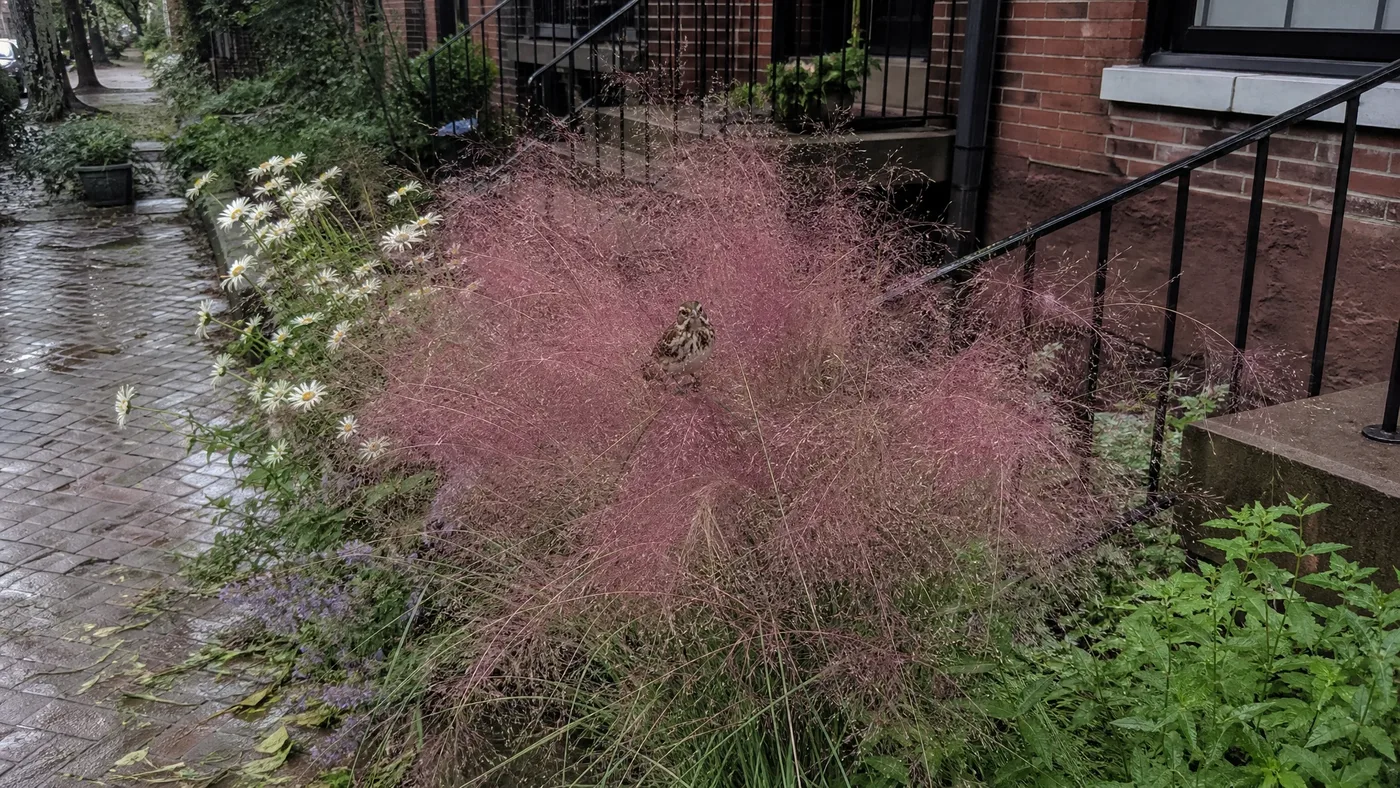
It starts at dusk in late October, when the low sun slides through a drift of Pink Muhly Grass and turns every plume into a glowing pink haze. A sparrow drops onto a seed head, bends it with its weight, and works the seed loose while the light fades. That small scene is the reason for this guide, and it raises a fair question: what else in your border is doing that job?
This article talks about how Pink Muhly Grass shelters, feeds and supports wildlife, and answers the questions customers ask us most. Read on to learn what the clump offers in summer and winter, which flowers to plant beside it for nectar, what it honestly does as a caterpillar host, and when to cut it back so the benefits last. Done well, a few plants give you color and a working piece of habitat. Done badly, you trim away the seed and shelter just as the cold arrives.
Pink Muhly Grass Gives Cover Before It Gives Color
Long before the first plume shows pink, Pink Muhly Grass is already working. From spring through summer it builds a fountain of fine, wiry green blades about 2–3 feet tall and wide, and NC State Extension notes that it provides excellent cover year-round. To a sparrow hunting insects, that mound is a roof.
The shelter works on two levels. Down in the crown, the dense base gives insects a protected place to live, and lady beetles are among the beneficial insects the grass attracts. At the edge of the clump, ground-feeding birds can step out to forage and step back under cover in a single hop.
One of the most common questions we get is whether that cover draws snakes. None of the sources we rely on says it does. Any dense, low clump shelters small creatures, and what moves in depends on your region, so if a spot makes you nervous, keep the grass back from doorways and paths.
It is a bunchgrass that does not spread by rhizomes, so the cover stays in a tidy mound instead of running across the bed. That suits the eye too. The green fountain gives the border a soft, quiet base through August while the flowers around it are at their loudest.
Backlit Plumes Hold Seed Into Winter
Bloom runs from September through November, and the real payoff comes as the flowers finish. The pink fades to tan or brown seed plumes, and Clemson's extension service says they hold up well from late fall through winter. The airy panicle takes up roughly a third to half the height of the plant, so it stands well above the foliage where the light can reach it.
That height matters to birds as much as to your eye. Native sparrows, finches and other small birds forage the seed heads of ornamental grasses, and songbirds and small mammals eat the seed of this one too. A clump that stays upright gives them a feeding station through the cold months.
For a designer, this is the best light of the year. With the sun low behind the planting, the plumes turn translucent and edged in gold, where in flat midday light they look pale and thin. Place the drift so that the evening sun comes from behind it as you look out from a window, and the bird working the seed heads becomes a moving silhouette.
If you want the full color timeline from first blush to tan, our season by season bloom guide covers it. Here the point is simpler. The plumes are a pantry as well as a picture, and they only work as one while they are still standing.
Pair Pink Muhly Grass With Late Nectar Flowers
Pink Muhly Grass is wind-pollinated, so it makes no nectar and has no reason to court a bee. Customers ask us often whether it attracts bees, and the honest answer is that it does not feed them. It does attract butterflies, but the nectar that butterflies and bees want has to come from the flowers you plant beside it.
The timing works in your favor. The grass blooms September through November, right when many late perennials carry the last nectar of the year, and both want full sun, meaning six or more hours a day. Think of native goldenrods, asters and late salvias as the partners, with the grass as the airy frame around them.
A few placement habits make the pairing work:
- Set the grass behind or beside the nectar flowers, so the plumes backlight the blooms instead of hiding them.
- Choose partners that are still blooming in October, so nectar overlaps with the weeks the plumes are pink.
- Match the site rather than improving it. Pink Muhly tolerates poor soil, so pick sun-loving partners that do the same and skip the rich bed.
- Repeat each partner in several spots along the border, so insects keep finding it as they move.
For full planting plans, see our landscape ideas and companion plants guide. Here the goal is only that nectar and seed overlap in the same border.
Pink Muhly Grass Hosts Skipper Caterpillars, Modestly
This is the claim we want to state carefully. Over 100 species of butterfly rely on native grasses as host plants, and grass skippers are among those that raise their caterpillars on native grasses. That is a statement about native grasses in general, not a documented list for Pink Muhly specifically.
The case for this grass as a host plant is shorter. It attracts butterflies, which tells you adults visit but does not name a species that raises young on it. So we call it a modest host. It may feed some skipper caterpillars, but we would not plant it expecting a caterpillar show.
Treat it as one grass in a mix. Plant it with other native grasses in the same border, so a skipper looking for a host has options, and accept a chewed blade or two as a sign the planting is working. Avoid broad insecticide sprays, which hit caterpillars and lady beetles alike.
Our pests and diseases guide covers the one pest worth acting on, the muhlygrass mealybug, which feeds on leaf sap. Target that problem when it appears and leave the rest of the clump's small residents alone.
Leave the Clump Standing Until Late Winter
The usual advice to tidy every grass in fall does not suit this plant. The Austin Watershed Protection plant guide says to cut back in winter, and for a wildlife planting we would push that as late as the weather allows. A fall haircut takes off the plumes just as the seed ripens and the weather turns, which removes food and shelter in one pass.
A standing clump carries seed, breaks the wind at ground level, and keeps the shelter that began in summer. The table shows what it offers wildlife as the year moves along.
| Time of year | What the clump offers |
|---|---|
| Spring and summer | Dense green mound for insects and ground-feeding birds |
| September–November | Pink plumes in bloom, with butterflies visiting |
| Late fall through winter | Tan or brown seed plumes for songbirds and small mammals |
| Late winter | Last of the cover, then cut before new growth |
Some customers push back that a standing clump looks untidy by February. We see it differently. The pale, wind-combed mound is part of the winter border, and a late trim still leaves time for fresh growth. Our guide on when and how to cut back Pink Muhly Grass gives the height and the tools. The only wildlife rule is to wait.
Drifts of Pink Muhly Grass Work Better Than Dots
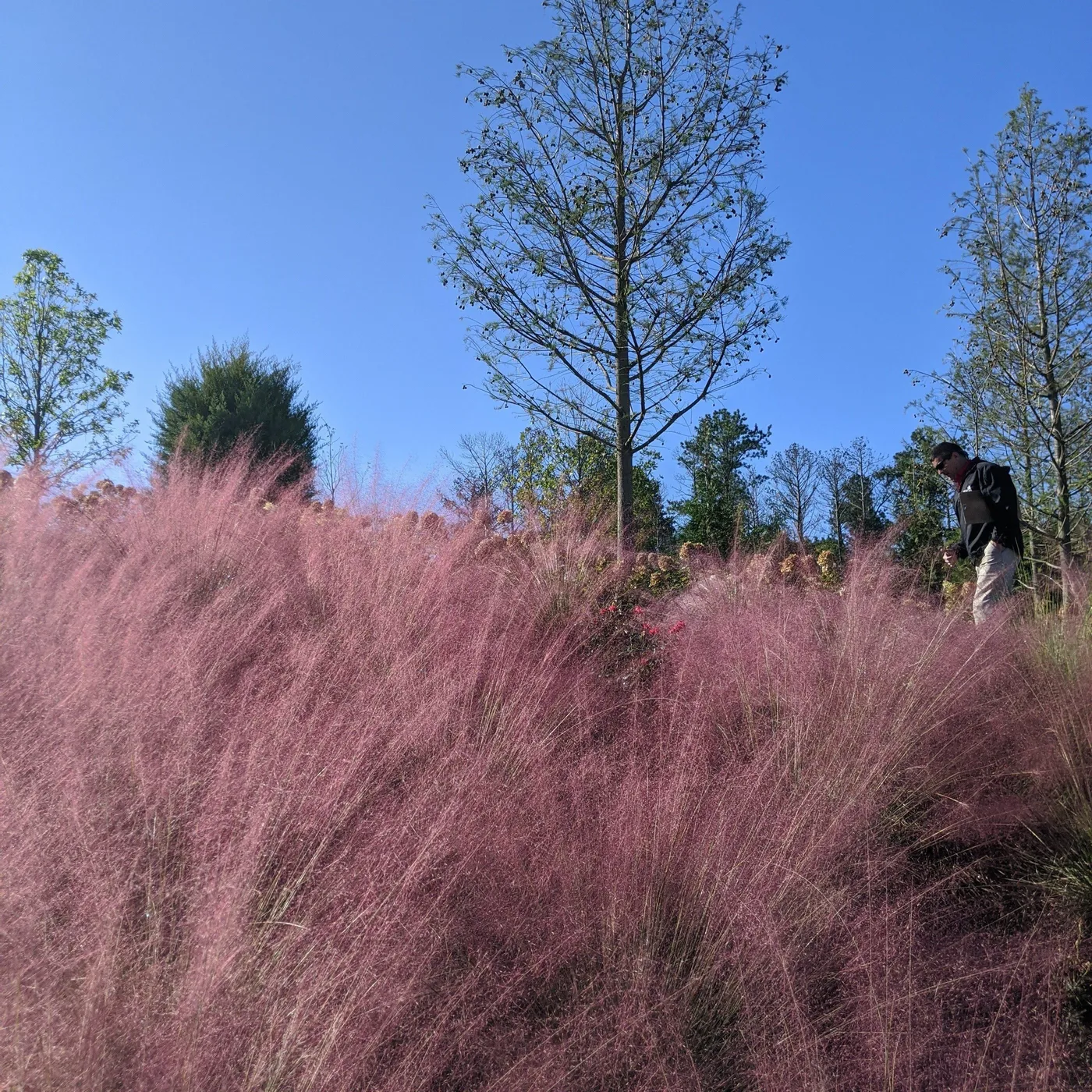
A single clump is a dot. At 2–3 feet wide, one plant reads as a small puff at the edge of a border, and its glow is easy to miss. Plant several together and the plumes merge into one rose-colored cloud that holds the low light like frosted glass.
The same mass does practical work for wildlife. Touching clumps give continuous cover, so a small bird can move through the planting without crossing open ground, and a bigger block of plumes means more seed in one place. A sparrow will settle in a drift in a way it never will in a lone plant.
Because Pink Muhly is a bunchgrass that does not spread by rhizomes, a drift will not fill itself in. You plant the drift on day one, or accept slow gap filling from the occasional seedling. Our spacing guide for borders and mass plantings shows how to place plants so the clumps just meet at maturity.
Shape the drift as a sweeping curve or an uneven oval rather than a row, and let it widen toward the side the evening light comes from. That gives you the longest stretch of glowing plumes and the longest unbroken run of cover underneath.
Pink Muhly Grass as a Small Piece of Habitat
Add it up and Pink Muhly Grass makes a modest but real contribution. It gives cover in summer, seed from late fall into winter, and a handsome backdrop for the nectar flowers beside it. It hosts caterpillars only in the loose sense that native grasses do.
For native-plant gardeners the credentials are good. The Arkansas extension service says it is native from Massachusetts to Florida and across to Texas, and it grows in soils from sand to clay. You can plant it in a native border without hesitation.
It also asks little in return. It is highly resistant to deer grazing and tolerant of heat, drought and poor soil once it is settled in, so the habitat you build in a sunny spot stays intact without much watering or fussing. That is the plant-it-and-leave-it case for wildlife, and it is a strong one.
Pink Muhly Grass Earns Its Place Twice Over
Pink Muhly Grass gives you cover in summer, seed through winter, and a frame for the nectar flowers that feed the pollinators it cannot feed itself. Treat its caterpillar value as a small bonus, plant it in drifts, and leave it standing until late winter. Done that way, the planting looks better and does more.
Picture a bird landing in a glowing drift on a cold, bright morning, the plumes lit pink against dark ground. Watch for it this winter, and you will see why we leave the clumps standing.
Pink Muhly Grass
Nursery-grown Pink Muhly Grass in sizes from 1 GALLON, shipped to your door.
From $78.94
Shop Now →Pink Muhly in our beds gets sun from morning to dusk and soil that drains fast, and we keep an eye on it from its green summer mounds through the first pink haze of fall and the plumes that hold into winter. Because we are a few growers tending top-quality grasses, trees and shrubs on land of our own, we know what a good clump looks like. If the thought of birds and pollinators working a drift in your yard appeals to you, come choose a plant for it.