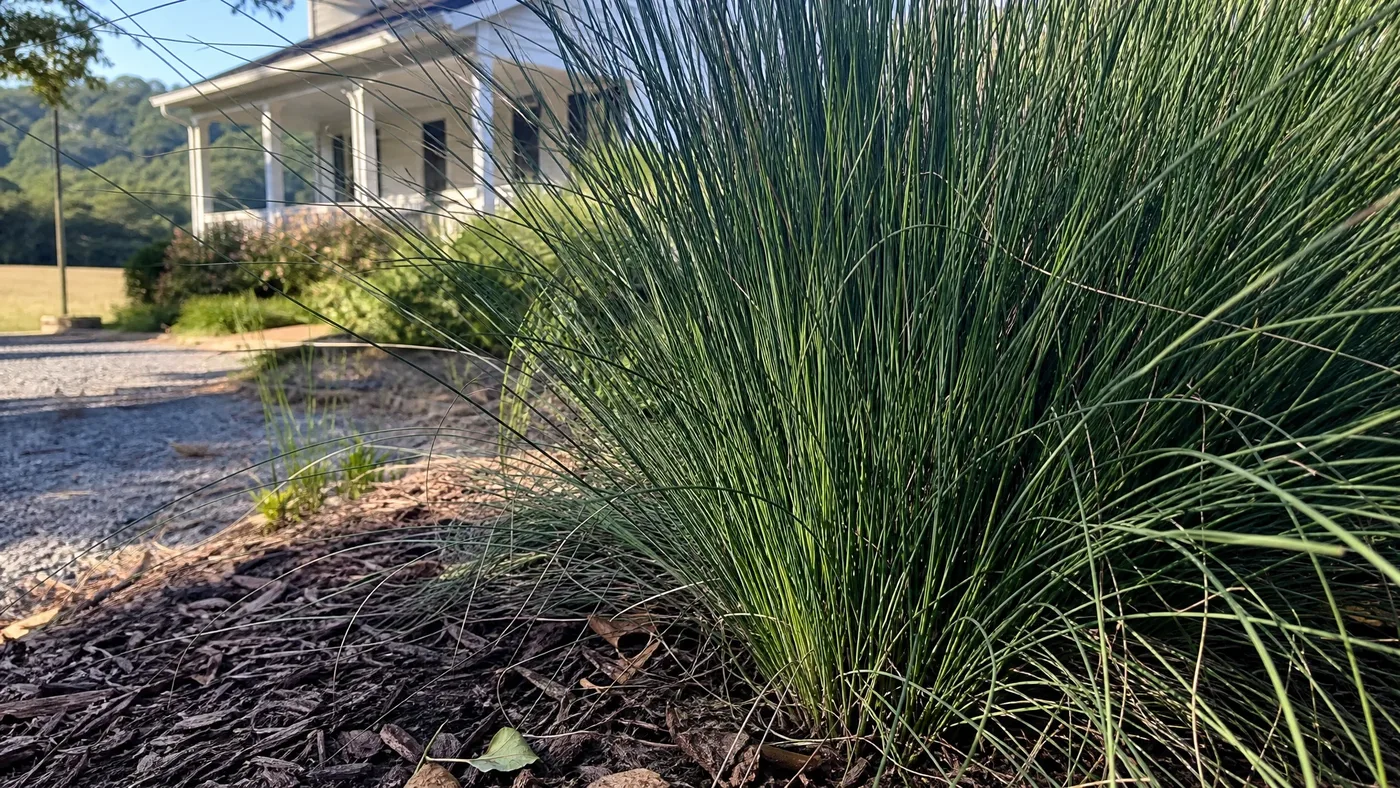
Why Is Pink Muhly Grass Turning Brown or Yellow?
Four things turned our clumps off-color last year, and only one of them threatened the plant. Most of the clumps that looked dead had green at the base. You are probably here because your pink muhly grass is brown or yellow in the middle of the growing season, and you want to know if it is dying.
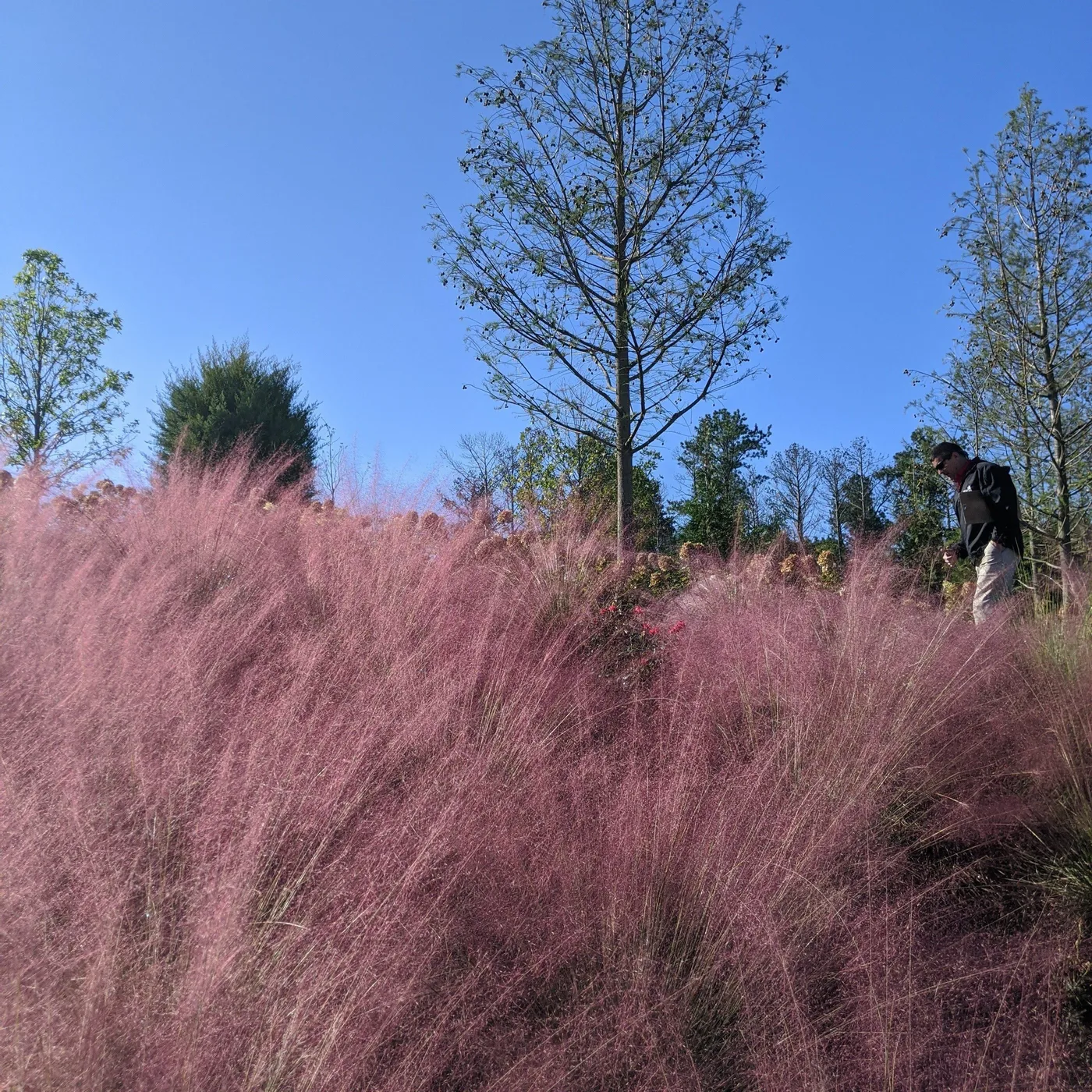
In this article, we'll go through the four causes we sort clumps into, the base test that separates a dying plant from a resting one, and the order to fix things in. Getting the cause wrong costs you more than the browning does. Extra water on a dry-stressed clump is harmless, but the same water on a rotting crown finishes it.
Pink Muhly Grass Browns for Four Reasons, Not One
We stopped asking "what is wrong with this clump" and started asking "where is the color off, and when did it start." Pattern sorts off-color clumps faster than any test. Walk the row, look at which blades changed, and note the weather of the last two weeks. Four patterns cover nearly everything we pull for inspection.
The table below is how we sort them. Match what you see, then read the section for that cause before you touch anything.
| What you see | Likely cause | First check |
|---|---|---|
| Blade tips tan, outer blades first, center still green | Dry soil | Dig down a few inches beside the clump |
| Small tan or brown flecks on blades after humid weather | Fungal leaf spotting | Look at the spots in good light |
| Pale, limp or stalled clump in the first weeks after planting | Transplant shock | Check planting date and root ball moisture |
| Yellow blades from the base up, bed stays wet | Root rot | Pull mulch back and inspect the crown |
One thing is not on the list. Tan blades from late fall through winter are normal dormancy, and our problems guide covers that color. Everything here is about browning or yellowing outside that window.
The sorting matters because each cause has a different fix, and two of them are opposites. Dry soil wants water. Root rot wants the water stopped. A grower who treats every brown clump with the hose will cure one pattern and kill another.
Dry Soil Shows in the Tips First
We start with dry soil, since it's the cause most growers reach for the hose to fix. First we cover how drought stress looks as it moves through a clump, then the right way to water it and what to leave alone while the clump recovers.
Which Blades Go First
Drought stress starts at the tips and works down. The outer blades of the clump fade to tan while the center stays green. The blades often curl inward along their length. That curl is the plant cutting water loss, and it is a signal to check the soil, not to panic.
The key words in every source we use are "once established." The Illinois Extension says pink muhly is drought-tolerant once established. A clump planted this year has not reached that point, so it shows dry stress much sooner than a mature one. An established clump in full sun can sit through a long dry stretch before the tips give any warning.
Sandy beds and sun-baked slopes dry fastest, and clumps in those spots show it first. A clump on a hot south-facing edge will fade weeks before the same plant in a loam bed.
The Watering Correction
Dig down a few inches next to the clump. If the soil is dry at that depth, water slowly and deeply so it soaks the whole root zone, then let it dry out again before the next soak. Short daily sprinkling wets only the top inch and teaches the roots to stay shallow.
Do not cut the browned blades to "fix" them. They no longer feed the plant, but they shade the crown, and new green will grow up through them. Cut them back in late winter with the rest of the clump. For a full schedule by age of planting, see our watering guide.
Spotted Blades After a Wet Spell
After a run of humid, rainy weeks we see small tan or brown flecks on the blades. They are scattered, often with a darker edge, and they do not follow the tip-first pattern of dry soil. The spotting sits on the blade surface and the tissue around it stays green. That is a fungal leaf spot, and on a healthy clump it has only ever been a cosmetic problem for us.
That fits the plant's record. NC State lists pink muhly as tolerating heat, humidity, drought and poor soil. A spotted blade is not a sign the plant is failing. It is a sign the foliage stayed wet for too long.
What to Trim and What to Leave
Leave the spotted blades alone unless a clump is so affected that it bothers you. Water at the base in the morning so the foliage dries during the day. Overhead watering in the evening is the habit that keeps blades wet all night.
Crowding makes it worse. If clumps are touching, thin the planting, or follow the spacing in our spacing guide next time, so air can move between them.
Skip fungicide for a cosmetic spot. If the spotting spreads to the crown or comes back hard every year, ask your local extension service which product, if any, fits your region.
Pink Muhly Grass Sulks After Transplanting
A newly planted clump often looks worse before it looks better. In the first weeks the blades go pale or bleached, the clump leans or flops, and nothing new grows. This is transplant shock. The roots were cut or disturbed, they cannot move enough water to the blades, and the top declines to match what the roots can supply.
Water Is the Recovery Plan
The Missouri Extension says grasses should be watered regularly during their first season to build a deep, vigorous root system. Soak the root ball and the soil around it at planting. Keep it moist, not wet, through the first weeks, then spread the waterings out as new green growth appears.
New green at the center of the clump is your signal that roots have taken hold. Until you see it, check the root ball with a finger a few inches down rather than watering by habit.
Check Depth and Be Patient
If the clump keeps sulking, check the planting depth. The crown should sit level with the surrounding soil, not buried under it. A crown set too deep stays wet and breeds the rot we cover next.
Patience matters here. Pink muhly grows at a medium rate by most accounts, and a clump spends its first season on roots before it puts on top growth. A slow first year is not a failure. Our planting guide covers depth and timing so you can avoid the shock in the first place.
Yellow Crowns and Soggy Roots
Yellowing that begins at the base and climbs is the pattern we worry about. It shows up in heavy clay, low spots and beds that get irrigation meant for thirstier plants. Unlike the other three causes, this one kills clumps.
Confirm It at the Crown
Pull mulch and soil back from the crown and look. A healthy base is firm, with pale roots. A rotting base is soft, dark and often smells sour, and the roots are brown and slimy. If the base is firm and the roots are pale, the yellowing is something else, most often dry soil or shock. Do this check before you cut or dig anything.
Move It or Raise It
If the crown is still firm, you can save the clump. Lift it, cut off any soft roots, and replant it higher, on a mound of free-draining soil, in full sun. The Clemson native plant page says the plant does well in full sun and well-drained soil, so drainage is the thing to change. Our soil guide covers how to build that mound.
If the base is mushy all the way around, the clump will not come back. Dig it out, replace the soil before you replant, and do not reuse the same wet spot.
Is Your Pink Muhly Grass Dying or Resting?
One of the most common questions we get is whether a brown clump is dead. Color alone cannot tell you. A clump can be fully tan and healthy, or look half green and be failing at the base. The base test settles it.
The Base Test
Cut a few blades off close to the crown and pull the old growth aside. Look at the very bottom of the tufts. Green or pale cream tissue there means the plant is alive. Brown, hollow or crumbling tissue all the way through means it is dead.
Do the test in several places around the clump, because a clump can die back on one side and live on the other. Any green on the base is enough to keep the plant and wait.
Know the Normal Calendar
Test only after you know what the plant should be doing. The plumes open from September through November and fade to tan as the cold comes. The plant then rests through winter. The City of Austin plant guide says to cut back in winter, and our cutting back guide gives the timing. A clump that is tan in January and slow in early spring is usually just late.
Rule Out a Pest
White cottony masses at the base of the blades point to muhlygrass mealybug. The Clemson Extension says mealybugs feed on leaf sap and reduce plant health and vigor. If you see them, treat that as a separate problem from the four above.
Pink Muhly Grass Recovery in Order of Steps
The order matters more than any single fix. Doing the wrong step first, especially watering, is how people lose a clump that was recoverable. Work down the list and stop when the clump responds.
- Test the base first. Check the crown for green or firm tissue. If it is dead all the way through, stop here and replace the plant.
- Fix drainage if the base is soft. Stop all watering, lift the clump and replant it on a raised mound in full sun. This is the only step that cannot wait.
- Correct the watering if the soil is dry. Soak deeply, then let it dry out before the next soak, and keep the schedule steady through the season.
- Leave spotted blades alone. Keep foliage dry by watering at the base in the morning. Cut everything back in late winter.
- Give a new planting time. Keep it watered through the first season, and do not judge it until a full year of growth has passed.
We do not add fertilizer to any of these. A stressed clump needs the cause corrected, not more nutrients, and feeding a rotting crown only adds to the problem. Our fertilizing guide explains when feeding does make sense.
Check the Base of One Clump This Week
Brown or yellow blades are a symptom, not a diagnosis. Match the pattern, test the base, and fix the cause in order. Dry tips and spotted blades are the common, harmless ones. A soft yellow crown is the one that needs action. Most clumps that looked dead to us were resting.
So check the crown base of one off-color clump this week, and act on what the base shows. Firm and green means water correctly and wait. Soft and dark means lift it and raise it.
Pink Muhly Grass
Nursery-grown Pink Muhly Grass in sizes from 1 GALLON, shipped to your door.
From $78.94
Shop Now →Pink Muhly Grass does best on our farms in sun all day and ground that sheds water quickly, and we dig and inspect crowns often enough to know a healthy one by feel. We grow and sell top-quality grasses as a small business with our own farms. If you are ready to plant a clump that stays firm and green at the base, we would be glad for you to take a look.