Is Pink Muhly Grass Invasive? How It Spreads and Self-Seeds
Small grass tufts turn up in your gravel path, a neighbor squints at them and says the word "invasive," and suddenly you wonder what you planted. Most people expect pink muhly to act like a running grass that tunnels under the bed and surfaces in the lawn. It doesn't. It is a clumping bunchgrass that holds its ground, and the only way it travels is by seed, mostly into bare, sunny soil close to the parent.
Below, you'll find out all about how pink muhly grass really spreads, including whether it runs underground, how many volunteers to expect, what the invasive listings say, where seedlings land and how to stop them. Sort those out and you can plant it and leave it alone, which is how this grass is meant to be grown.
Does Pink Muhly Grass Creep Through Runners Underground?
The runner idea comes from other grasses. Bermuda grass and many bamboos send stems sideways and pop up feet away, so people assume every ornamental grass does the same. Pink muhly does not. Illinois Extension notes that pink muhly plants don't spread from rhizomes, and the USDA NRCS plant guide agrees that the grass clumps but does not spread through above or underground stems.
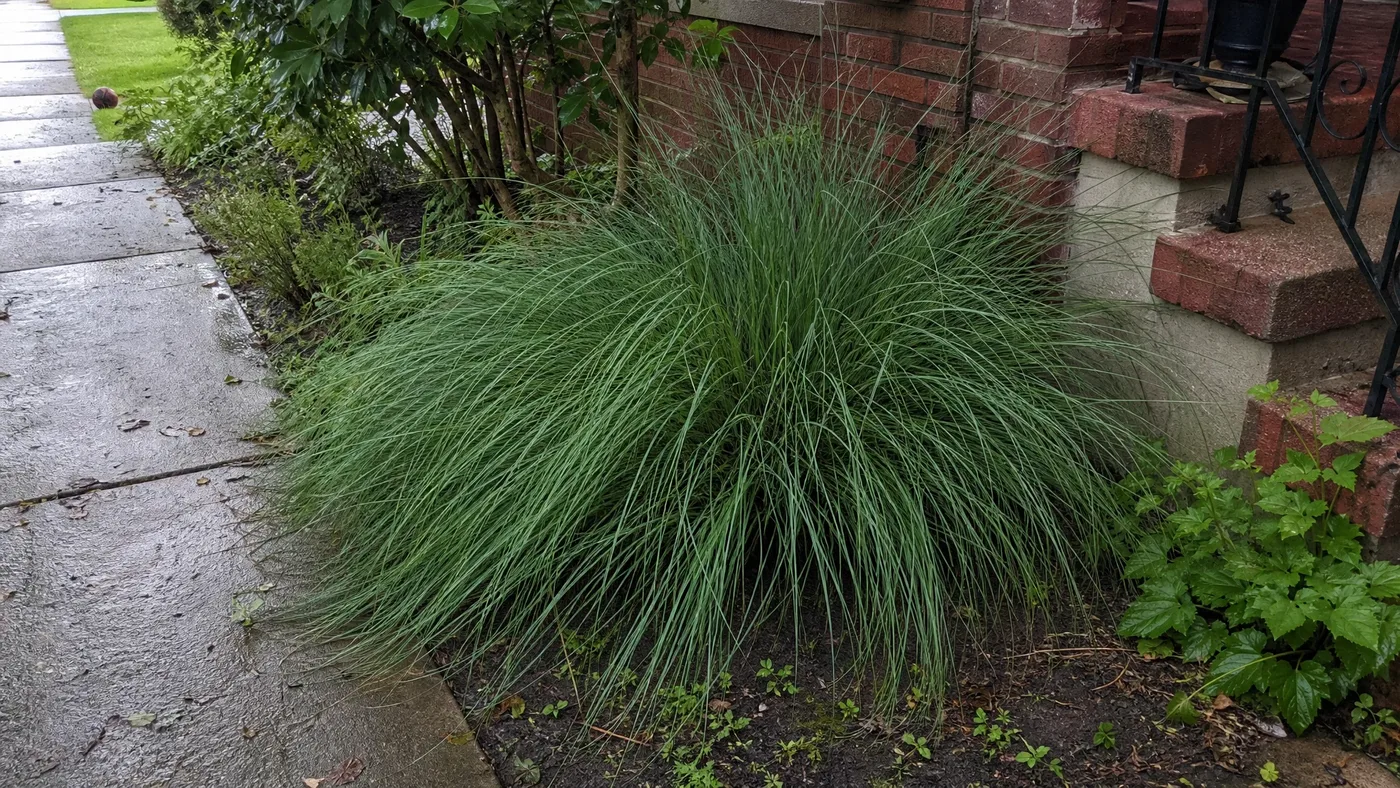
What you get is a bunchgrass, one crown that thickens year by year. A mature clump runs 2–3 feet wide, and NC State notes it can reach 4 feet tall and 3 feet wide. Sources rate its growth from medium to fast, but that energy goes into a fuller crown and more plumes, not into new ground. The clump edge creeps outward slowly, and nothing leaps the path.
How to Tell a Wide Clump From a Wanderer
If a tuft shares a base with the main clump, you are looking at the crown itself widening or a seedling tucked against it. If a tuft stands apart with its own small crown, it grew from seed. Dig one up to be sure: you will find no stem running back to the parent, and that settles it.
When the Clump Itself Gets Too Wide
A crowded clump is a spacing problem, not a spreading problem. Set plants at the right distance from the start (our spacing guide covers it) and you will rarely need to act. If an older clump does push into its neighbors, the NRCS advice is to divide in early spring or summer and not during flowering. Since plumes open from September through November, that means well before fall.
So the runner worry is settled. No rhizomes, no stolons, just a crown that thickens slowly.
Self-Seeding Means Takeover, Doesn't It?
No, because the two words describe different things. Self-seeding means a plant drops seed and some of it sprouts. Invasive means a plant escapes cultivation, multiplies fast and crowds out other plants across wide areas. Pink muhly does the first. The University of Tennessee notes it will naturalize by re-seeding, and that is the fair description: it settles in around the planting and does not conquer the neighborhood.
Timing explains what you will see. The seed rides on the airy plumes, which show from September through November. The NRCS notes that the seed needs no cold treatment to germinate, so seedlings do not wait on a hard winter. What they do need is open, sunny soil to land on, which we come to below.
What Volunteer Numbers to Expect
Expect scattered singles, not a carpet. In a planted, mulched bed you will find a few seedlings at the base of the clump and along the bed edge. Beside a big old clump on bare or gravelly ground, you will find more. A first-year plant with few plumes sets little seed, so the count rises as the clump matures and the plumes multiply.
In our rows, the seedlings we find are single tufts at the clump base and along bare edges, never a sheet of them. A seedling looks like a thin, small version of the parent, with the same wiry leaves, and it pulls out easily while it is small. If you pull a few each spring, the job is done.
Self-seeding is a housekeeping chore at worst. It is not a takeover.
Pink Muhly Grass Is Not on Any Invasive List
We have found no invasive listing for this plant, and you should confirm that for your own state. UF/IFAS rates its invasive potential as not known to be invasive. The USDA NRCS plant guide, which uses the name hairawn muhly for this species, lists its environmental concerns as "No concerns at this time."
The listings that do exist run the opposite way. The same NRCS guide shows the species is endangered in Connecticut, Indiana, Maryland and New Jersey, extirpated in Pennsylvania and presumed extirpated in Ohio. That makes it a conservation concern, not a weed. It is native from Massachusetts to Florida and across to Texas, so over much of the east it belongs there.
How to Check Your Own State
Search your state invasive plant council or department of agriculture list for Muhlenbergia capillaris, and try the common names pink muhly, hairawn muhly and muhlygrass too, since lists do not always use the same one. Then call your county extension office, because local concerns can differ from state lists. If you garden outside the plant's eastern and southern native range, that call matters most.
The record we can point to is clean, and a five-minute check will tell you whether your state agrees.
Seedlings Only Appear Where Soil Is Bare and Sunny
This belief is close to right, and it gives you a way to predict where volunteers will show up. Pink muhly wants full sun, six or more hours a day, and tolerates sand, loam, clay and poor soil. A sprouting seed needs those same sunny conditions plus bare ground with no competition, which is why the gravel path got the tufts and the thick bed next to it did not.
Where Volunteers Turn Up
The table below ranks common sites by how likely they are to grow pink muhly seedlings.
| Site | Seedling risk | Why |
|---|---|---|
| Gravel path or drive edge | Highest | Open, sunny, fast-draining and nothing to compete with |
| Bare soil between young plants | High | Full sun and no cover over fallen seed |
| Mulched bed with filled-in perennials | Low | Seed lands on mulch and foliage, not on soil |
| Lawn or dense turf | Low | Grass cover leaves no bare ground |
| Shaded spots | Low | The plant wants full sun, so seedlings sulk |
Sites Where You Can Relax
A well-planted bed that is mulched and filled in is the safe choice. Rocky, sandy ground drains fast and suits the grass, so a gravel garden is both a good home for it and the likeliest place to collect volunteers. If you plant into gravel, expect to pull seedlings. For soil choices, see our soil guide.
Check your bare, sunny gaps first, and you will have found your seedlings.
Deadheading Is Your Only Defense Against Volunteers
It is one defense, and for this plant it is a poor one. Each clump carries a huge number of fine plume stems, and the plumes are the reason you grow it. Snipping them one at a time is tedious, and removing them early costs you the fall display. Cutting plumes to stop seed means giving up what you planted the grass for. We think most beds do not need it.
Match the control to the site. The steps below go from least effort to most.
- If the clump sits in a mulched bed with neighbors around it, do nothing and pull the odd seedling in spring.
- If bare soil shows between young plants, mulch it before the plumes open in September so fallen seed has nowhere to root.
- If the clump borders gravel, a drive or a path, cut the faded plumes once the color is gone and before they shed.
- If you want plumes through winter, leave them, then cut the whole clump back in late winter.
Cutting Back as Seed Control
The NRCS advice is to burn or mow stands in late winter to remove old residue. Most of the seed has already fallen by then, so a late-winter cut tidies the clump but does not prevent volunteers. It does clear the ground, so that is the moment to rake the bed and check for gaps. Our cutting back guide covers the how.
Dealing With Seedlings Already Up
If tufts are already up, pull them while they are small, since they come out easily with a gentle tug. Larger ones need a trowel. Mulch the bare spot afterward.
Pink Muhly Grass Seedlings Will Match the Parent
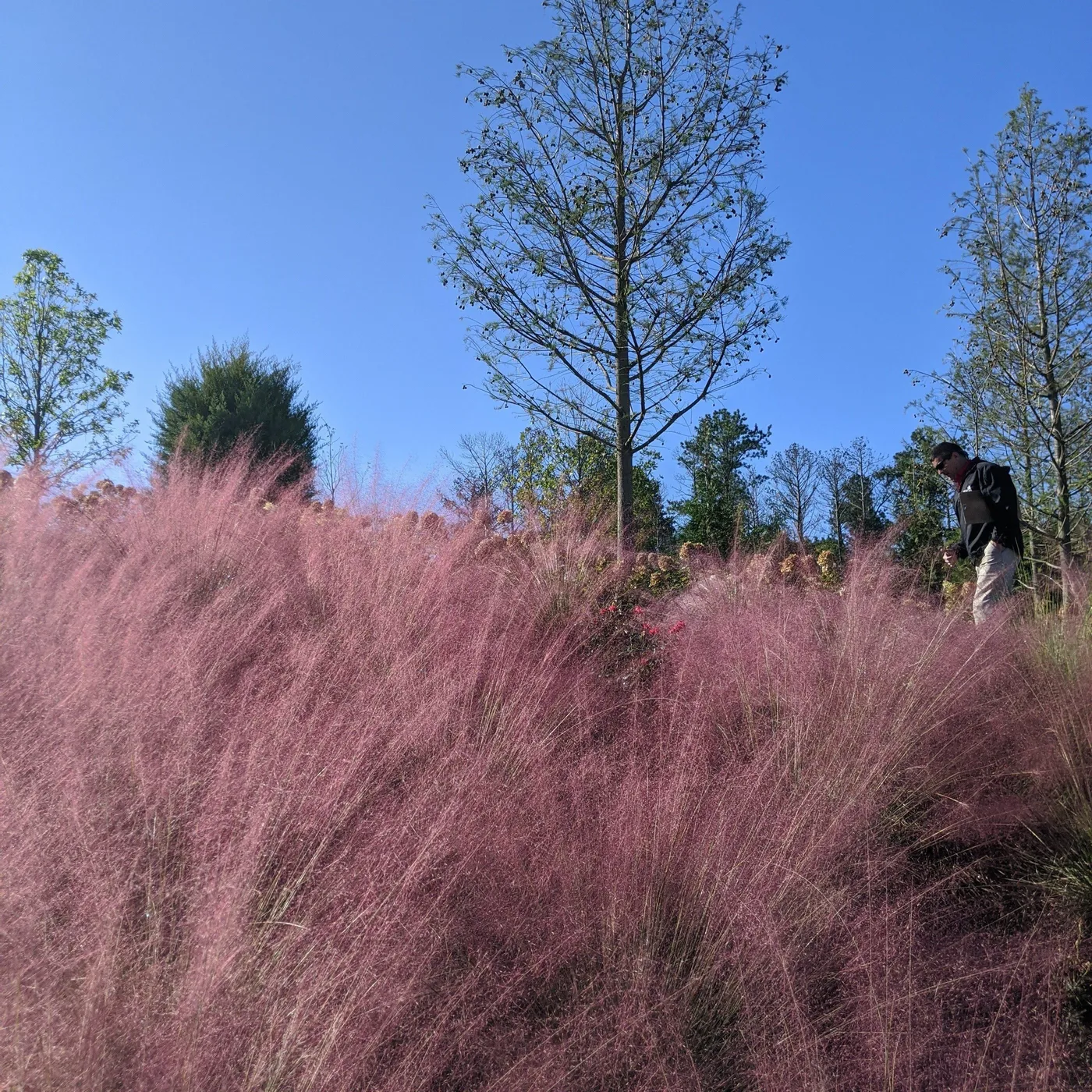
Not reliably. One of the most common questions we get is whether volunteers will be the same color as the pink plant they came from. The species itself carries a range, since NC State describes its plumes as pink, purplish red or purplish gray. Seed-grown plants can land anywhere in that range, so a volunteer may bloom paler, grayer or less dense than its parent.
That matters most if you chose a named selection for a specific look. Selections stay true to type by being propagated from the parent plant itself, as with division. Seed is a reshuffle, and volunteers from a named plant should be treated as unknown plants. Our cultivar comparison explains what the named forms offer.
What to Do With a Volunteer
If the color matters, such as a matched row or a bold mass, pull the volunteers and divide the parent instead. The NRCS says to divide clumps in early spring or summer, not during flowering. If the color doesn't matter, let a few mature, since a mixed planting of slightly different plumes often looks natural. Wait until it blooms in fall to judge it. If it disappoints, pull it that winter.
Where Pink Muhly Grass Stands on Spreading
Here is how the worries hold up. Runners: no, it is a clumping bunchgrass with no rhizomes or stolons, and the crown widens slowly. Takeover: no, it self-seeds modestly, mostly into bare, sunny soil near the clump. Invasive listing: none that we know of, so check your state, as the species is a conservation concern in several states. Volunteers matching the parent: not guaranteed, so divide if color matters.
This autumn, walk the edges of your bed once the plumes have faded and look at the bare, sunny ground within a few feet of each clump. If you find seedlings, pull them while they are small and mulch the gap. If you find none, leave the grass alone and enjoy it.
Pink Muhly Grass
Nursery-grown Pink Muhly Grass in sizes from 1 GALLON, shipped to your door.
From $78.94
Shop Now →Pink Muhly Grass grows on our farms in sunny, open beds of gritty, quick-draining soil, with each clump given room to stay put and flower in fall. We are a small grower-run business, so we only ship grasses we would plant in our own gardens. If you want a well-behaved clump of your own, come and see which Pink Muhly plants we have ready.