Pink Muhly Grass vs Little Bluestem: How They Compare
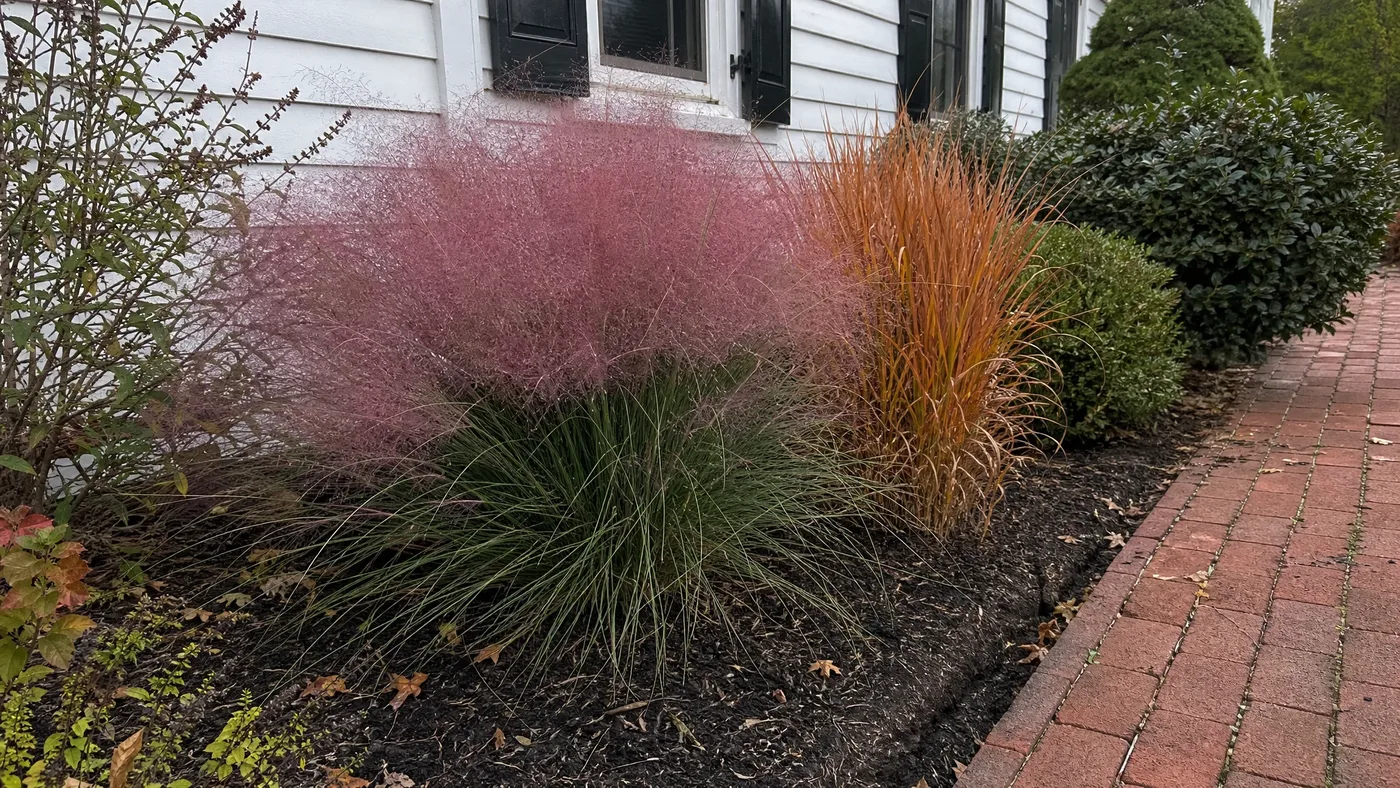
Walk our rows in mid-October and the two grasses split the view. Pink muhly stands in a pink cloud, and the little bluestem beside it is a stand of rust-copper stems. Most people assume they are picking between two similar native grasses for fall, and either one will do the job.
We see it differently. They give you two different sights, and each one asks for different ground. Below, you'll find out all about how each grass looks through autumn and winter, why one leans while the other stands, and how to read plume height, thin bloom and dull color, including what to do about wet soil and about a bed that suits neither. Which of those two sights do you want outside your window?
Pink Muhly Grass Looks Pink Only Part of the Year
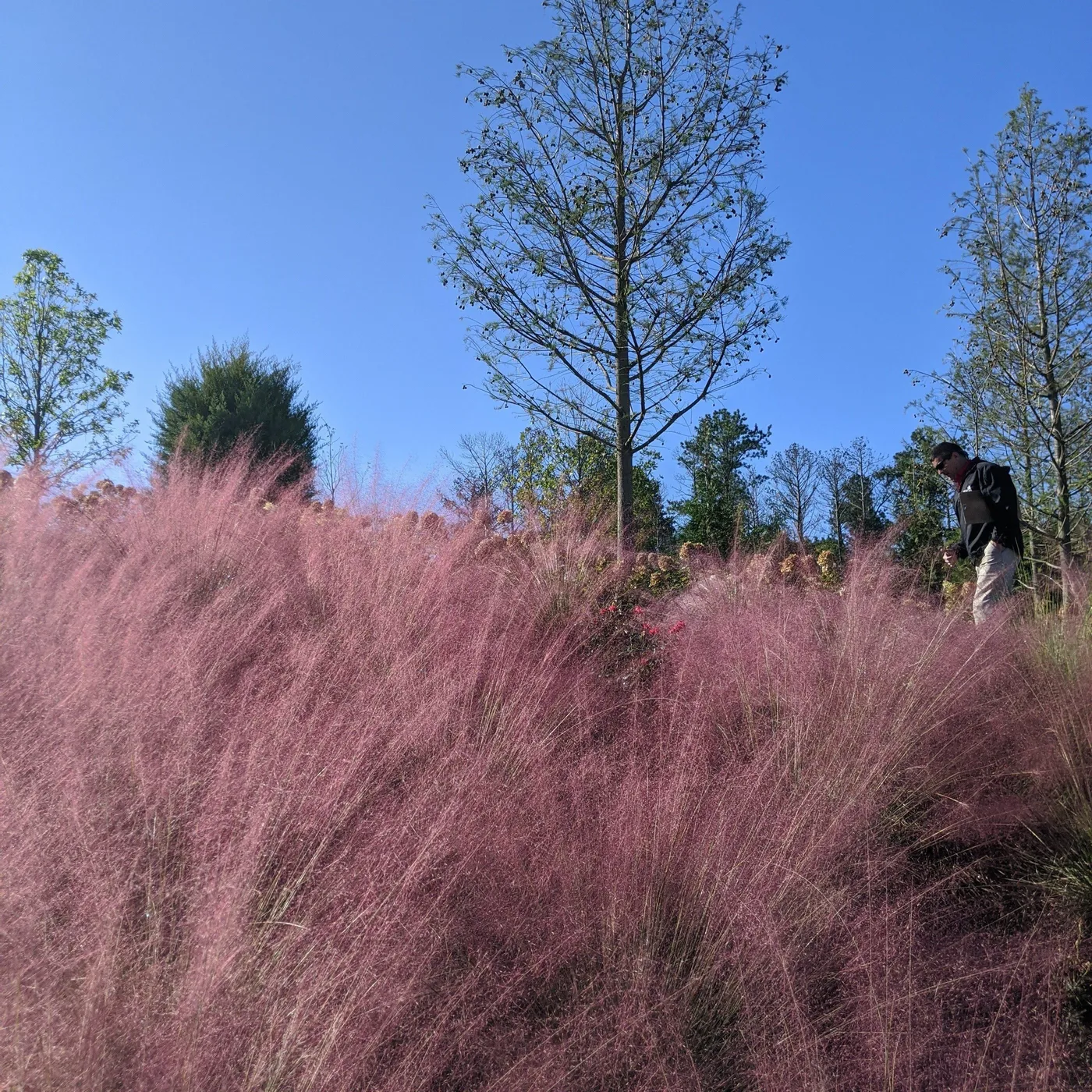
Visit a planting of pink muhly in July and you will find a tidy mound of fine green blades with no pink anywhere. The color is the flower, and the flower comes late, with bloom from September through November. The plumes, technically an inflorescence (the whole flowering structure), open pink, purplish red or sometimes purplish gray, and they run up to 12 inches long.
That is the baseline. When the show ends, the plumes dry to a light buff, and the tan seed heads stay attractive through winter. So the pink is a peak of roughly two months, followed by a long, pale afterglow. Our bloom timing guide follows the stages week by week.
Little bluestem runs the other way. Its leaves and stems often carry a bluish cast in summer, and the fall color is a warm copper that does not fade throughout winter. Its color comes from foliage, so it builds as the weather cools and then holds. Muhly gives you a peak of flowers and bluestem gives you a plateau of rust. Decide which you want before you buy.
Why Little Bluestem Flops While Pink Muhly Grass Stands
One of the most common photos customers send us is a bluestem clump splayed open like a dropped bouquet, stems arching onto the walk. Growers call this lodging: stems fall over because they grew taller or softer than they can support. It is nearly always a growing-conditions problem. The same causes can loosen a muhly, but its wide, rounded mound carries its weight lower, so the damage shows less.
Rich Soil and Extra Feed
Bluestem is a lean-soil grass. It tolerates a wide range of soil conditions including infertility and clay, and it grows as narrow, erect clumps. Feed it, or plant it in bed soil heavy with compost, and nitrogen pushes fast, soft growth that a narrow clump cannot hold upright.
The fix is subtraction. Stop feeding, skip rich mulch, and let new growth firm up over a season. Our guide on fertilizing pink muhly makes the same case for the other grass.
Too Little Light
Shade produces the same lean by a different route. Stems stretch toward the light and end up long and thin. Pink muhly wants full sun, meaning 6 or more hours of direct sun a day, and bluestem prefers full sun too.
No change in feeding fixes a shady spot, and staking only hides it. Move the clump, or open up the canopy above it.
Reading Pink Muhly Grass Plume Height Against Its Foliage
Crouch beside a healthy pink muhly in October and you will see two layers. There is a rounded mound of blades roughly 2 to 3 feet tall and wide, and plumes rise above it to bring the whole plant to about 3 to 4 feet. At full plumage, the panicle (the branched flower cluster) should make up roughly a third to half of the plant's height.
Those proportions are a diagnostic. Plumes that look stubby, or sit down inside the blades, point to too little sun or too much feed. A plant that is all leaf with few plumes tells the same story. A cloud riding well above the mound tells you the conditions are right.
Bluestem reads differently. It forms narrow erect clumps that may grow to 2 to 4 feet tall with an equal spread. There is no separate flower layer to judge, so you read the whole stem line. That 2-foot gap between short and tall is large, and in our experience site decides it: lean, sunny ground tends to keep a clump compact.
Here is how the two compare on the measures you can check with a tape and a calendar.
| Measure | Pink Muhly | Little Bluestem |
|---|---|---|
| Height | Mound 2–3 ft, plumes lift it to about 3–4 ft | 2–4 ft |
| Spread | 2–3 ft | About equal to its height |
| Shape | Rounded mound under a cloud of plumes | Narrow, erect clump |
| Fall color | Pink to purplish red plumes, then buff | Copper foliage through winter |
| Hardiness zones | 5–9 | 3–9 |
Thin Bloom or Muddy Color: Tracing Each Back to Its Cause
A muhly with lush blades and only a handful of plumes, or a bluestem that turns a dull brownish green instead of copper, is telling you something about its conditions. Three causes cover most cases: light, soil fertility and timing. Work through them in that order, because the first is the hardest to fix later.
Light
Bloom is the plant's response to a surplus of energy, and energy comes from sun. Below roughly 6 hours of direct sun, muhly makes leaf and skips most of the flower. Our sun requirements guide covers how to measure the hours in your bed. We expect bluestem in heavy shade to color poorly for the same reason, though we can't point to a trial that measured it.
Soil Fertility
Fertility means the nutrients the soil can supply. Missouri State describes pink muhly as fairly soil-tolerant, from poor to adequate fertility, and that range is the point: it does not need rich ground. A fed, well-amended bed encourages leaf at the expense of plumes. If the bed has had compost every year, rest it.
Timing
Judge both in autumn, not August. Muhly plumes open in September and keep coming into November, and a plant in its first season will carry fewer than an established clump. Also note that purplish gray is a normal plume color, so a muted plume is not always a fault. Cut both grasses back while dormant, before new growth starts.
Wet Feet, Poor Drainage, and Pink Muhly Grass Roots
After a rainy stretch, a clump with a yellowing, mushy center and blades browning from the base is often showing you a crown sitting in water. The crown is the point where roots meet shoots. Saturated soil pushes out the air roots need, so the plant effectively starves for oxygen while drenched. Yellowing has other causes, so first confirm the soil really stays wet.
Which Grass Takes Wetter Ground
Pink muhly has a surprising record. UF/IFAS lists it as tolerating extended flooding, along with sand, loam and clay. Clemson, meanwhile, says it does well in full sun and well-drained soil. Both can be true, since surviving a wet spell is not the same as thriving in one.
Little bluestem grows in habitats from moist to dry, and it handles clay. On the evidence we have, muhly is the safer of the two in a spot that stays soggy, though neither is a bog plant.
What to Amend and What to Leave
Skip heavy compost, which brings back the fertility problem. The common advice to dig a big hole and fill it with enriched soil backfires in clay, because water collects in it like a bowl. Plant slightly high instead, on a broad low mound of the native soil.
pH is rarely the culprit. Muhly grows in acid, neutral and alkaline soils. Our soil and drainage guide has the details.
Fixing a Bed That Suits Neither Grass
Some beds fail both grasses at once: bluestem sprawling, muhly leafy and plume-shy, and a puddle by the downspout. These problems often share one source, a bed built for lush perennials with shade from a nearby tree, rich soil and slow drainage. Fix them in this order, hardest-to-reverse first.
- Count the sun. Check the bed at mid-morning, noon and mid-afternoon on a clear day. Both grasses want full sun, and muhly wants 6 or more hours. If the bed falls short, prune or move the plants before touching anything else.
- Stop feeding. Pull back thick layers of compost or rich mulch and skip fertilizer for a full season.
- Test drainage. Fill a hole with water and see whether it has drained by the next day. If it hasn't, regrade the bed or build a low mound.
- Reset the clumps. Replant slightly high in the native soil rather than in a pocket of amended soil.
- Wait a season. Judge the result in October, when both grasses show what they have.
Light comes first because no soil change replaces it, and drainage comes before replanting because fixing it afterward means digging the plants up again. If the bed still fails, choose the grass for the conditions you actually have rather than the ones you hoped for.
Both grasses grow as clumps rather than creeping runners, so lifting and resetting one is a manageable job. Do it in a cool, dry stretch, and keep the crown at or just above the old soil line.
Choosing Between Pink Muhly Grass and Little Bluestem
Stand at the bed on a sunny afternoon and name what you see: bright and lean, or shaded and heavy? Your observation matters more than your preference, and it usually points one way.
Pick pink muhly when the spot gets full sun, the soil is average to lean, and you want a cloud of pink in autumn. It is hardy in zones 5–9, and it is our choice for most bright, open beds where fall drama is the point.
Pick little bluestem when you garden colder than zone 5, since it grows in zones 3 through 9. It also suits heavy clay and a winter garden, where its copper holds long after muhly's pink has gone to buff.
Many yards can take both. Our landscape ideas guide includes a meadow with little bluestem that shows how they sit together.
One October Afternoon Settles It
Pink muhly gives you a brief, showy cloud of pink on a mounded plant, and it asks for sun and lean, well-drained ground. Little bluestem gives you steady copper foliage on a narrow clump, and it forgives clay and cold but leans when fed or shaded. Most failures with either grass trace back to light, fertility or drainage, in that order.
Walk the bed on a bright October afternoon, note which symptom you see first, and let that choose the grass.
Pink Muhly Grass
Nursery-grown Pink Muhly Grass in sizes from 1 GALLON, shipped to your door.
From $78.94
Shop Now →Pink Muhly Grass settles in best when it gets a bright, open spot and ground that never holds water, and that is just how we raise it, with a light hand on feeding. Our small team of growers works our own farms to turn out top-quality trees, shrubs and grasses, so we've seen firsthand how this one behaves. Once you've decided between it and Little Bluestem, we'd love for you to pick out a plant for your garden.