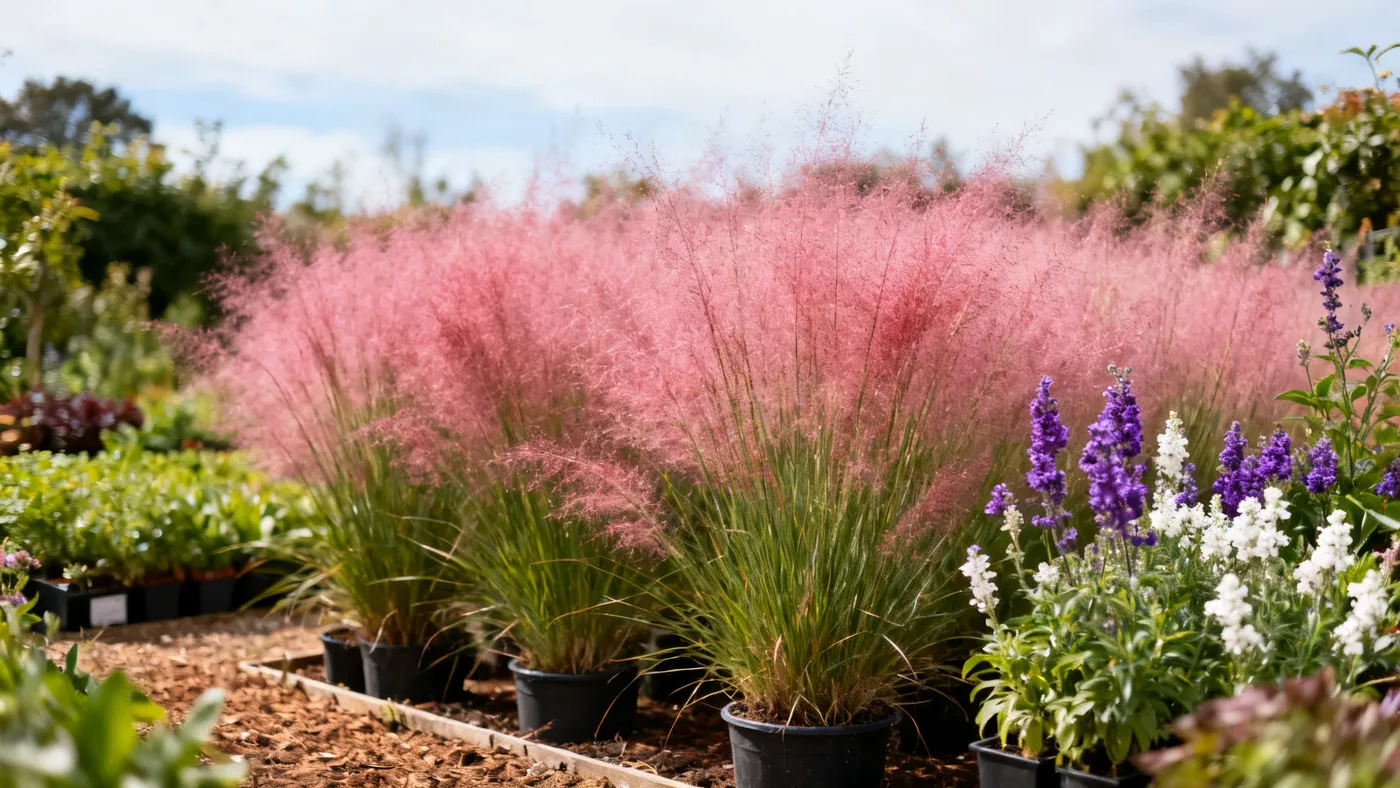
Pink Muhly Grass Fall Color: What to Expect Each Autumn
If you planted pink muhly grass this spring, or if you're watching an established clump, September is the month everything changes. The fine green foliage that's been quietly growing all summer suddenly tops itself with an explosion of wispy, cloud-like plumes in shades of pink and dusty rose. It's the reason this plant is worth the patience. Autumn is when pink muhly grass becomes the focal point of a garden, and understanding what's coming helps you care for it properly and appreciate the show for the months ahead.
Right now, in late September, many gardeners are seeing their first plumes emerge or are about to. If that's you, this guide walks you through what happens next: the color shifts, the timeline, regional differences, and how to keep that fall interest alive well into winter.
When Pink Muhly Plumes Appear
Pink muhly grass blooms in late summer to fall, typically September through November, depending on where you garden. For most gardeners in zones 6 through 9, the plumes start showing up in mid to late September. In warmer zones toward the southern end of the range (8 and 9), they may emerge a bit earlier. In cooler zone 6 gardens, you might not see full plume emergence until early October.
The plumes don't all appear at once. A mature clump produces them gradually over several weeks, so the display builds through September and peaks in October. Your plant won't look fully dressed until mid-October, even if you start seeing early plumes in late September.
What the Plumes Actually Look Like
The airy pink to reddish-pink plumes are the defining feature. They sit atop the fine-textured, wiry green foliage clump, which reaches 2 to 3 feet tall. Once the plumes fully develop, they add another 1 to 2 feet of height, bringing the plant's total height to 3 to 4 feet including the bloom. From a distance, they have a soft, feathery appearance that catches light beautifully in afternoon sun.
Some cultivars show variation. 'White Cloud' produces white plumes instead of pink. 'Regal Mist' is a deeper pink selection. Unless you know your plant's cultivar from the nursery label or the source where you got it, expect the classic pink to reddish-pink hue.
The Color Progression Through Fall
Here's what happens to the color as autumn deepens: The plumes start as a brighter pink or reddish-pink in October, when they're fresh and full. By late October and into November, that color begins to soften and fade. The pink gradually shifts toward tan and beige. This isn't decline, it's part of the plant's natural cycle, and the fading plumes are still attractive. Many gardeners find the muted tan tones in November equally appealing because they blend beautifully with dried ornamental grasses and fall perennials.
At the same time the plumes are changing, the foliage underneath may shift too. After the first hard freeze, the green blades can turn bronze or tan. This color change in the foliage adds another layer of interest in October and November.
October: Peak Pink Muhly Season
If you're planning to cut fresh plumes for a fall arrangement or you want to photograph your plant at its showiest, October is your window. The plumes are fully developed, vibrant in color, and still holding their form well. By November, they're visibly fading, and by late November in cooler zones, some may start to break apart or lodge if your plant catches heavy wind or snow.
October is also the best time to see how well your plant performs in full sun. Plants in full sun will show the richest, most vivid pink color. If your muhly is in part shade or light shade, the plumes will still develop, but the color will be more subdued, and fewer plumes overall may form.
Regional Timing Differences
Pink muhly grass is native to the southeastern and eastern United States, from New Jersey and Massachusetts south to Florida and west to Texas and Kansas. Because it's so geographically widespread in its native range, the timing of fall color varies significantly by latitude and elevation.
| Region/Zone | Typical Plume Emergence | Peak Color Window | Plumes Begin to Fade |
|---|---|---|---|
| Zone 6 (northern) | Early October | Mid to late October | Early November |
| Zone 7 (central) | Late September | October | Late October to early November |
| Zone 8 (lower South) | Mid-September | Late September through October | November |
| Zone 9 (warmest) | Mid-September | Late September through October | November to December |
If you're in zone 6, don't panic if your neighbors in zone 8 already have plumes and yours aren't showing yet. Your plant will catch up once nights cool down enough.
Maximizing Your Muhly's Fall Show
A few simple practices now ensure your pink muhly puts on its best autumn display.
Sunlight Matters Most
Pink muhly grass blooms best in full sun. If your plant is in a spot that gets less than 6 hours of direct sun daily, you'll see fewer plumes and more muted color. There's not much you can do about that in autumn, but it's worth noting for next year. If you're considering moving a younger plant to a sunnier spot, early spring is the time to do that.
Don't Cut It Back Yet
This is crucial: do not cut back your muhly grass in fall. Do not shear it. The seed heads and dried foliage provide winter interest and should be left standing until late winter or early spring. Cutting now destroys the plumes and the architectural interest they give your garden through winter.
When spring arrives and before new growth emerges, cut the entire plant back to 4 to 6 inches above the ground. This is the only pruning muhly grass needs. Wait until late winter or early spring to do it, never in fall.
Water Wisely
Pink muhly grass is drought-tolerant once established, but newly planted specimens (those in their first year) benefit from regular watering. As fall advances and temperatures cool, you'll need less supplemental water. Let the plant's natural autumn dormancy begin. Overwatering in fall can make the plant flop or lodge (bend over), especially if you've also over-fertilized in summer.
Skip the Fertilizer
Pink muhly grass is a light feeder. If you fertilized in spring with a balanced fertilizer, that's enough for the season. Adding more fertilizer now can cause soft, floppy growth that will lodge or break in wind. Let the plant finish its season naturally.
Winter Interest: The Story After the Plumes Fade
When the plumes fully fade to tan and beige by late November, some gardeners assume the show is over. It's not. The tan seed heads and dried foliage persist through winter and provide texture and interest if left uncut. The plant becomes a sculptural element in the winter garden, especially beautiful when frosted or dusted with snow.
This is one reason not to cut the plant back in fall. You're missing months of seasonal interest by doing so. The seed heads also attract songbirds looking for food, so you're supporting wildlife at the same time.
For more detailed care information through all seasons, read the complete pink muhly grass care guide for every season.
Common Fall Color Questions
Why are my plumes paler or smaller than last year?
Less sunlight, too much shade, or over-fertilizing in summer can reduce plume size and color saturation. A healthy mature clump grown in full sun and left unfertilized will produce a fuller, more vibrant display. If your plant is in its first or second year, it's also normal to see a smaller show; first notable bloom often comes in year 2, with a full mature display by year 3.
Can I cut the plumes for arrangements?
Yes, and it's a good way to enjoy them up close indoors. Cut plume stems in October when they're at peak color. The plumes will continue to dry in a vase and last for weeks indoors. Don't overdo it, though. Only cut a few stems, not the majority of the plant's plumes, so the garden display isn't compromised.
When do the plumes fall apart or get damaged?
In warmer zones (8 and 9) where the growing season extends longer, plumes may hold their form well into December. In zone 6, heavy snow or a hard freeze in November can start to break down the plume structure. Wind and rain throughout fall gradually soften them too. This is all normal and part of the reason they fade from pink to tan gracefully rather than disappearing overnight.
Do all cultivars have the same fall color?
No. 'White Cloud' produces white plumes that fade to off-white or cream. Other pink selections like 'Regal Mist' will show slightly different color depth, though the progression from vibrant to soft tones is the same across all forms. If you know your cultivar, expect subtle variations, but the October peak and November fade timeline is consistent.
Quick Reference: Pink Muhly Fall Timeline
| Task or Observation | When to Expect It | What to Do |
|---|---|---|
| Plumes begin to emerge | Mid-September to early October (varies by zone) | Watch for them; ensure plant has full sun |
| Peak pink color and full plume display | October | Enjoy the display; photograph or cut fresh plumes if desired |
| Color fades from pink to tan/beige | Late October through November | Still beautiful; leave plumes standing for winter interest |
| Foliage may turn bronze or tan | After first hard freeze (October to November) | Normal; color adds to the seasonal display |
| Plumes lodge or break down | Late November onward, especially in zone 6 | Leave them standing anyway; they feed birds and insulate new growth |
| Cut back to 4-6 inches | Late winter or early spring before new growth | Do this once per year; never cut in fall |