Pink Muhly Grass FAQ: 12 Most Asked Questions Answered
Pink muhly grass is one of the most popular ornamental grasses for fall color, but new gardeners often have questions about how to grow it, when it blooms, and whether it's the right choice for their landscape. This guide answers the most common pink muhly grass questions so you can plant with confidence.
About Pink Muhly Grass
What is pink muhly grass?
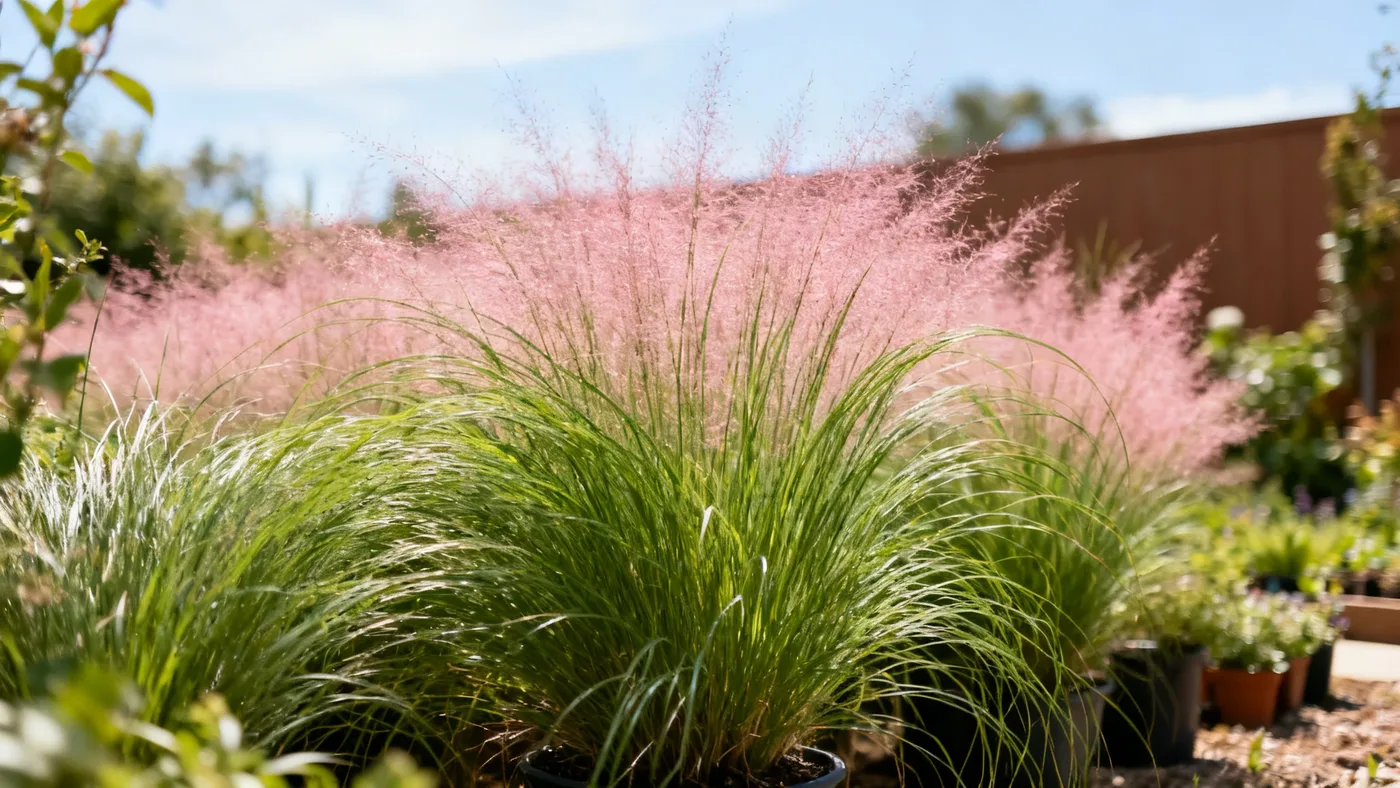
Pink muhly grass (Muhlenbergia capillaris) is a warm-season ornamental grass native to the southeastern and eastern United States. It's prized for its airy, cotton-candy-like pink plumes that appear in late summer and fall, paired with fine-textured green foliage.
What other names does pink muhly grass go by?
Pink muhly grass is also called muhly grass, hairawn muhly, gulf muhly, pink hair grass, or cloud grass, depending on the region. You may see these names used interchangeably by nurseries and garden centers, but they all refer to Muhlenbergia capillaris.
Is pink muhly grass a native plant?
Yes, pink muhly grass is native to the southeastern and eastern United States, from New Jersey and Massachusetts south to Florida and west to Texas and Kansas, with populations also found in parts of the Caribbean and Mexico. Its native status makes it an excellent choice for pollinator-friendly and naturalized landscaping.
Hardiness and Climate
What USDA hardiness zones does pink muhly grass grow in?
Pink muhly grass is hardy in USDA zones 6 through 9, though some sources extend the range to zones 5b and 10. If you're at the edge of these zones, choose a sheltered spot with good winter drainage to improve survival odds.
How much sun does pink muhly grass need?
Pink muhly grass thrives in full sun to light or part shade, though full sun produces the best bloom color and densest plumes. In low-light conditions, you may see reduced flowering and looser, more floppy growth.
What kind of soil does pink muhly grass prefer?
Pink muhly grass is highly adaptable and grows in sand, loam, or clay, but it needs good drainage above all else. Soil pH can range from acidic to slightly alkaline (roughly 5.5 to 7.5), so it suits most garden soils.
How much water does pink muhly grass need?
Pink muhly grass needs regular watering during the first growing season to establish a deep root system. Once established, it requires low to moderate water and becomes highly drought-tolerant, making it ideal for xeriscape gardens.
Is pink muhly grass drought-tolerant?
Yes, pink muhly grass is highly drought-tolerant once established, typically within the first season. This makes it an excellent choice for water-wise gardens in arid or semi-arid regions.
Can pink muhly grass handle coastal or salty conditions?
Pink muhly grass has high salt tolerance and is commonly used in coastal landscapes where salt spray is a concern. Its resilience to salty soils makes it a smart choice for oceanfront properties and seaside gardens.
Bloom Time and Appearance
When does pink muhly grass bloom?
Pink muhly grass blooms in late summer to fall, typically from September through November, though the exact timing varies by region and latitude. The further north your location, the earlier the plumes will appear.
What color are the pink muhly grass blooms?
The blooms are airy, feathery plumes in pink to reddish-pink tones, though some cultivars display purple or white plumes instead. The color intensifies in full sun and gradually fades to tan or beige as winter approaches.
How tall does pink muhly grass get?
Pink muhly grass typically grows 2 to 3 feet tall as a foliage clump, reaching 3 to 4 feet tall when the bloom plumes appear. Some cultivars may vary slightly in height, so check the plant tag at purchase.
What does pink muhly grass look like in winter?
The pink plumes fade to tan and beige, and the foliage may turn bronze or tan after the first hard freeze. If left uncut, the dried seed heads and foliage persist through winter and provide texture and visual interest in the dormant garden.
Planting and Spacing
When is the best time to plant pink muhly grass?
Spring or fall are ideal planting times for pink muhly grass, when temperatures are mild and soil moisture is reliable. Container-grown plants can generally be planted anytime the ground is workable within its hardiness range, though spring and fall plantings establish fastest.
How far apart should I space pink muhly grass?
Space plants 18 to 36 inches apart depending on your landscape design and how quickly you want the area to fill in. Closer spacing (18 inches) creates a denser display within one to two seasons, while wider spacing (36 inches) allows more air circulation and individual plant structure to show.
How long does it take for pink muhly grass to bloom?
Pink muhly grass often produces its first noticeable bloom in year 2 after planting, and reaches full mature clump size by year 2 to 3. Young plants from quart containers may bloom their first fall if planted early in the season.
How fast does pink muhly grass grow?
Pink muhly grass grows at a moderate rate, typically gaining 6 to 12 inches of height per year until it reaches mature size in 2 to 3 years. Growth speed depends on moisture, sun exposure, and soil quality.
Maintenance and Care
Do I need to fertilize pink muhly grass?
Pink muhly grass is a light feeder and does not require much fertilizer. A light application of balanced fertilizer in spring is optional; over-fertilizing reduces bloom intensity and causes weak, floppy growth.
When and how should I prune pink muhly grass?
Cut pink muhly grass back to 4 to 6 inches above the ground in late winter or early spring before new growth emerges. Never shear the plant in fall, or you will remove the winter interest of the seed heads and dried plumes. For detailed instructions, see the complete pink muhly grass care guide for every season.
Are there pests or diseases on pink muhly grass?
Pink muhly grass is generally pest-free, though rust fungus and occasional mealybugs may appear in humid conditions. Provide good air circulation and avoid overwatering to minimize disease risk.
Why is my pink muhly grass not blooming as much?
Reduced blooms typically result from too much shade, excess fertilizer, or overwatering. Move the plant to a sunnier spot, reduce watering and fertilizer applications, and be patient, as year-1 plants may produce minimal plumes.
Landscape Uses and Companions
What plants pair well with pink muhly grass?
Pink muhly grass looks stunning alongside black-eyed susan, coneflower, little bluestem, sedum, salvia, goldenrod, and yucca. Its airy texture complements bold architectural plants and creates a naturalized meadow feel in mixed perennial beds.
Can pink muhly grass grow in containers?
Yes, pink muhly grass is well-suited to containers with good drainage and is sold commonly as quart-container starts for later transplant into gardens. Container-grown plants need regular watering during the growing season and can be overwintered indoors in cold climates.
Safety, Invasiveness, and Lifespan
Is pink muhly grass toxic to pets or people?
Pink muhly grass is not known to be toxic to pets or people. It's safe to plant in family gardens and around children and animals.
Is pink muhly grass invasive?
No, pink muhly grass is not considered invasive. As a North American native, it is commonly recommended for native plant landscapes and pollinator-friendly gardens and will not overtake other plantings.
How long does pink muhly grass live?
Pink muhly grass is a long-lived perennial that often lives 10 or more years with proper care. Periodic division of mature clumps every few years helps maintain vigor and rejuvenates older plants.
More Information
For step-by-step planting instructions and seasonal timing, read how to plant pink muhly grass for the best fall color. For year-round care from pruning to watering schedules, see the complete pink muhly grass care guide for every season.
Quick Reference
| Aspect | Details |
|---|---|
| Hardiness zones | 6-9 (some sources list 5b-10) |
| Mature height | 2-3 ft foliage, 3-4 ft with blooms |
| Mature width | 2-3 ft |
| Sun requirement | Full sun to part shade |
| Soil type | Sand, loam, or clay with good drainage |
| Soil pH | 5.5-7.5 (adaptable) |
| Water needs | Moderate to establish, drought-tolerant when mature |
| Bloom time | September-November |
| Bloom color | Pink to reddish-pink plumes |
| Spacing | 18-36 in apart |
| Pruning | Cut to 4-6 in in late winter/early spring |
| First bloom | Year 2 |
| Growth rate | 6-12 in per year |
| Lifespan | 10+ years |
| Deer resistant | Yes |
| Toxic to pets | No |
| Invasive | No, North American native |