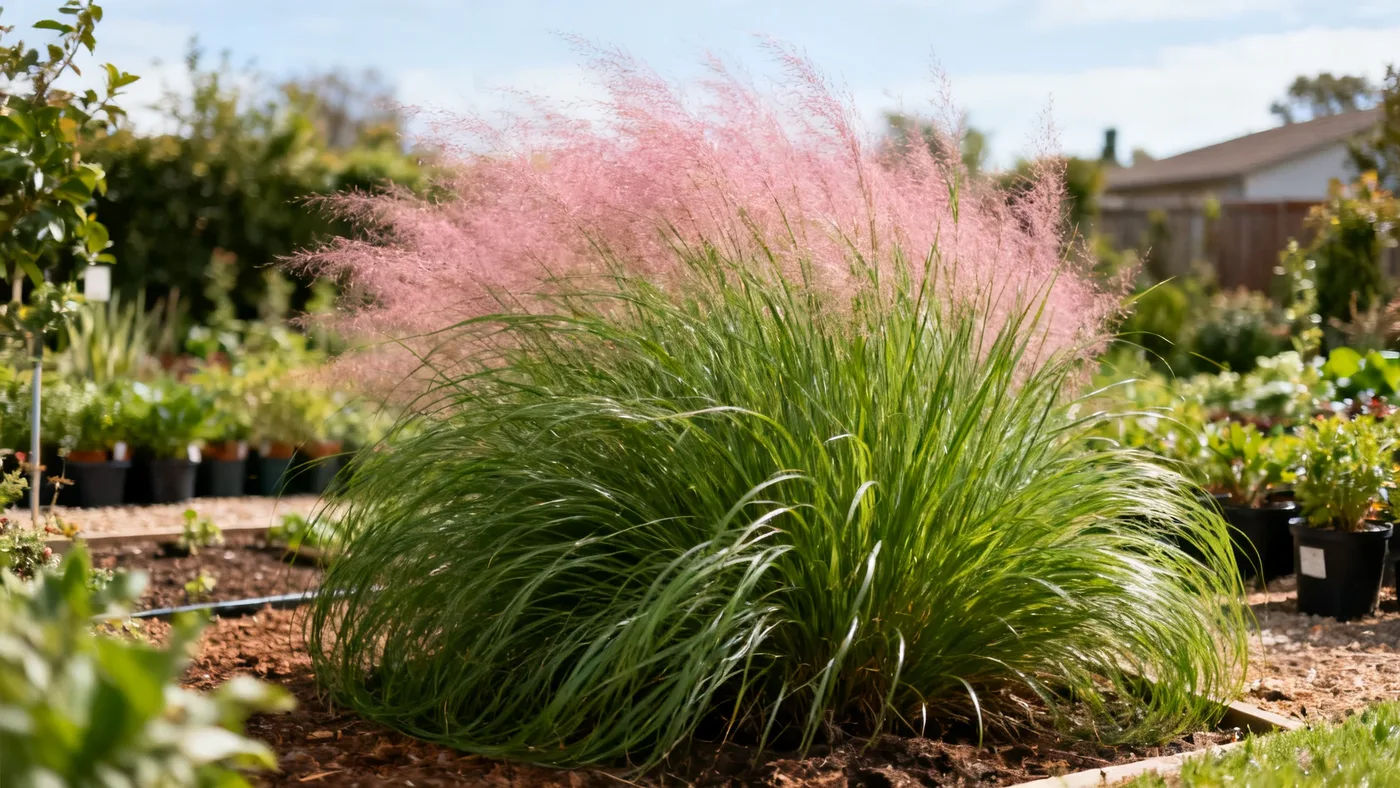
Pink Muhly Grass vs Pampas Grass: What Is the Difference?
When you're shopping for a tall ornamental grass with dramatic fall plumes, Pink Muhly Grass and Pampas Grass often come up. Both are striking landscape plants that create height, movement, and visual interest. But they're not interchangeable. The differences matter for your garden's scale, your maintenance load, and your safety. This guide walks you through what sets them apart so you can pick the right one.
Quick Size Comparison
The most obvious difference: scale. Pink Muhly Grass reaches 2 to 3 feet tall in foliage, with plumes extending to 3 to 4 feet at maturity. Pampas Grass is substantially larger, typically growing 8 to 12 feet tall (including plumes in mature specimens) and commanding much more horizontal space. This size gap shapes everything else about growing them.
Foliage and Texture
Pink Muhly Grass has fine-textured, wiry, arching green blades that form a dense clump. The foliage feels soft and delicate to walk past. The plumes themselves are airy and pinkish, giving the plant an almost cloud-like appearance in late summer and fall.
Pampas Grass produces broader, stiffer leaves with sharp edges. Many gardeners report that the leaf edges can cut skin if you brush against them or try to handle them during pruning. The plumes are showier and more substantial, but the overall plant carries more risk of injury in a high-traffic garden.
Hardiness and Climate Zones
Pink Muhly Grass thrives in USDA zones 6 through 9, with some sources listing 5b to 10. This range covers most of the eastern United States, the Southeast, and parts of the Midwest. If you're gardening in zone 5, zone 10, or colder regions, check with your local extension service before committing.
Pampas Grass is typically suited to zones 7 through 11, making it less reliable in the colder zones where Pink Muhly succeeds. If you're in zone 6 or cooler, Pink Muhly Grass is often the safer choice for reliable winter survival.
Growing Requirements: Sun and Water
Both grasses are sun-lovers, but Pink Muhly Grass offers flexibility. It performs best in full sun, where you'll see the most vibrant pink bloom color. However, it tolerates light to part shade and will still establish. Pampas Grass also prefers full sun but can adapt to partial shade; full sun is still ideal for densest growth.
For water, Pink Muhly Grass needs regular watering to establish, then becomes drought-tolerant once rooted. This transition typically happens in the first growing season. Pampas Grass is also drought-tolerant once established, though it can be thirstier during its establishment phase. Both are good choices for water-conscious landscapes once they're past the nursery phase.
Soil Adaptability and Drainage
Pink Muhly Grass is remarkably adaptable. It grows in sand, loam, or clay as long as drainage is good. It tolerates acidic to slightly alkaline soil (roughly 5.5 to 7.5 pH). Salt tolerance is high, making it a smart pick for coastal gardens. This adaptability means fewer site-preparation headaches.
Pampas Grass is similarly adaptable to soil type but does require good drainage. It also tolerates coastal conditions, so both grasses excel in seaside landscapes. The advantage goes slightly to Pink Muhly for its proven tolerance in a broader range of soils.
Maintenance and Pruning Demands
Pink Muhly Grass needs pruning only once a year: cut it back to 4 to 6 inches above ground in late winter or early spring before new growth emerges. This single annual task keeps the plant healthy and maintains next season's bloom quality. Do not shear it in fall if you want to enjoy the winter plume display.
Pampas Grass follows a similar pruning schedule, but the sheer size of mature specimens makes the work more demanding. A large Pampas Grass clump requires significant effort and protective gear (gloves and long sleeves are essential given the sharp leaf edges). Some gardeners hire landscapers for this annual chore. Smaller Pink Muhly plants are kinder to your hands and schedule.
Comparison Table: Pink Muhly vs Pampas Grass
| Attribute | Pink Muhly Grass | Pampas Grass |
|---|---|---|
| Mature height (foliage) | 2 to 3 feet | 6 to 8+ feet |
| Mature height (with plumes) | 3 to 4 feet | 8 to 12+ feet |
| Spread | 2 to 3 feet | 5 to 8+ feet |
| USDA zones | 6 to 9 | 7 to 11 |
| Hardiness in zone 6 | Reliable | Borderline |
| Foliage texture | Fine, wiry, soft | Broad, stiff, sharp-edged |
| Bloom color | Pink to reddish-pink | White, cream, or pink |
| Bloom season | September to November | August to October |
| Drought tolerance (mature) | High | High |
| Soil pH range | 5.5 to 7.5 | 6.0 to 8.0 (typical) |
| Annual pruning effort | Low (one cut, 4 to 6 in. height) | High (large clump, sharp leaves) |
| Safety risk (leaf edges) | Low | High |
| Coastal salt tolerance | High | High |
Pros and Cons at a Glance
Pink Muhly Grass
Pros:
- Moderate size fits most residential gardens without overwhelming the space
- Fine foliage texture is soft and safe; no cutting hazard
- Hardy in zone 6, making it reliable across the Northeast and upper Midwest
- Low annual maintenance: one cutting to 4 to 6 inches in late winter
- Delicate pink plumes are distinctive and elegant
- Excellent for containers and patio accents
- High salt and drought tolerance once established
- Not invasive; native to North America
Cons:
- Less dramatic visual impact than Pampas Grass if you want a specimen plant from a distance
- Best bloom color requires full sun; part shade reduces plume vibrancy
- Needs good drainage; clay-heavy soil requires amending
- Reduced bloom in low light
Pampas Grass
Pros:
- Dramatic, tall specimen plant that serves as a strong focal point
- Larger plumes with more visual presence in the landscape
- Colors range from white to cream to pink, offering design flexibility
- Cold-hardy enough for zone 7 and warmer regions
- Coastal and drought-tolerant once established
Cons:
- Very large at maturity; needs ample space (6 to 8 feet or more)
- Sharp leaf edges pose injury risk to gardeners, children, and pets
- Not reliably hardy in zone 6 or colder; requires winter mulch and may not survive harsh years
- Annual pruning is physically demanding and requires protective gear
- Can self-seed in warm climates; invasive in some regions
- More costly and harder to find in northern nurseries
Best For: Use Cases and Recommendations
Choose Pink Muhly Grass if you:
- Garden in USDA zone 6 or cooler (it's your most reliable choice)
- Have a smaller or medium-sized garden where 3 to 4 feet tall fits the scale
- Want low-maintenance ornamental appeal; one annual 4 to 6 inch cut is all you need
- Have children or pets; the soft foliage poses no cutting hazard
- Prefer delicate, airy plumes over bold statement plants
- Want a native North American plant for a pollinator-friendly or naturalized scheme
- Plan to mass-plant for texture and movement (space them 18 to 36 inches apart)
- Garden on a coastal property or in sandy/lean soils
- Want to use the plant in a container or as a patio accent
Choose Pampas Grass if you:
- Garden in USDA zone 7 or warmer and have confirmed winter survival in your area
- Have a large landscape where 8 to 12 foot height makes sense
- Want a dramatic specimen plant that commands attention from a distance
- Are willing to invest in annual pruning effort and protective gear
- Have no children or pets at risk from sharp leaf edges
- Prefer bold, architectural foliage over delicate texture
- Can access plants locally (shipping large specimens is expensive)
Why Pink Muhly Grass Is a Smart Pampas Grass Alternative
If you've been considering Pampas Grass but have doubts about the size, maintenance, or hardiness, Pink Muhly Grass solves most of those concerns. It delivers similar design impact on a manageable scale. The bloom plumes are distinctive and showy enough to anchor a fall garden without dominating it. And the growing demands are dramatically lighter: one annual pruning cut versus wrestling a massive clump every year.
For gardeners in zone 6, Pink Muhly Grass is often the only reliable choice between the two. Pampas Grass may survive mild winters but can be killed back or lost entirely in a harsh season, leaving you replanting. Pink Muhly Grass is predictable and resilient.
Both grasses love full sun and perform well in poor soils once established. Both tolerate salt spray in coastal gardens. But if you want an ornamental grass that feels like a Pampas Grass substitute without the drawbacks, Pink Muhly Grass checks nearly every box.
Learning More: Care and Cultivation
Once you've decided Pink Muhly Grass is right for your garden, the next step is learning how to plant, water, and prune it through the seasons. Spacing, timing, and soil prep matter. Read the complete Pink Muhly Grass care guide for every season to plan your planting and nail the maintenance schedule.
Quick Reference Checklist
| Factor | Pink Muhly | Pampas |
|---|---|---|
| Fits zone 6? | ✓ | ✗ |
| Low pruning effort? | ✓ | ✗ |
| Safe foliage (no sharp edges)? | ✓ | ✗ |
| Fits average residential garden scale? | ✓ | ✗ |
| Dramatic specimen plant? | ◐ | ✓ |
| Native to North America? | ✓ | ✗ |
| Drought-tolerant once established? | ✓ | ✓ |
| Tolerates coastal salt spray? | ✓ | ✓ |